Prince Harry's account of his life inside the British royal family, his grief at his mother's death, his marriage to Meghan Markle, and the decision to step back from royal duties.
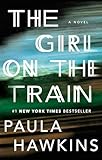
An alcoholic woman who commutes daily past her ex-husband's house becomes entangled in the disappearance of a woman she had been secretly watching from the train.
Symbologist Robert Langdon arrives in Prague to attend a lecture by noetic scientist Katherine Solomon, whose groundbreaking manuscript on human consciousness could shatter everything we believe. When she vanishes amid a brutal murder, Langdon races to recover it.
The fourth Blood and Ash novel. With Casteel captured by the Blood Queen, Poppy unleashes her full power as the Primal-blooded chosen one, marshaling allies for war while the lovers fight to reunite across a fracturing kingdom.
The conclusion of the Summer I Turned Pretty trilogy. Two years on, Belly is with Jeremiah — until a betrayal and a sudden engagement force her to finally confront which brother she truly loves, and what Cousins Beach has meant all along.
The fifth Blood and Ash novel, retelling the saga's beginning from Hawke's point of view. As Poppy lies in stasis, Casteel recounts how their story truly started — revealing the secrets, doubts, and devotion he hid when he first came to her as a guard.
Tris and Four escape the city to discover the truth about their world's genetic experiments, leading to a final sacrifice that divided readers and defined the trilogy's legacy.
As Bella prepares to choose between Edward and Jacob, a mysterious series of vampire killings in Seattle and the return of a vengeful enemy raises the stakes for everyone she loves.
A Harvard symbologist and a French cryptologist race through Paris and London decoding clues that lead to a secret that could shake the foundations of Christianity.
High-powered lawyer Julian Mantle suffers a massive heart attack in the middle of a courtroom and, shaken to his core, sells everything — including his beloved Ferrari — to study with the Sages of Sivana in the Himalayas. He returns transformed and shares seven virtues for a more purposeful, joyful, and fulfilling life.
When seventeen-year-old Bella Swan moves to rainy Forks, Washington, she falls in love with the mysteriously compelling Edward Cullen — who turns out to be a vampire.
Bella and Edward's wedding triggers a chain of consequences — including an impossible pregnancy — that will draw the entire vampire and werewolf worlds into an explosive confrontation.
After Edward leaves Forks to protect Bella, she descends into depression — and finds unexpected comfort in Jacob Black, whose own supernatural secret will complicate everything.
The fifth Robert Langdon thriller. At the Guggenheim in Bilbao, billionaire futurist Edmond Kirsch promises to answer humanity's oldest questions — where we come from and where we are going — but is silenced before he can. Langdon and museum director Ambra Vidal race across Spain to release his discovery.
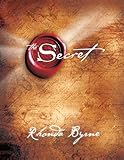
Rhonda Byrne presents the Law of Attraction — the idea that positive thinking and focused desire literally attract corresponding circumstances from the universe — as the secret to achieving health, wealth, and happiness.
A witch-historian at Oxford's Bodleian Library unearths an enchanted alchemical manuscript and finds herself at the center of a centuries-old conflict between vampires, witches, and daemons — and falling for a 1,500-year-old vampire geneticist.
The daughters of King Minos — Ariadne, who saves Theseus from the Labyrinth only to be abandoned, and Phaedra, who inherits the consequences — reclaim two lives silenced at the edges of the Theseus myth.
In a future America where love has been classified as a disease called amor deliria nervosa, eighteen-year-old Lena counts the days until her cure — until she meets Alex.
J.D. Vance traces his chaotic Appalachian upbringing — a drug-addicted mother, a stabilizing grandmother, a stint in the Marines — and his unlikely path to Yale Law School, offering a ground-level account of white working-class decline in America.
Tom Hazard was born in 1581 and ages so slowly he has lived through Shakespeare's London, Captain Cook's voyages, and 1920s Paris — now working as a history teacher in present-day London while belonging to a secret society that forbids its members from falling in love.
Harvard symbologist Robert Langdon wakes in a Florence hospital with no memory of the past few days and must decode a mystery rooted in Dante's Inferno before a bioterrorist threat kills millions.
A Sicilian girl makes a dangerous pact with a demon prince named Wrath to uncover who murdered her twin sister in 1800s Sicily, weaving Italian folk magic and Dante's Seven Princes of Hell into a slow-burn enemies-to-lovers mystery.
In a suburban neighborhood, two women have disappeared: doula Shelby Tebow and Kate Lemmon. Eleven years later, Kate's daughter Delilah, who also vanished, appears — but she cannot remember where she has been.
Disclosure: Editors Reads is a participant in the Amazon Services LLC Associates Program. When you click an Amazon link and make a purchase, we may earn a commission at no additional cost to you. This helps fund our independent editorial team.
We use cookies to understand how visitors use our site (Google Analytics). No data is collected until you accept.
Privacy Policy