Young adult fiction at its best earns the loyalty of readers who grew up with it and retains it for decades. These are the YA novels — fantasy, contemporary, and everything between — that stand the test of adult rereading.
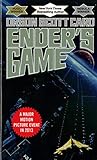
Andrew 'Ender' Wiggin is humanity's most gifted military mind, trained from childhood in the zero-gravity Battle Room of a space station to fight the alien Formics. But the game and the war may not be as separate as Ender believes.
The endgame. Aelin Galathynius has been captured, and without her the armies of Terrasen face annihilation. Her allies must fight on without her — each carrying a piece of the plan only Aelin knew in full. The conclusion to one of the most beloved epic fantasy series of the decade.
Beginning with The Golden Compass, Philip Pullman's trilogy follows Lyra Belacqua — a girl who can read the alethiometer — across multiple worlds, uncovering a vast conspiracy involving the Church, the nature of Dust, and the meaning of consciousness itself. A fantasy epic of rare philosophical ambition.
Percy leads the defense of Olympus against Kronos's army as the Great Prophecy — the one that has shadowed his life since birth — finally comes true in a battle for the fate of the gods.
Twelve-year-old Jonas lives in a Community where pain, conflict, and choice have been eradicated through Sameness — until the Ceremony of Twelve assigns him the singular role of Receiver of Memory, forcing him to carry the full weight of human history and exposing the quiet violence that keeps his world frictionless.
Lyra Belacqua lives in Jordan College, Oxford, in a parallel world where human souls exist outside the body as animal companions called daemons. After her friend Roger is kidnapped by the mysterious Gobblers, she embarks on a journey north that leads her to the Magisterium's most terrible secret.
Rose grows up poor in a small Ontario town, in the back half of a house where her stepmother Flo runs a store. Through ten linked stories, she escapes via scholarship to university, marries above her class, divorces, becomes an actress, and discovers that escape from where you came from is never as complete as you planned.
Del Jordan grows up in the small Ontario town of Jubilee—between the respectable town and the rougher country her family comes from—discovering sex, religion, ambition, and the limits of small-town life in a linked series of stories that constitute Munro's only novel. The essential Munro.
Emil Sinclair grows up in two worlds: the 'bright' world of his bourgeois family and the 'dark' world he senses underneath. Max Demian—strange, self-possessed, seemingly ageless—appears as his guide, leading him through Jungian psychology, Gnostic Christianity, and Nietzsche toward his own self-realization. Written in 1917, published in 1919.
Le Guin's first Earthsea novel follows Ged, a boy of extraordinary power who attends a school for wizards on the island of Roke and, in his pride, releases a shadow upon the world that only he can face.
Todd, Viola, and the Spackle leader 1017 navigate three-way war on New World, with arrival of the Answer's ship adding a fourth power. The Carnegie Medal-winning conclusion to Chaos Walking is one of the great YA trilogy endings — costly, honest, and earned.
Chimamanda Ngozi Adichie's debut novel follows fifteen-year-old Kambili Achike growing up in Nigeria with a wealthy, devoutly Catholic father who is publicly generous and privately tyrannical — a study of silence, religious authority, family violence, and the flowering of a young woman's inner life.
Todd Hewitt is the last boy in Prentisstown — a colony world where a germ has made everyone's thoughts audible as constant Noise — until he discovers a pocket of silence in the swamp and finds Viola, the first girl he has ever seen, whose ship crashed nearby.
A young girl is sent to spend the summer with relatives in rural County Wexford, Ireland, in the 1970s, and discovers for the first time what it means to be cared for unconditionally.
A group of reformatory boys is evacuated to a remote mountain village during World War II. When plague breaks out, the villagers flee and lock the boys in, leaving them to survive alone. A brief, violent, and exhilarating novel about what happens when the social order abandons the already-abandoned.
Popular girl Samantha Kingston dies in a car crash and relives her last day seven times, slowly reckoning with the cruelties she participated in and what it would cost to do something different.
Salim grows up in Zanzibar watching his family fall apart—his father withdrawing into silence, his uncle becoming politically prominent—and eventually comes to London to study, where an older Englishman named Mr. Mgeni becomes a surrogate father. A Gurnah coming-of-age story that draws on Shakespeare's Measure for Measure.
Martha Quest, fifteen years old on a farm in Southern Rhodesia in the late 1930s, is furiously intelligent and furiously trapped—by her parents' colonial world, by the small-mindedness of white settler society, by being female. The first volume of Lessing's semi-autobiographical five-novel Children of Violence sequence.
A five-year-old girl's-eye view of Marrakech in the early 1970s, as her unconventional mother pursues Sufi mysticism while her daughters navigate a world of souks, street life, and Moroccan school.
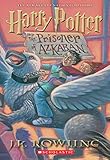
A convicted murderer has escaped Azkaban prison and is believed to be hunting Harry Potter, forcing Harry to confront the true story of his parents' betrayal and death. The mystery that unravels is more complicated, more painful, and more morally instructive than any straightforward threat.
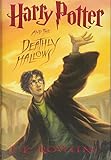
Harry, Ron, and Hermione abandon Hogwarts to hunt Voldemort's Horcruxes, confronting betrayal, sacrifice, and the revelation that Harry himself is the final Horcrux. The series concludes with the Battle of Hogwarts and a resurrection that draws on the oldest mythological traditions.
Harry is mysteriously entered into the dangerous Triwizard Tournament while Voldemort's followers grow bolder, culminating in the Dark Lord's terrifying return to full power. The death of a fellow student in the graveyard permanently changes what the Harry Potter series is.
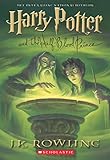
As Voldemort's war spreads beyond Hogwarts, Dumbledore guides Harry through Tom Riddle's past to find the key to destroying him, while a mysterious annotated textbook raises questions about the identity of the Half-Blood Prince. The year ends with Dumbledore's death and the series' darkest turning point yet.
Harry Potter by J.K. Rowling, The Hunger Games by Suzanne Collins, The Fault in Our Stars by John Green, and A Court of Thorns and Roses by Sarah J. Maas are among the most widely read YA series. For literary YA, The Perks of Being a Wallflower and Speak are frequently taught in schools.
Absolutely — many of the most popular YA series have substantial adult readerships. YA fiction often handles coming-of-age, identity, and moral questions with directness that adult fiction sometimes avoids. The best YA novels earn rereading at every age.
Young adult fiction typically features protagonists aged 14–18 and deals with themes of identity, romance, and social belonging. Middle grade targets readers aged 8–12 with younger protagonists and less mature themes. Many adults read both — the distinction is primarily about the protagonist's age and the complexity of themes.
Disclosure: Amazon links on this page are affiliate links. If you purchase through them we earn a small commission at no extra cost to you.
We use cookies to understand how visitors use our site (Google Analytics). No data is collected until you accept.
Privacy Policy