The best historical fiction does two things simultaneously: it recreates a vanished world with enough texture and precision that you inhabit it, and it illuminates something about that world that speaks directly to the present. These novels do both.
Two retired Texas Rangers, Woodrow Call and Augustus McCrae, lead a cattle drive from Lonesome Dove, Texas, to Montana. The novel follows the drive across a thousand miles of frontier, and the lives of every person touched by it — cowboys, women, outlaws, Indians, and the land itself.
The true story of Oskar Schindler, a German industrialist and member of the Nazi Party who saved more than 1,200 Jews during the Holocaust by employing them in his factories — a story Keneally tells in the form of a novel, using invented scene and dialogue alongside documented fact.
The Joad family, driven from their Oklahoma farm by the Dust Bowl, joins the great migration west to California — and finds exploitation, hunger, and community in equal measure.
An English navigator is shipwrecked in feudal Japan in 1600 and drawn into the deadly rivalry between samurai lords competing for supreme power. One of the great historical novels of the twentieth century.
In a small Pennsylvania town in the 1930s, a Black and Jewish community is bonded by need and mutual aid — until a murder, a deaf child, and a decades-old secret bring everything to a crisis point.
Frances 'Frankie' McGrath follows her brother to Vietnam as an Army nurse and discovers that war is not what she expected — and that coming home may be harder than going.
Eilis Lacey, a young woman from Enniscorthy in County Wexford, emigrates to Brooklyn in the early 1950s. She builds a life, finds work, falls in love, and is called home by a family death — and faces a choice she cannot make without losing something she cannot replace.
Twin brothers born of a forbidden union in an Ethiopian mission hospital — Marion and Shiva Stone grow up as doctors in a country torn by revolution, their lives diverging and converging across two continents.
A retelling of David Copperfield transplanted to opioid-ravaged Appalachia, narrated by Damon 'Demon' Fields as he moves from poverty and foster care through addiction and hard-won survival.
The Pulitzer Prize-winning novel traces four generations of a Chicago family from the 1920s to the 2000s, following the children and grandchildren of William Waters — who has never recovered from his own father's abandonment — as they repeat, reject, and survive the patterns that his wound set in motion.
Cal Stephanides narrates the history of a genetic mutation across three generations of a Greek-American family — from Smyrna in 1922 to Detroit in the 1960s and 1970s — that eventually produces Cal: a hermaphrodite raised as a girl who discovers his true biology in adolescence.
Colin Bridgerton discovers that Penelope Featherington — the wallflower he has known for years, and the anonymous Lady Whistledown — has secretly loved him for a decade.
Two Jewish cousins — a Czech refugee with Houdini-level escape artistry and a Brooklyn teenager with a gift for business — create one of the golden age of comics' most enduring superheroes, The Escapist, while navigating World War II, love, loss, and the American immigrant experience. Winner of the Pulitzer Prize.
One day—from reveille to lights out—in the life of Ivan Denisovich Shukhov, a peasant soldier serving eight years in a Stalinist labor camp. Solzhenitsyn's 1962 novella was the first published account of the Gulag to appear in the Soviet Union, approved by Khrushchev as a tool against Stalin's legacy.
Al-Sayyid Ahmad Abd al-Jawad rules his Cairo household with absolute authority while leading a secret life of pleasure and debauchery outside it — the first volume of Mahfouz's Cairo Trilogy follows his family through World War I and the Egyptian nationalist movement of 1919.
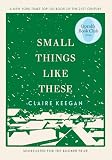
In a small Irish town in the weeks before Christmas 1985, a coal merchant named Bill Furlong begins to see what the respected convent at the edge of town is hiding — and must decide whether to look away or act.
Soviet submarine captain Marko Ramius attempts to defect to the United States with his entire crew and the USSR's most advanced nuclear submarine — and CIA analyst Jack Ryan must convince a skeptical Navy the defection is real before both superpowers open fire.
Based on the life of Erdrich's grandfather Patrick Gourneau, a Chippewa tribal council chairman who organised against House Concurrent Resolution 108 in 1953 — the legislation that would have terminated federal recognition of Native American tribes. Told alongside the story of Patrice, a young Turtle Mountain woman.
Irène Némirovsky's unfinished masterpiece, written during the Nazi occupation of France and discovered decades after her death at Auschwitz. Its two completed novellas portray the chaotic 1940 exodus from Paris and life under German occupation, with extraordinary immediacy and moral clarity.
In 14th-century Barcelona's Ribera neighbourhood, a serf's son rises from bondage to become a respected stoneworker and bastaix — a carrier of stones for the construction of the great Gothic church of Santa Maria del Mar.
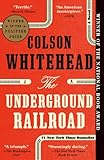
Cora, a slave on a Georgia plantation, escapes on a literal underground railroad — a secret network of actual trains and tunnels — and is hunted across an alternate-history antebellum America. Winner of the Pulitzer Prize and National Book Award.
Thomas Cromwell rises from a blacksmith's son to become Henry VIII's chief minister, navigating court intrigue, the fall of Cardinal Wolsey, and the king's desire for Anne Boleyn. Winner of the Man Booker Prize.
Historical fiction is set in the past, with characters and plot either drawn from history or imagined within a historically accurate setting. The best examples — Hilary Mantel's Wolf Hall, Ken Follett's Pillars of the Earth — recreate their periods with enough texture to feel fully inhabited.
Hilary Mantel's Wolf Hall trilogy, Ken Follett's Pillars of the Earth, and Patrick O'Brian's Aubrey–Maturin series are among the most acclaimed. For WWII fiction, All the Light We Cannot See by Anthony Doerr and The Nightingale by Kristin Hannah are the most popular recent examples.
The best historical fiction is accurate in setting, atmosphere, and major events — but characters and their inner lives are invented or imagined. Authors typically include notes distinguishing fact from fiction. Readers often use the novels as a gateway to reading the actual history.
Disclosure: Amazon links on this page are affiliate links. If you purchase through them we earn a small commission at no extra cost to you.
We use cookies to understand how visitors use our site (Google Analytics). No data is collected until you accept.
Privacy Policy