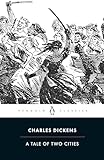
Editors Reads Verdict
Dickens's most propulsive novel pairs historical sweep with an unforgettable redemption story — Sydney Carton's arc from ruin to sacrifice is the Victorian novel's most powerful act of self-giving.
What We Loved
- The opening paragraph is the most famous in English-language prose fiction
- Sydney Carton is uniquely compelling — flawed, self-aware, and ultimately heroic
- The Revolutionary Paris sequences are vivid and genuinely terrifying
Minor Drawbacks
- Lucie Manette is among Dickens's weakest heroines — passive almost to the point of invisibility
- Readers seeking historical rigour should supplement with non-fiction accounts of the Revolution
Key Takeaways
- → Resurrection — personal, moral, and political — is the novel's governing metaphor
- → Revolutionary violence, however justified in origin, tends to create its own new tyranny
- → Character is revealed under extreme pressure; comfort masks who people really are
- → The greatest acts of love may be those performed without any expectation of return
| Author | Charles Dickens |
|---|---|
| Publisher | Penguin Classics |
| Pages | 400 |
| Published | April 30, 1859 |
| Language | English |
| Genre | Classic Fiction, Historical Fiction, Romance |
How A Tale of Two Cities Compares
A Tale of Two Cities at a glance against 3 similar books readers weigh alongside it.
| Book | Author | Rating | Best for |
|---|---|---|---|
| A Tale of Two Cities (this book) | Charles Dickens | ★ 4.7 | Classic Fiction |
| A Christmas Carol | Charles Dickens | ★ 4.9 | Classic Fiction |
| David Copperfield | Charles Dickens | ★ 4.7 | Classic Fiction |
| Great Expectations | Charles Dickens | ★ 4.8 | Classic Fiction |
A Tale of Two Cities Review
“It was the best of times, it was the worst of times.” The opening of A Tale of Two Cities is the most quoted sentence in English fiction — a series of brilliant paradoxes announcing Dickens’s subject (the French Revolution) and his method (everything doubled, everything contrasted). London and Paris. Life and death. The man who will be saved and the man who will save him.
Published in 1859, the novel is Dickens’s most historically ambitious. It moves between comfortable English domesticity and the murderous machinery of the Terror at a pace closer to thriller than Victorian serial fiction, drawing on his months immersed in Carlyle’s The French Revolution.
At the novel’s heart is the coincidence of Sydney Carton and Charles Darnay — two men identical in appearance, opposite in everything else. Darnay is a French aristocrat who has renounced his title; Carton is a brilliant barrister who has drunk himself toward ruin. Both love Lucie Manette, daughter of a doctor released after eighteen years in the Bastille. Darnay wins her; Carton loves her without hope, and that hopeless love drives the novel’s devastating finale.
When France condemns Darnay to the guillotine, Carton substitutes himself — using their identical faces to give another man his life. His final reflection is Victorian fiction’s most moving statement on redemption: “It is a far, far better thing that I do, than I have ever done.” Dickens understood that sacrifice is not diminished by being freely chosen. Carton’s death is a resurrection — the only one available to him.
What Distinguishes This Book
Among the qualities that set A Tale of Two Cities apart: The opening paragraph is the most famous in English-language prose fiction; Sydney Carton is uniquely compelling — flawed, self-aware, and ultimately heroic; and The Revolutionary Paris sequences are vivid and genuinely terrifying. These strengths are evident from the first pages and sustain across the whole work.
Themes
The thematic concerns of A Tale of Two Cities give it weight beyond its surface narrative. Resurrection — personal, moral, and political — is the novel’s governing metaphor. Revolutionary violence, however justified in origin, tends to create its own new tyranny. Character is revealed under extreme pressure; comfort masks who people really are. The greatest acts of love may be those performed without any expectation of return. These ideas emerge from the texture of the work rather than explicit statement, which is the mark of ambitious fiction done well.
Why It Endures
A Tale of Two Cities belongs to the literary canon for reasons that become clear on reading. Charles Dickens’s command of the form was exceptional for their era and remains impressive today. The social observation is precise, the characterisation is economical, and the underlying moral intelligence is never heavy-handed. These are the properties that separate enduring literature from period curiosity.
Limitations
Lucie Manette is among Dickens’s weakest heroines — passive almost to the point of invisibility. Readers seeking historical rigour should supplement with non-fiction accounts of the Revolution. These are worth knowing before starting, though they are unlikely to diminish the experience for the readers the book is written for.
Our rating: 4.7/5 — Dickens at his most dramatically focused, powered by one of literature’s great acts of selfless love.
Dickens’s Historical Novel
A Tale of Two Cities was published serially in Dickens’s own journal All the Year Round from April to November 1859 — the opening serial in the new publication, which replaced Household Words. It is Dickens’s most directly historical novel and one of the two shortest among his major works. Dickens drew heavily on Thomas Carlyle’s The French Revolution (1837), which he described as having read several hundred times; he borrowed Carlyle’s copy of the sources when researching.
The Novel’s Unusual Structure
A Tale of Two Cities differs structurally from Dickens’s other novels in ways that have divided critics: it is comparatively spare, with less of the digressive character comedy that distinguishes Bleak House, Little Dorrit, or Our Mutual Friend, and its plot is more tightly constructed around the central sacrifice of Sydney Carton. The phrase “It was the best of times, it was the worst of times” is among the most recognised opening sentences in English literature. The novel has been adapted multiple times for film, most notably in a 1935 MGM production with Ronald Colman as Sydney Carton.
Serialisation and Sales
A Tale of Two Cities was serialised in Dickens’s own periodical All the Year Round from April to November 1859, beginning with the first issue; the serialisation drove the publication’s circulation to extraordinary heights. The novel was also published in monthly parts simultaneously with the serial. It was the first major work published in All the Year Round after Dickens closed Household Words following a dispute with his publishers. It is often cited as one of the best-selling novels in history, with some estimates of 200 million or more copies, though reliable historical sales data is difficult to establish for 19th-century fiction.
Sydney Carton
Sydney Carton’s sacrifice in the novel’s final section — taking the place of Charles Darnay at the guillotine and dying with the famous last words “It is a far, far better thing that I do, than I have ever done; it is a far, far better rest that I go to than I have ever known” — is among the most celebrated endings in Victorian fiction. Dickens uses Carton’s self-destruction as a redemption narrative that the novel’s main plot — the love story between Lucie Manette and Darnay — cannot generate on its own; the emotional centre of the novel is Carton, not Darnay, which is why the ending, when it comes, carries the weight it does.
Frequently Asked Questions
What is "A Tale of Two Cities" about?
Set across London and Paris during the French Revolution, Dickens's most dramatic novel is a tale of sacrifice, resurrection, and the violence of revolutionary change. At its centre is Sydney Carton, a dissolute barrister whose unrequited love drives him to history's most selfless act.
What are the key takeaways from "A Tale of Two Cities"?
Resurrection — personal, moral, and political — is the novel's governing metaphor Revolutionary violence, however justified in origin, tends to create its own new tyranny Character is revealed under extreme pressure; comfort masks who people really are The greatest acts of love may be those performed without any expectation of return
Is "A Tale of Two Cities" worth reading?
Dickens's most propulsive novel pairs historical sweep with an unforgettable redemption story — Sydney Carton's arc from ruin to sacrifice is the Victorian novel's most powerful act of self-giving.
Ready to Read A Tale of Two Cities?
Check the current price on Amazon.
Check Price on Amazon (paid link)Prices and availability are subject to change. See Amazon for current price.
Review last updated: