Clara Whitmore has spent over a decade immersed in literary fiction, mystery, and speculative storytelling, developing a sharp eye for narrative structure and character-driven prose. As Senior Fiction Editor at Editors Reads, she reviews novels across genres — from quiet literary fiction to high-stakes thrillers and epic fantasy. Her tastes run toward books that balance propulsive plotting with genuine thematic depth. Clara brings a reader's instinct and a critic's precision to every review she writes.
Ebenezer Scrooge, a cold and miserly businessman, is visited by three spirits on Christmas Eve and given the chance to confront his past, his present, and a terrible possible future. The most beloved Christmas story ever written — and a genuine literary fable about the possibility of redemption.
Anna Karenina abandons her respectable life for a passionate affair with the dashing Count Vronsky — and both are destroyed by the collision between private desire and social convention. Tolstoy's great novel of passion and consequence contains the most famous opening sentence in fiction.
Elizabeth Bennet and Fitzwilliam Darcy clash on every point of pride and principle — and fall irrevocably in love. Austen's most beloved novel is a razor-sharp comedy of manners and one of the great love stories in the English language.
Twelve stories from The Strand Magazine collected into the first Holmes short story anthology, including A Scandal in Bohemia, The Red-Headed League, and The Speckled Band. The short story format reveals Conan Doyle's genius at compression — twelve complete puzzles delivered at full intensity.
Three brothers — the sensualist Dmitri, the rationalist Ivan, and the saintly Alyosha — are bound together by the murder of their corrupt father. Dostoevsky's final and greatest novel asks the hardest question: if God does not exist, is everything permitted?
Alice follows a White Rabbit down a rabbit hole and falls into Wonderland — a world where size is unstable, logic is inverted, authority is arbitrary, and language itself has become unmoored from meaning. Carroll's 1865 masterpiece is ostensibly a children's fantasy but operates simultaneously as linguistic philosophy, dream narrative, and one of the strangest and most sustained acts of imagination in the English literary tradition.
Paul Bäumer enlists in the German army at 18, full of patriotic idealism, and spends the next few years watching his friends die one by one on the Western Front while the world that sent them there carries on. Remarque's novel is the definitive anti-war testimony: written in the flat, precise language of men who have stopped expecting rescue.
The Infernal Devices reaches its devastating, then beautiful, conclusion. Mortmain's clockwork army threatens every Shadowhunter, but it is the question of Will, Jem, and Tessa — and whether love can survive impossible choices — that makes this ending one of the most discussed in young adult fiction.
Raskolnikov, a destitute former student in St. Petersburg, murders a pawnbroker to test his theory that extraordinary people are above conventional morality — and then spends the rest of the novel being destroyed by his own conscience. Dostoevsky's most accessible masterpiece is the definitive novel about guilt.
Victor Frankenstein creates life from dead matter and then abandons his creation. Shelley's 1818 novel, written when she was 18, invented science fiction as a genre and remains the most philosophically profound horror novel ever written: a meditation on creation, abandonment, and what it means to be human.
Pip, an orphan boy raised by a fearsome blacksmith's wife, is elevated by a mysterious anonymous benefactor and sent to London to become a gentleman. Dickens's most personally felt novel is a meditation on class, ambition, and the painful cost of social aspiration.
Jane Eyre — orphaned, plain, passionate, and morally unyielding — survives a punishing childhood to become governess at Thornfield Hall, where she falls in love with the fierce, sardonic Mr Rochester, whose dark secret haunts the upper floors. Brontë's first-person novel, with its direct, confrontational address to the reader and its heroine's ferocious insistence on her own inner worth, fundamentally changed what heroines in fiction were permitted to be.
Mann's four-volume retelling of the Joseph story from Genesis — sixteen years in the writing — treats the biblical narrative not as sacred history but as myth that characters know they are living inside. The most sustained act of literary ambition of the twentieth century.
An ageing king divides his kingdom between his daughters based on their professions of love, disowns the one who refuses to flatter him, and descends into madness on the heath while his kingdom fractures around him. King Lear is Shakespeare's greatest tragedy — the most philosophically ambitious, the most emotionally devastating, and the most resistant to consolation.
Jean Valjean, paroled after nineteen years in prison for stealing a loaf of bread, spends the rest of his life pursued by the relentless Inspector Javert while trying to become a better man. Hugo's vast novel about poverty, redemption, and the Paris barricades of 1832 is one of the most epic and emotionally overwhelming novels ever written.
The four March sisters — Meg, Jo, Beth, and Amy — come of age in Civil War-era New England, each navigating the tension between social expectation and personal aspiration in Alcott's masterpiece about ambition, sisterhood, and growing up.
A brave Scottish general is corrupted by ambition and prophecy, murders his king, seizes the throne, and descends into a tyranny from which there is no return.
A sweeping portrait of English provincial society in the 1830s, centering on the idealistic Dorothea Brooke and the ambitious Dr. Lydgate as they pursue their aspirations and confront their disappointments.
Anne Elliot, at 27, is considered past her prime — but the man she loved and lost eight years ago has returned. Austen's final completed novel is her most emotionally mature, trading wit for a quieter, more aching register.
Two teenagers from feuding Verona families fall in love and die for it in the span of five days. Shakespeare's greatest love story is also his most formally perfect tragedy — the balcony scene, the potion plot, the final tomb — all locked into a structure so tight it compels a fatal outcome from the very first line.
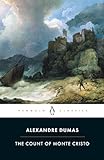
Edmond Dantès is wrongly imprisoned, escapes after fourteen years, acquires a vast fortune, and returns to Paris as the mysterious Count of Monte Cristo to execute a perfectly planned revenge on those who destroyed his life. Dumas's epic is the greatest revenge story ever told — intricate, theatrical, and utterly compelling.
A spectral hound haunts the Baskerville family across the Dartmoor moors, and when the new baronet arrives to claim his inheritance, Holmes sends Watson ahead while working in secret. Conan Doyle's masterpiece fuses gothic atmosphere with rigorous detective logic into the most complete and satisfying Holmes story.
Two young men have invented fictional alter egos to escape social obligations — Jack Worthing has invented 'Ernest' in town, and Algernon Moncrieff has invented a sickly friend 'Bunbury' in the country. Wilde's masterpiece of comic drama is the funniest play in the English language, a vehicle for some of the most memorable epigrams ever written, and beneath the surface glitter a perfectly constructed satire of Victorian earnestness, sincerity, and the institution of marriage.