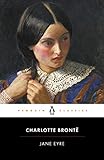
Editors Reads Verdict
One of the great novels in the English language — a gothic romance, a bildungsroman, and a declaration of women's moral and spiritual equality delivered with such force and intimacy that it feels personal even now.
What We Loved
- Jane's first-person voice is one of the most distinctive and compelling in all of English fiction — direct, fierce, and morally serious
- The novel's structure is immaculate: each section of Jane's life has its own texture and emotional logic
- The romance between Jane and Rochester is genuinely complex — built on conflict, equality, and mutual challenge rather than simple attraction
Minor Drawbacks
- The treatment of Bertha Mason, Rochester's Creole wife, reflects Victorian racial attitudes that later critics, most notably Jean Rhys in Wide Sargasso Sea, have rightly interrogated
- The St John Rivers section, while thematically necessary, loses some narrative momentum after the Thornfield climax
Key Takeaways
- → Inner worth is not contingent on beauty, wealth, or social position — Jane insists on this in the face of every pressure that says otherwise
- → Moral integrity requires the willingness to walk away from what you most want — Jane's departure from Thornfield is the novel's moral centre
- → Love built on inequality — financial, social, or physical — is unstable; the novel's resolution requires Rochester to be levelled before the marriage can work
- → Brontë's use of the direct address — 'Reader, I married him' — collapses the distance between narrator and audience in a way that had almost no precedent
| Author | Charlotte Brontë |
|---|---|
| Publisher | Penguin Classics |
| Pages | 507 |
| Published | October 16, 1847 |
| Language | English |
| Genre | Classic Fiction, Romance, Gothic Fiction |
How Jane Eyre Compares
Jane Eyre at a glance against 3 similar books readers weigh alongside it.
| Book | Author | Rating | Best for |
|---|---|---|---|
| Jane Eyre (this book) | Charlotte Brontë | ★ 4.8 | Classic Fiction |
| Alice's Adventures in Wonderland | Lewis Carroll | ★ 4.8 | Classic Fiction |
| The Time Machine | H.G. Wells | ★ 4.6 | Science Fiction |
| Twenty Thousand Leagues Under the Sea | Jules Verne | ★ 4.6 | Science Fiction |
Jane Eyre Review
Charlotte Brontë published Jane Eyre in October 1847 under the pseudonym Currer Bell, and its immediate success was driven by the shock of its narrator’s voice. Victorian readers had not encountered a heroine quite like Jane — not beautiful, not wealthy, not self-effacing, and entirely unwilling to pretend that her inner life was smaller or less important than the men around her. The novel opens a direct line between Jane and the reader that feels, even now, like a hand gripping your arm.
The structure moves Jane through five distinct environments — Gateshead, Lowood School, Thornfield Hall, Moor House, and Ferndean — each of which tests a different aspect of her character. Brontë is meticulous about this: every location is both a physical place and a moral crucible. Lowood strips away privilege and tests endurance; Thornfield offers love and tests integrity; Moor House offers security and tests independence. Jane survives each test by refusing to compromise the thing she knows herself to be.
The romance at the novel’s heart is more complicated than its reputation as a love story suggests. Rochester is difficult, manipulative, and ethically compromised — he tries to commit bigamy and expects Jane’s love to absolve him of the consequences. Jane refuses this. Her departure from Thornfield in the rain, knowing it may destroy her, is the moral climax of the novel and one of the most quietly radical acts in Victorian fiction.
The famous final line — “Reader, I married him” — is often quoted for its intimacy, but its structure is equally important: Jane is the grammatical subject, Rochester the object. Brontë has her heroine do the choosing. That small grammatical fact is the whole novel in miniature, and 175 years on it still lands with force.
The Voice That Changed Fiction
What made Jane Eyre a sensation in 1847 — and what keeps it alive — is the first-person voice. Before Brontë, the heroine of a novel was typically observed from a sympathetic distance; Jane is not observed but heard, narrating her own life with an urgency that refuses the reader any comfortable remove. The famous direct addresses, of which “Reader, I married him” is only the most quoted, collapse the wall between narrator and audience, turning the novel into something closer to confession or testimony. Brontë’s contemporaries found this voice almost indecent in its frankness — a plain governess insisting, at length, on the absolute value of her own feeling. The scandal was the point: Jane claims the right to a rich interior life that her society reserved for men and for the beautiful, and she claims it in prose of such directness that nearly two centuries of imitation have not dulled it.
Lowood and the Making of Jane
The early Lowood section is the novel’s moral foundation, and also its most autobiographical. Brontë drew on her own experience at the Clergy Daughters’ School at Cowan Bridge, where two of her sisters died of conditions worsened by the school’s privations; the hypocritical, cruel Mr Brocklehurst is a barely disguised portrait of its founder. In Helen Burns — Jane’s saintly friend who endures injustice with Christian patience — Brontë creates a foil the novel both honours and rejects. Jane loves Helen but cannot be her: where Helen submits, Jane resists, and the book sides quietly with resistance. The lesson Jane carries out of Lowood is not Helen’s forgiveness but a harder thing — the conviction that she may love and be loved without surrendering her sense of her own worth.
Bertha Mason and the Novel’s Shadow
No honest account of Jane Eyre can ignore Bertha Mason, the “madwoman in the attic” whose existence the novel treats as Rochester’s tragic burden rather than her own. Bertha — a Creole woman from Jamaica, locked away and dehumanised — is the figure through whom modern readers register the novel’s limits. Sandra Gilbert and Susan Gubar made her the emblem of Victorian women’s suppressed rage; Jean Rhys, in Wide Sargasso Sea (1966), gave her back a name, a history, and a voice, rewriting Brontë’s villain as a colonial victim. To read Jane Eyre now is to read it double: as one of the great emancipatory texts for its heroine, and as a book whose emancipation does not extend to the woman in the attic. That tension is not a reason to dismiss the novel but part of why it remains so productive to argue with.
A Marriage of Equals
The resolution is the novel’s most radical gesture. Jane returns to Rochester only after he has been maimed and blinded by the fire that kills Bertha — only, that is, after the financial, physical, and moral inequalities between them have been levelled. Critics have long debated whether this is liberation or a kind of punishment, but Brontë’s logic is consistent: the love offered at Thornfield was built on Rochester’s power over Jane, and it could not stand. The marriage at Ferndean works because Jane comes to it as an independent woman of means, choosing freely. “Reader, I married him” places her in the grammatical position of the one who acts, and the whole novel has been arguing for her right to occupy it.
A Heroine Who Refuses to Be Small
Brontë’s most quietly revolutionary choice was to make Jane plain. The novel insists, repeatedly, that its heroine is small, pale, and unremarkable to look at — and then insists, with equal force, that none of this diminishes her claim to a full emotional and moral life. “Do you think I am an automaton? — a machine without feelings?” Jane demands of Rochester. “Do you think, because I am poor, obscure, plain, and little, I am soulless and heartless?” It is one of the most quoted passages in Victorian fiction because it states the book’s whole argument in a breath: that interior worth owes nothing to the external markers — beauty, money, rank — by which the world measures women. A century and a half of heroines valued for their minds rather than their faces trace back to this insistence.
Our rating: 4.8/5 — One of the supreme novels in English: a gothic romance, a bildungsroman, and a ferocious declaration of a woman’s moral and spiritual equality, delivered in a first-person voice that still feels like a hand gripping your arm.
Reading Guides
- Books Like Jane Eyre: 11 Gothic Romances and Feminist Classics
- Books Like Great Expectations: Class, Self-Invention, and the Education of Pip
- Books Like Middlemarch: Provincial Life, Moral Ambition, and the Web of Society
- Books Like Rebecca: Gothic Suspense, Obsession, and the Shadow of the Past
- Books Like Wuthering Heights: Wild Love, Obsession, and the Gothic Moors
- Books Like Pride and Prejudice: 11 Novels With Wit, Romance, and Sharp Social Eyes
- Pride and Prejudice vs Jane Eyre: Which Classic Should You Read First?
Frequently Asked Questions
What is "Jane Eyre" about?
Jane Eyre — orphaned, plain, passionate, and morally unyielding — survives a punishing childhood to become governess at Thornfield Hall, where she falls in love with the fierce, sardonic Mr Rochester, whose dark secret haunts the upper floors. Brontë's first-person novel, with its direct, confrontational address to the reader and its heroine's ferocious insistence on her own inner worth, fundamentally changed what heroines in fiction were permitted to be.
What are the key takeaways from "Jane Eyre"?
Inner worth is not contingent on beauty, wealth, or social position — Jane insists on this in the face of every pressure that says otherwise Moral integrity requires the willingness to walk away from what you most want — Jane's departure from Thornfield is the novel's moral centre Love built on inequality — financial, social, or physical — is unstable; the novel's resolution requires Rochester to be levelled before the marriage can work Brontë's use of the direct address — 'Reader, I married him' — collapses the distance between narrator and audience in a way that had almost no precedent
Is "Jane Eyre" worth reading?
One of the great novels in the English language — a gothic romance, a bildungsroman, and a declaration of women's moral and spiritual equality delivered with such force and intimacy that it feels personal even now.
Ready to Read Jane Eyre?
Check the current price on Amazon.
Check Price on Amazon (paid link)Prices and availability are subject to change. See Amazon for current price.
Review last updated: