Books Like Jane Eyre: 11 Gothic Feminist Romances
If Jane Eyre's fierce moral independence and gothic atmosphere gripped you, these novels capture the same passion, darkness, and refusal to compromise.

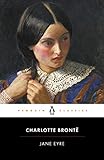
Charlotte Brontë published Jane Eyre in 1847 and changed what a novel could do with a woman’s inner life. Jane is an orphan, a governess, a person of no social consequence — and the most morally certain character in the book. Her love for Edward Rochester is genuine and fierce, but when she discovers the secret he has kept from her, she refuses to compromise herself for it. “I would always rather be happy than dignified,” she says, but when dignity and happiness conflict, she chooses dignity and walks out into the moors alone. The famous line — “Reader, I married him” — is not a capitulation. It is Jane, having made herself whole without Rochester, choosing to return to him on her own terms.
What makes Jane Eyre endure is the combination of elements it holds in tension: the gothic atmosphere of Thornfield Hall, with its locked room and midnight laughter and the fire that changes everything; the romance built on intellectual equality between two people who genuinely surprise each other; and Jane’s fierce insistence on her own value in a world that has given her every reason to believe she has none. The books below share some or all of these qualities — the dark house, the morally complex heroine, the love story that refuses easy sentiment, the sense that passion and principle might not be enemies after all.
When readers describe a novel as having “Jane Eyre energy,” they usually mean a specific combination: a heroine who cannot be bought or flattered into betraying herself, a romance with real intellectual charge, and an atmosphere that makes the ordinary world feel charged with concealed meaning. That combination is rarer than it should be. The eleven books below come closest to delivering it.
The Gothic House and Its Secrets
#1 — Rebecca by Daphne du Maurier
A nameless young woman marries the wealthy, remote Maxim de Winter and goes to live at Manderley, his great estate on the Cornish coast. But Manderley belongs to Rebecca — Maxim’s first wife, dead before the novel begins — and the housekeeper Mrs. Danvers tends that memory with a devotion bordering on obsession. Du Maurier’s 1938 novel is the most direct heir to Jane Eyre in English fiction: the dark house, the brooding master, the second woman trying to live inside the shadow of the first. The difference is that du Maurier refuses to let the house be merely atmospheric — Manderley itself is the antagonist, and the revelation of what happened to Rebecca is darker and more morally complicated than anything in Brontë.
#2 — Wuthering Heights by Emily Brontë
Where Jane Eyre is about passion disciplined by moral principle, Wuthering Heights is about passion consuming everything in its path. Heathcliff and Catherine are not a romance to admire — they are a catastrophe that unfolds across generations, destroying everyone near them. Emily Brontë’s only novel was published the same year as Jane Eyre and is arguably the stranger and more radical work: a love story with no redemption, a gothic novel without a house you would want to live in, a portrait of obsession as its own form of integrity. Readers who found Rochester too quickly reformed will find Heathcliff refuses any such consolation.
#3 — Atonement by Ian McEwan
In 1935, thirteen-year-old Briony Tallis misreads what she sees in the gardens of her family’s English country house and makes an accusation that destroys two lives. The novel moves through the war years and into old age, following the consequences of that single act of misreading. McEwan uses the country house with the same precision Brontë used Thornfield Hall — as a social world whose surfaces conceal enormous violence — and the novel’s treatment of class, desire, and the stories we tell to make ourselves bearable is as morally serious as anything in Victorian fiction. The ending is one of the most discussed in contemporary British literature.
Victorian Heroines Who Would Not Be Managed
#4 — North and South by Elizabeth Gaskell
Margaret Hale moves from rural southern England to the industrial north when her father leaves the Church of England, and there she meets John Thornton, a mill owner whose values and manner she finds repellent. Gaskell’s 1855 novel is the closest Victorian counterpart to Jane Eyre: a heroine of strong opinions and limited means, a hero who is more complex than he first appears, and a central relationship built on argument as much as attraction. Where Brontë’s romance takes place in an isolated house, Gaskell sets hers against the backdrop of industrial labour disputes, giving Margaret’s moral convictions a political dimension Jane Eyre’s never quite had.
#5 — The Tenant of Wildfell Hall by Anne Brontë
A mysterious woman arrives at the ruined Wildfell Hall with a young son and refuses to explain her past. Gilbert Markham, the novel’s narrator, falls in love with her before he understands what she has escaped. Anne Brontë’s 1848 novel was more radical than her sisters’ work in a specific way: Helen Huntingdon does not wait for her husband to reform. She leaves him, takes her child, and supports herself — a thing Victorian law barely permitted and Victorian fiction rarely endorsed. George Moore called it the most original novel in the English language. It is, at minimum, the first English novel to make a convincing feminist argument about marriage.
#6 — Pride and Prejudice by Jane Austen
Elizabeth Bennet and Jane Eyre are the two great heroines of the English novel precisely because they share a quality that should not be as rare as it is: the refusal to be flattered out of their own judgments. Austen published Pride and Prejudice in 1813, three decades before Brontë, but the two novels are in permanent conversation. Austen’s comedy of manners and Brontë’s gothic romance reach the same conclusion: that a woman who knows her own mind is more compelling — and ultimately more rewarded — than one who accommodates herself to what men want her to be. If Jane Eyre’s passion is what you love, Pride and Prejudice is where Austen conducts the same argument in a major key.
#7 — Sense and Sensibility by Jane Austen
Where Pride and Prejudice is broadly triumphant, Sense and Sensibility is harder and more honest about the costs women paid for having feelings in public. Marianne Dashwood’s passionate nature makes her vulnerable to a man who exploits it; her sister Elinor’s disciplined self-concealment is its own kind of suffering. Austen is not endorsing Elinor’s repression — she is demonstrating the impossible choice. The novel has more in common with Jane Eyre than it might initially seem: both are about women who must navigate between the legitimate demands of feeling and the social world’s indifference to those demands.
Feminist Retellings and Literary Companions
#8 — Wide Sargasso Sea by Jean Rhys
This is not optional reading for anyone who has loved Jane Eyre. Jean Rhys’s 1966 novel gives voice to Bertha Mason — the woman Rochester locked in the attic, the “madwoman” whose existence Jane never fully understood. Rhys names her Antoinette Cosway, gives her a childhood in Jamaica, a mother whose madness was partly a response to colonial violence, and a marriage to Rochester that the novel renders as its own kind of imprisonment. The novel is short, hallucinatory, and devastating. It does not replace Jane Eyre — it completes it, filling the silence at the centre of the original with a story Brontë could not or would not tell.
#9 — Villette by Charlotte Brontë
Brontë’s final completed novel, published in 1853, is by most critical accounts her greatest. Lucy Snowe travels to the fictional city of Villette to become a teacher in a girls’ school, and the novel follows her interior life — her loneliness, her suppressed passion, her refusal to sentimentalise her own situation — with a psychological honesty that goes beyond anything in Jane Eyre. Lucy is a harder, more self-aware narrator than Jane, and the novel is less consoling: Brontë originally intended an unhappy ending, and the one she kept is ambiguous enough that readers argue about it still. Essential reading for anyone who wants to understand what Brontë was capable of.
Dark Passion Across Time
#10 — A Gentleman in Moscow by Amor Towles
Count Alexander Rostov is sentenced to house arrest in Moscow’s Metropol Hotel in 1922 and will spend the next thirty years there while the Soviet Union transforms around him. Towles’s novel shares less surface with Jane Eyre than the others on this list, but it belongs here because of what it shares underneath: a confined protagonist whose interior life is larger than the space assigned to them, a slow-building love story with genuine intellectual charge, and a commitment to the idea that character — not circumstance — determines how a life is lived. The prose is as elegant as the Count himself. Readers who loved Jane’s self-possession will recognise Alexander’s.
#11 — The Name of the Rose by Umberto Eco
A medieval Italian monastery, a series of inexplicable deaths, a labyrinthine library at the centre of a theological murder mystery. Eco’s 1980 novel is not a romance, but it is one of the great gothic novels in any language: the dark, rule-bound institution concealing a terrible secret; the detective figure who brings reason to bear on the irrational; the sense that knowledge itself might be dangerous. Readers who love the atmospheric weight of Jane Eyre — the sense of Thornfield Hall as a place where terrible things are happening just out of sight — will find that same quality saturating every corridor of Eco’s abbey.
How to Choose Your Next Read
If you want the most direct Jane Eyre successor: Rebecca by Daphne du Maurier — the gothic house, the brooding husband, the second wife in the first wife’s shadow.
If you want the most important companion novel: Wide Sargasso Sea by Jean Rhys — read it immediately after Jane Eyre and then go back and reread the original.
If you want the darkest version of the gothic romance: Wuthering Heights by Emily Brontë — passion with no redemption arc and no comfortable resolution.
If you want the strongest feminist argument in Victorian fiction: The Tenant of Wildfell Hall by Anne Brontë — the sister who went furthest.
If you want more of Charlotte Brontë herself: Villette — harder and more psychologically honest than Jane Eyre, and arguably her masterpiece.
If you want Victorian romance with social conscience: North and South by Elizabeth Gaskell or either Austen novel, depending on whether you want comedy or cost.
Pride and Prejudice vs Jane Eyre
For a direct comparison of Austen and Brontë’s two landmark novels — romantic philosophy, heroines, and which to read first — see our Pride and Prejudice vs Jane Eyre guide.
For the Best Fiction Books
For the definitive guide to fiction — the greatest novels across literary fiction, classics, and contemporary writing — see our Best Fiction Books of All Time list.
Affiliate disclosure: Links to Amazon on this page are affiliate links. We earn a small commission at no extra cost to you. This does not influence our editorial recommendations.
Frequently Asked Questions
Is Jane Eyre a romance novel?
Jane Eyre is the template for literary romance as a genre. Published in 1847, it established the conventions that define romantic fiction to this day: the brooding, secretive hero; the plain but morally formidable heroine; the dark house concealing a terrible secret; the romance built on intellectual equality rather than social convention. When readers and writers talk about the 'classic romance,' they are almost always describing something that traces back to Charlotte Brontë's novel, whether they know it or not.
What is Wide Sargasso Sea and how does it relate to Jane Eyre?
Wide Sargasso Sea by Jean Rhys, published in 1966, retells Jane Eyre from the perspective of Bertha Mason — the 'madwoman in the attic' whom Rochester imprisoned at Thornfield Hall. Rhys gives Bertha a name (Antoinette Cosway), a Caribbean childhood, and a voice that Rochester's account had suppressed. It is one of the most celebrated postcolonial novels in English and a powerful act of literary reclamation. Reading it after Jane Eyre transforms how the original novel reads.
What other gothic novels have the same dark country-house atmosphere as Jane Eyre?
The closest in atmosphere are Rebecca by Daphne du Maurier, which transplants the Thornfield Hall dynamic into 1930s Cornwall with a new bride haunted by her husband's first wife, and The Turn of the Screw by Henry James, which places a governess figure in an isolated house with sinister secrets. Among more recent novels, Atonement by Ian McEwan captures the English country house as a site of misreading and irreversible consequence, while The Name of the Rose by Umberto Eco brings gothic atmosphere to a medieval monastery.
Who should I read after Charlotte Brontë?
Start with Emily Brontë's Wuthering Heights for the darkest version of the gothic romance, then Anne Brontë's The Tenant of Wildfell Hall for the most radical feminist argument of the three sisters. For Victorian contemporaries, Elizabeth Gaskell's North and South is the closest in spirit to Jane Eyre — a working heroine, a difficult hero, and a romance that earns its resolution. Charlotte Brontë's own Villette is considered by many critics to be her most psychologically complex novel, more unsettling than Jane Eyre and more honest about the limits of what a woman could hope for.