ACOTAR vs Fourth Wing: Which to Read First?
A Court of Thorns and Roses vs Fourth Wing — fae courts against dragon-riders. We compare both series on world-building, romance, pacing, and who each is really for.
Two fantasy romance series dominate every bookshop display, every romantasy reading list, and a substantial fraction of BookTok: A Court of Thorns and Roses by Sarah J. Maas and Fourth Wing by Rebecca Yarros. Both have sold millions of copies. Both have spawned devoted fanbases prepared to defend them at length on any platform that allows text. And both get recommended to the same reader so consistently that the question is no longer whether to read them — it is which to read first, and why.
This comparison does not declare a winner by arbitrary category tallying. Both series are doing what they set out to do, and doing it well. The question worth answering is what each actually delivers, where they differ in meaningful ways, and which is right for you at this particular moment in your reading life.
Quick Comparison
| A Court of Thorns and Roses | Fourth Wing | |
|---|---|---|
| Author | Sarah J. Maas | Rebecca Yarros |
| Setting | Fae courts, Prythian | Dragon-rider war college |
| Protagonist | Feyre Archeron | Violet Sorrengail |
| Romance Style | Slow burn, tortured, emotionally complex | Fast-igniting, electric, explicit |
| Pacing | Patient in book 1, explosive from book 2 | Immediate and sustained throughout |
| Series Length | 5 books (+ 6th forthcoming) | 5 planned (2 published) |
| Heat Level | Moderate book 1, high from book 2 | High throughout |
| Best For | Depth, mythology, emotional complexity | Momentum, heat, dragon combat |
A Court of Thorns and Roses: What Makes It Work
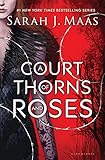
A Court of Thorns and Roses begins as something close to a Beauty and the Beast retelling — a mortal girl named Feyre Archeron kills a wolf in the forest, is seized by a fearsome fae lord named Tamlin as punishment, and is brought to a land of immortal beings living under a curse she does not yet understand. The setup is familiar. The world is not.
Sarah J. Maas has been constructing the mythology of Prythian for years, and even in the first book — before the series reveals how intricate and politically sophisticated its world actually is — you can feel the architecture underneath. The fae of Prythian are not elves or fairies in any conventional sense. They are ancient, amoral, beautiful, and genuinely dangerous in ways that the best fantasy romance requires: dangerous to Feyre’s survival, dangerous to her sense of self, and dangerous to whatever part of her is beginning to want to stay. The curse structure of the first book is an elegant piece of world-building because it creates mystery without arbitrary withholding — the rules of what the curse requires and why matter, and discovering them changes your understanding of everything that came before.
The romance in the first book is a slow burn, and intentionally so. Tamlin is designed to be compelling in a way that a later book quietly and deliberately complicates — a choice Maas makes with enough craft that it reads as a narrative move rather than a retcon. The tension between Feyre and Tamlin across the first book is atmospheric and well-paced, built on proximity, negotiated trust, and the particular charge of a relationship between people who are supposed to be adversaries.
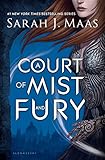
What makes ACOTAR exceptional, though, is not the first book. It is A Court of Mist and Fury. The second book is a different and significantly more ambitious novel — emotionally complex, structurally confident, and willing to interrogate the first book’s romantic premise in ways that require rereading the earlier chapters with new eyes. The character of Rhysand, barely more than a villain in the first book, becomes one of the most fully realized romantic leads in modern fantasy fiction. The Night Court world-building is some of the most imaginative in the genre. And the emotional arc Feyre travels — from the aftermath of the first book’s trauma to discovering a self she did not know she had — is the kind of writing that earns the word “transformative” without irony.
The series asks for patience in the first book and rewards it with compound interest in the second. That is a legitimate structural choice, and knowing it going in changes the reading experience of book one.
Fourth Wing: What Makes It Work
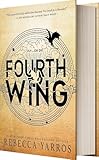
Fourth Wing opens at a run and does not stop. Violet Sorrengail arrives at Basgiath War College’s Riders Quadrant expecting to die — she was born with fragile bones unsuited to dragon-rider training, and her mother, the commanding general, has sent her there anyway. The first chapter establishes the stakes, the physical jeopardy, and the central antagonist-turned-love-interest Xaden Riorson with an efficiency Yarros has clearly thought hard about. By the end of the first act, a dragon has chosen Violet, the romance has declared itself in the most combustible way possible, and you understand exactly what kind of book this is.
Rebecca Yarros comes from military romance and new adult fiction, and those origins show in the best sense. She understands pacing as a craft tool with an instinctiveness that pure fantasy writers often lack. Fourth Wing never lets you settle into a scene long enough to disengage; something is always about to change, someone is always about to say the thing they have been not saying, and the combat sequences are choreographed with spatial clarity that dragon battles at altitude actually require. The world-building is functional rather than atmospheric — designed to support the plot rather than exceed it — and that keeps the book in constant forward motion.
The romance between Violet and Xaden is the kind that gets screenshots shared across social media because specific lines are worth sharing individually. Yarros writes desire with directness and without the apologetic hedging that mars a lot of fantasy romance. The enemies-to-lovers dynamic is not drawn out past its welcome; the tension is earned and paid off at a rate that respects the reader’s intelligence without undercutting the anticipation. The heat level is high from an early point in the book, and the chemistry is specific to these two characters rather than interchangeable with any other pairing.
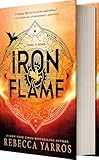
Iron Flame, the second book, is an 800-page commitment that expands the world significantly and raises the stakes in ways the first book’s mysteries were building toward. The revelations in Iron Flame about the nature of Violet’s world are genuinely surprising, and Yarros handles the payoff with more craft than most authors manage when closing out a first-book setup. The romance deepens in proportion to the plot’s increased complexity. Readers who found the Basgiath world thin in the first book will find Iron Flame answers many of those concerns.
Key Differences
World-Building Approach. Maas builds her world laterally — she reveals Prythian’s politics, history, and internal logic gradually and across multiple books, and the world consistently turns out to be more complex than it first appeared. Yarros builds her world vertically: the war college, the dragon bond mechanics, and the political conflict between the Navarre establishment and Xaden’s rebel faction are established quickly because the plot needs them operational immediately. Maas rewards patience and rereading. Yarros rewards forward momentum. Both approaches are valid; they produce fundamentally different reading experiences.
Romance Heat Level. Both series are explicitly romantic and earn the “romantasy” label unambiguously. Fourth Wing operates at a higher heat level from an earlier point in the narrative; the first book is more explicit than ACOTAR’s first book by a significant margin. A Court of Mist and Fury matches and probably exceeds it in terms of emotional and physical intensity, but that is the second book. If you need the romance fully operational from page one, Fourth Wing delivers it. If you prefer a romance built toward and earned across a longer structure, ACOTAR’s arc is more satisfying.
Pacing and Tone. Fourth Wing is a fast book that trusts the reader to keep up. A Court of Thorns and Roses is a measured book that earns its momentum over time. The college setting creates a natural episodic structure — trials, combat training, political conflicts between factions — that generates consistent forward propulsion. ACOTAR’s fairy-tale structure is more traditional and takes longer to establish its strongest material. If you read a hundred pages of the first ACOTAR book and are not hooked, give it to A Court of Mist and Fury before making a final judgment.
Writing Style. Maas and Yarros have genuinely different prose voices. Maas writes with more literary self-consciousness — her descriptive passages in the Night Court sequences of A Court of Mist and Fury have a density and intentionality that goes beyond scene-setting. Yarros writes with more conversational directness; her narration is snappier, her dialogue crackles, and she prioritises clarity of action over atmospheric elaboration. Readers who value prose texture will find more to admire in Maas. Readers who value readability and momentum will find Yarros more consistently satisfying.
Series Commitment Required. Both series are long. The ACOTAR series currently spans five substantial novels and is expanding. The Yarros series is planned for five books with two published. Picking up either series is a commitment measured in weeks of reading time. Both series are structured so that book one functions as a complete arc — you can make a decision about continuing after each entry without being stranded mid-story. But the full argument of each series only becomes visible several books in.
Who Should Read Which
Start with ACOTAR if: you are drawn to fae mythology and high fantasy world-building; you want a series whose full arc you can read now rather than waiting for future installments; you are willing to invest in a slower first book in exchange for what the second delivers; or you want the romance embedded in politically complex stakes where the fantasy and the relationship are genuinely interdependent.
Start with Fourth Wing if: you want immediate pace and momentum from the first chapter; you prefer military and tactical fantasy settings over court intrigue; you want a higher average heat level without waiting for book two; or you are newer to romantasy and want a book that does not require patience to access its major pleasures.
The honest recommendation for most readers: read both, and if you are starting from zero, start with Fourth Wing. The reason is not that it is the better series — the ACOTAR series has the more fully realized mythology and its best book, A Court of Mist and Fury, operates at a higher level of ambition than anything currently published in the Empyrean series. The reason is that Fourth Wing is the more immediately legible book. It explains its world clearly, establishes its romance fast, and delivers its major pleasures quickly. For a reader building their tolerance for the romantasy register — the elevated emotional stakes, the explicit romance alongside serious worldbuilding — Fourth Wing is the more welcoming entry point.
Once you have finished Fourth Wing and confirmed you are committed to the genre, A Court of Thorns and Roses gives you a richer and ultimately more emotionally complex experience. Go in knowing that the first book is the weakest entry and that A Court of Mist and Fury is where the series reaches its full potential.
The Case for A Court of Mist and Fury
Any honest comparison of ACOTAR and Fourth Wing has to acknowledge that it is slightly unfair to Maas. The book being compared to Fourth Wing is not the series’ best entry. A Court of Mist and Fury is the novel that built the ACOTAR fandom into what it is, and it operates at a higher level of ambition and emotional complexity than either the first ACOTAR book or Fourth Wing. If you want to compare the best each series currently has to offer, you are comparing A Court of Mist and Fury against Fourth Wing and Iron Flame together — and that is a closer contest than the series openers suggest.
The pivot in ACOTAR between book one and book two is one of the more striking examples in recent popular fiction of a series finding its real subject midway through. Book one is a fairy tale. Book two is a study in trauma, recovery, and the question of what love actually looks like as opposed to what it looks like performing itself. That distinction — between love as possession and love as recognition — is the emotional core of the entire ACOTAR series, and Maas articulates it through plot rather than theme statement. It is better than it has to be.
What to Read After Both Series
Once you are committed to romantasy and have finished both series, the reading map opens considerably.
From Blood and Ash by Jennifer L. Armentrout is the most frequently recommended next read for ACOTAR fans — it shares the slow-burn tension, the hidden-truth-about-the-protagonist structure, and the fae-adjacent world-building. The Crescent City series by Sarah J. Maas extends the ACOTAR world into a contemporary fantasy setting and eventually connects to Prythian’s mythology directly.
For readers who want more of what Yarros does — military academy setting, competent female protagonist in a dangerous institutional hierarchy, explicit romance with tactical combat — the Empyrean series continues with further books. The Plated Prisoner series by Raven Kennedy offers court-based fantasy romance in the ACOTAR vein with its own original mythology.
For readers ready to move toward fantasy with less romance foregrounding, Brandon Sanderson’s The Way of Kings offers the most sophisticated world-building in contemporary epic fantasy. If the dragon element was your primary hook, Anne McCaffrey’s Dragonflight is the foundational dragon-rider text that Yarros is explicitly building on and in conversation with.
Frequently Asked Questions
Is ACOTAR better than Fourth Wing?
They are excellent at different things. ACOTAR has richer world-building, a more fully realized mythology, and a series that builds impressively across five books — A Court of Mist and Fury in particular is considered one of the finest fantasy romance novels written. Fourth Wing has tighter pacing, higher heat from the first page, and more immediate momentum. Most readers who love one end up reading both. If you want depth and mythology, start with ACOTAR. If you want breathless forward momentum and dragon-riders, start with Fourth Wing.
How explicit is ACOTAR compared to Fourth Wing?
Both are explicit adult romantasy. Fourth Wing is more consistently explicit from the first book, maintaining a high heat level throughout. ACOTAR varies significantly by entry: the first book is relatively restrained while A Court of Mist and Fury and later entries are considerably more explicit. Neither series is appropriate for younger readers despite sometimes appearing in the same bookshop sections as YA.
Do I need to read the whole ACOTAR series?
You can stop after the first book — it has a complete arc. But most readers find that A Court of Mist and Fury is a different and better novel than its predecessor, and many who were lukewarm on the first book became devoted to the series after the second. If you enjoy the first book at all, continue. The series substantially earns its length.
How long is the series commitment for each?
ACOTAR is five main novels averaging around 600 pages each, with a sixth forthcoming. The Empyrean series is planned for five books with two published, running even longer — Iron Flame exceeds 800 pages. Both series are multi-year commitments if you read all available entries. Both also offer natural stopping points after each book.
What should I read after ACOTAR and Fourth Wing?
From Blood and Ash by Jennifer L. Armentrout is the most recommended next step for ACOTAR readers. The Crescent City series by Sarah J. Maas extends the world. For readers whose hook was specifically the dragon-rider setting, Anne McCaffrey’s Dragonflight is essential reading — it is the foundational text of the entire dragon-rider subgenre and makes Fourth Wing’s ambitions fully legible.
The ACOTAR Series in Order
For all six ACOTAR novels in the correct reading sequence, see our A Court of Thorns and Roses Books in Order guide.
For the Best Romantasy Books
For the definitive guide to the romantasy genre — from Maas and Yarros to the best independent titles — see our Best Romantasy Books list.
Affiliate disclosure: Links on this site are affiliate links. We earn a small commission at no extra cost to you. This does not influence our editorial recommendations.
Frequently Asked Questions
Is ACOTAR better than Fourth Wing?
They are excellent at different things. ACOTAR's world-building is richer and more layered — Sarah J. Maas has been building Prythian's fae mythology for over a decade, and the emotional complexity deepens significantly across the series. Fourth Wing is the more immediately propulsive read: Yarros's dragon-rider world is designed for maximum momentum, the romance is hotter from the first chapter, and the combat sequences are among the best in the genre. Readers who want depth and slow burn should start with ACOTAR. Readers who want to be swept away fast should start with Fourth Wing.
How explicit is ACOTAR compared to Fourth Wing?
Both series are explicit, but Fourth Wing is more consistently so from the first book. ACOTAR builds toward its steamier content across the series and becomes significantly more explicit by A Court of Mist and Fury. Fourth Wing opens with heat early and maintains that level throughout. Neither is appropriate for younger readers — both are firmly adult romantasy, despite ACOTAR's early YA-adjacent marketing. If explicit content is a concern, ACOTAR's first book is actually the more restrained of the two series starters.
Do I need to read the whole ACOTAR series, or is the first book a standalone?
The first book functions as a complete story with a satisfying resolution, but reading only it means missing the best the series has to offer. A Court of Mist and Fury is widely considered one of the finest fantasy romance novels written — it is a different, deeper, and more emotionally complex book than the first, and many readers who found ACOTAR enjoyable but not exceptional were completely undone by its sequel. If you read the first book and like it at all, continue. The series earns its length.
How long is the series commitment for each?
ACOTAR currently spans five main novels — A Court of Thorns and Roses, A Court of Mist and Fury, A Court of Wings and Ruin, A Court of Frost and Starlight, and A Court of Silver Flames — plus a sixth book forthcoming. Fourth Wing is planned as a five-book series by Rebecca Yarros, with two books currently published: Fourth Wing and Iron Flame. Both series require real time investment, but ACOTAR books average around 600 pages each while Yarros's books run even longer — Iron Flame is over 800 pages.
What should I read after ACOTAR and Fourth Wing?
After both series, the most natural next reads within romantasy are From Blood and Ash by Jennifer L. Armentrout — which shares ACOTAR's fae-adjacent world-building and slow-burn tension — and The Bridge Kingdom series by Danielle L. Jensen for political intrigue with romance. For readers ready to move into fantasy without the romance foregrounding, Brandon Sanderson's The Way of Kings offers the most sophisticated world-building in contemporary epic fantasy. If the dragon element of Fourth Wing was the hook, Anne McCaffrey's Dragonflight is the foundational dragon-rider text that Yarros builds on.