1984 vs Brave New World: Which to Read First?
Two novels, two visions of how the world ends — not with a bang but with a boot or a soma tablet. Here is how to read them, in what order, and why both still matter.
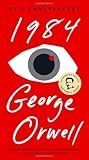
The two most important dystopian novels ever written were published fourteen years apart — Aldous Huxley’s Brave New World in 1932, 1984 by George Orwell in 1949 — and they disagree about almost everything. Not about whether civilization is at risk. About how it ends, and whether the ending will look like horror or like happiness.
Orwell’s vision is the one we recognize as dystopian on first contact: jackboots, surveillance cameras, the torture chamber, the memory hole, the face of Big Brother. Power in Oceania is naked, brutal, and deliberate. It wants you to suffer, because suffering is how it knows it exists.
Huxley’s vision is stranger and, many readers find, more disturbing precisely because it does not look like oppression at all. The World State in Brave New World does not torture its citizens. It entertains them. It drugs them. It conditions them from birth to love their servitude. The boot on the face has been replaced by a soma tablet and a comfortable chair, and nobody is asking to leave.
Together, these two novels define the poles between which most serious dystopian fiction has operated ever since. Reading them in sequence is one of the essential intellectual experiences that literature offers. This guide will help you do it in the right order, with the right context.
Quick Comparison
| 1984 | Brave New World | |
|---|---|---|
| Author | George Orwell | Aldous Huxley |
| Year | 1949 | 1932 |
| Control method | Terror, surveillance, torture | Conditioning, pleasure, soma |
| Protagonist | Winston Smith | Bernard Marx / John the Savage |
| Tone | Bleak, suffocating, relentless | Satirical, unsettling, cold |
| Length | ~300 pages | ~270 pages |
1984: What Orwell Got Right
1984 is set in Airstrip One — formerly England — a superstate locked in permanent war with two other superstates, the war itself possibly fictitious, the purpose being to consume surplus production and sustain the population in a state of permanent emergency. The Party, led by the invisible Big Brother, exercises total control through four ministries whose names are the opposite of their functions: the Ministry of Truth falsifies history, the Ministry of Peace conducts war, the Ministry of Love administers torture, the Ministry of Plenty manages scarcity.
The novel’s protagonist, Winston Smith, is a minor Party functionary whose job is to rewrite old newspaper articles to match the Party’s current position. He knows what he does is a lie. He begins, in secret, to write this down — the act of writing in a diary being itself a thought crime punishable by death.
What Orwell understood, writing in the wreckage of the Second World War with Stalin’s purges and the Spanish Civil War fresh in his mind, was the psychology of totalitarianism as distinct from its mechanics. The Party does not merely want compliance. It wants genuine belief. The interrogator O’Brien, one of literature’s most chilling antagonists, explains this directly to Winston in the Ministry of Love: the Party does not kill its enemies after converting them. It converts them first, then destroys them, because what it requires is not submission but agreement. Power is not the means to an end. Power is the end.
Orwell gave the English language the vocabulary for this understanding: doublethink, the ability to hold two contradictory beliefs simultaneously and believe both; thoughtcrime, the act of entertaining an idea the Party forbids; the memory hole, where inconvenient history is disposed of; unperson, what you become when the Party erases your existence from all records. These words have outlasted the novel’s specific political context because they describe something true about how authoritarian systems work — not as coherent ideologies but as psychological environments designed to make independent thought impossible.
Winston’s arc is devastating precisely because Orwell gives him everything a reader needs to root for him — a love story, a moment of connection, a brief experience of what freedom feels like — and then systematically destroys it all. The final line of the novel is among the most despairing in twentieth-century literature. It is not a warning so much as a clinical observation.
Brave New World: What Huxley Got Right
Brave New World opens with a tour of the Central London Hatchery and Conditioning Centre, where human beings are manufactured on assembly lines, sorted into five castes — Alphas, Betas, Gammas, Deltas, Epsilons — and conditioned from birth to love their assigned place in the social hierarchy. Epsilons are stunted with alcohol in the bottle. All children are subjected to hypnopaedia — sleep-teaching — to instil the values the World State requires: consumption, conformity, and the avoidance of anything difficult or deep.
In the World State, there is no war, no poverty, no disease, no old age, and no suffering — and no art, no religion, no literature, no genuine love, no authentic experience of any kind. Citizens take soma — a perfectly safe, mood-enhancing drug with no hangover — whenever reality becomes uncomfortable. Sexuality is casual and obligatory; monogamy is considered antisocial. Shakespeare is forbidden, not because the government fears what he might inspire, but because the emotional complexity he requires is incompatible with social stability.
The novel’s central character is Bernard Marx, an Alpha who is slightly too short and slightly too thoughtful for the World State’s comfort, and John the Savage — a man born on a Reservation (the parts of the world left outside the system) to a World State woman, raised on Shakespeare and the King James Bible, and brought back to civilization as a curiosity. John is Huxley’s lens: he sees the World State from outside, and what he sees is not freedom but a different kind of cage — one whose bars are made of pleasure.
The argument Huxley makes, which gets sharper with each decade, is that pleasure can be a more efficient form of control than pain. You do not need surveillance cameras if people voluntarily broadcast their lives. You do not need to ban books if people simply stop reading them. You do not need to torture dissidents if the conditions that produce dissent — boredom, longing, the desire for meaning — have been pharmacologically suppressed. The World State does not need Winston Smith’s Room 101. It already has what Room 101 is designed to produce: a population that has forgotten how to want anything the state cannot provide.
The Core Disagreement
In 1931, Huxley read a draft of a novel called We by the Russian writer Yevgeny Zamyatin, which had circulated in samizdat and directly influenced Orwell’s thinking about 1984. When 1984 was published, Huxley wrote Orwell a letter congratulating him and then, with characteristic politeness, explaining why he thought Orwell had the wrong dystopia.
Huxley’s argument: the rulers of the future would find it unnecessary and inefficient to use pain as their primary instrument. Pain creates martyrs. Pain creates Winston Smiths who remember what freedom felt like and write it down. A more rational tyranny would make servitude feel like pleasure, would engineer citizens to desire their own conditioning. Huxley did not think totalitarian governments were too benevolent to use violence. He thought they were too practical — that the soma method was cheaper, more stable, and more permanent.
The difference can be stated sharply: Orwell feared those who would ban books. Huxley feared a world in which no one would want to read them.
Orwell saw the danger in active suppression — censorship, propaganda, the deliberate destruction of truth. Huxley saw the danger in passive surrender — not the forced abdication of freedom but its voluntary relinquishment in exchange for entertainment, comfort, and the relief of not having to think.
Both visions have proved partially correct. The surveillance architecture Orwell described has been built — but largely by corporations rather than states, and largely with the consent of the surveilled. The entertainment culture Huxley described has been perfected — but the resulting attention economy has also enabled precisely the kind of coordinated misinformation campaigns Orwell had in mind. The two nightmares have proved not mutually exclusive but mutually reinforcing.
Which Is More Relevant Today?
The most intellectually honest answer is that 2026 has given both novelists something to point to.
Orwell’s fears look prescient in any context involving the deliberate manipulation of language and fact — the political euphemism, the viral misinformation, the state that insists its current position has always been its position. His understanding that power maintains itself partly by making people doubt their own perception of reality remains as precise as anything in political philosophy.
Huxley’s fears look prescient in any context involving attention, distraction, and the economics of engagement. The argument that a population voluntarily addicted to its devices, optimized for dopamine rather than meaning, and increasingly reluctant to tolerate the difficulty that serious art and serious politics require — is effectively controlled, whether or not anyone intended to control it — has aged better with each passing year.
Neil Postman made Huxley’s case explicitly in Amusing Ourselves to Death in 1985. His argument has, if anything, strengthened since.
What the two novels share, and what neither alone captures, is this: the machinery of control does not choose its method in advance. It uses whatever is available. In some times and places, that is the boot. In others, it is the soma. In most, it is both, applied to different parts of the population for different purposes.
Which Should You Read First?
Read 1984 first.
The case for this order: 1984 is the more emotionally immediate novel. Its story — Winston’s rebellion, his love for Julia, his brief experience of something that feels like authentic human connection, and then O’Brien — carries readers through its ideas in a way that makes the ideas felt rather than merely understood. It is also the novel that established the genre’s vocabulary. Reading it first gives you the conceptual framework that Brave New World then complicates and challenges.
Brave New World works better as a response to 1984 than the other way around. When you already know what Orwell’s dystopia looks and feels like, Huxley’s reversal — control through contentment rather than coercion — registers with full force. The World State’s horror is partly that it is so reasonable, so comfortable, so free of the cruelties that make Oceania obviously monstrous. That contrast lands harder if you’ve already spent time in Room 101.
Read Brave New World second, giving it the attention its opening chapters ask for. The first three chapters are dense with world-building, but the novel accelerates sharply once John the Savage arrives. The final act — John’s confrontation with Mustapha Mond, the World Controller, one of the best philosophical dialogues in twentieth-century fiction — rewards everything Huxley has set up.
Allow yourself time between the two books. A week is enough. Come to Brave New World with 1984’s questions still open, and let Huxley complicate your answers.
What to Read After Both
Having read both, you have internalized the genre’s foundational argument. The novels below take that argument in different directions.
Fahrenheit 451 by Ray Bradbury (1953) makes books themselves the explicit target of control — a society where firemen burn them rather than extinguish fires. Bradbury’s novel sits between the two visions: its suppression is partly Orwellian (the state actively destroys), partly Huxleyan (citizens have largely stopped caring about books before the firemen arrive). It is shorter and more lyrical than either precursor.
The Handmaid’s Tale by Margaret Atwood (1985) updates the totalitarian template to a theocratic patriarchy erected on the ruins of the United States. Where both Orwell and Huxley imagined control primarily in terms of class and political ideology, Atwood focuses it through gender. Offred’s narrative is among the most formally controlled and emotionally precise in the genre.
The Road by Cormac McCarthy (2006) works as a coda rather than a companion — it begins where the dystopias end, in a world that has already collapsed, and asks what survives. Where Orwell and Huxley are concerned with how civilizations are destroyed from within, McCarthy is concerned with what it means to carry something worth preserving through total darkness.
Station Eleven by Emily St. John Mandel (2014) offers the most genuinely hopeful response to the tradition — a post-collapse novel that insists on art, memory, and connection as the things worth rebuilding civilization around. Read it last, as a corrective.
Frequently Asked Questions
Is 1984 or Brave New World better?
There is no clean answer, and serious readers disagree. 1984 is the more emotionally devastating novel — Winston’s story hits like a fist. Brave New World is the more philosophically unsettling one, because Huxley’s dystopia is built on things people actually want: comfort, pleasure, and the absence of pain. If you want to be shaken emotionally, 1984 is better. If you want to be made uncomfortable by your own desires, Brave New World is better. Most readers who love one end up loving both.
Which dystopian novel is more prophetic about the modern world?
The honest answer in 2026 is both, in different registers. Orwell’s fears about surveillance, the manipulation of language, and the deliberate blurring of fact and fiction look prescient in an era of algorithmic misinformation and state surveillance programs. Huxley’s fears about distraction, pharmaceutical mood management, and the replacement of genuine experience with pleasant simulation look equally prescient in a world of social media, streaming, and attention economies. Neil Postman’s 1985 book Amusing Ourselves to Death argued that Huxley was winning. The intervening four decades have complicated the picture.
Is Brave New World harder to read than 1984?
Brave New World is not harder to read in terms of prose difficulty — it is actually slightly more accessible sentence by sentence than 1984. The difficulty is conceptual. Huxley introduces a lot of world-building quickly in the opening chapters — the Bokanovsky process, caste conditioning, pneumatic culture — which can be disorienting before the novel finds its characters. 1984 is more conventionally plotted from the start. Most readers find 1984 grips them faster, while Brave New World rewards the patience it asks for in its opening.
What should I read after 1984 and Brave New World?
The most essential next steps are Fahrenheit 451 by Ray Bradbury, which bridges the two visions by focusing on books themselves as the target of control, and The Handmaid’s Tale by Margaret Atwood, which updates the totalitarian template to a theocratic patriarchy with unsettling contemporary resonance. For something tonally different, The Road by Cormac McCarthy and Station Eleven by Emily St. John Mandel both explore what survives collapse rather than what causes it, and together they make a powerful companion to the classical dystopian tradition.
Books Like 1984
For dystopian novels with 1984’s political horror, surveillance state, and enduring relevance, see our Books Like 1984 guide.
Books Like Brave New World
For dystopian novels with Brave New World’s social satire, philosophical depth, and cautionary vision, see our Books Like Brave New World guide.
For the Best Dystopian Novels
For the definitive guide to dystopian fiction — from 1984 and Brave New World to contemporary dystopia — see our Best Dystopian Novels list.
More Dystopian Fiction Reading Guides
Affiliate disclosure: Links on this site are affiliate links. We earn a small commission at no extra cost to you. This does not influence our editorial recommendations.
Frequently Asked Questions
Is 1984 or Brave New World better?
There is no clean answer, and serious readers disagree. 1984 is the more emotionally devastating novel — Winston's story hits like a fist. Brave New World is the more philosophically unsettling one, because Huxley's dystopia is built on things people actually want: comfort, pleasure, and the absence of pain. If you want to be shaken emotionally, 1984 is better. If you want to be made uncomfortable by your own desires, Brave New World is better. Most readers who love one end up loving both.
Which dystopian novel is more prophetic about the modern world?
The honest answer in 2026 is both, in different registers. Orwell's fears about surveillance, the manipulation of language, and the deliberate blurring of fact and fiction look prescient in an era of algorithmic misinformation and state surveillance programs. Huxley's fears about distraction, pharmaceutical mood management, and the replacement of genuine experience with pleasant simulation look equally prescient in a world of social media, streaming, and attention economies. Neil Postman's 1985 book Amusing Ourselves to Death argued that Huxley was winning. The intervening four decades have complicated the picture.
Is Brave New World harder to read than 1984?
Brave New World is not harder to read in terms of prose difficulty — it is actually slightly more accessible sentence-by-sentence than 1984. The difficulty is conceptual. Huxley introduces a lot of world-building quickly in the opening chapters, with its Bokanovsky process, caste conditioning, and pneumatic culture, which can be disorienting before the novel finds its characters. 1984 is more conventionally plotted from the start. Most readers find 1984 grips them faster, while Brave New World rewards the patience it asks for in its opening.
What should I read after 1984 and Brave New World?
The most essential next steps are Fahrenheit 451 by Ray Bradbury, which bridges the two visions by focusing on books themselves as the target of control, and The Handmaid's Tale by Margaret Atwood, which updates the totalitarian template to a theocratic patriarchy with unsettling contemporary resonance. For something tonally different, The Road by Cormac McCarthy and Station Eleven by Emily St. John Mandel both explore what survives collapse rather than what causes it, and together they make a powerful companion to the classical dystopian tradition.
