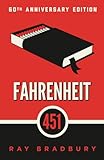
Editors Reads Verdict
Bradbury's most enduring novel is a passionate defence of literature's value — and a prescient description of a culture that chooses sensation over reflection. Written in the age of television, it speaks more directly to the age of social media, infinite content, and shortened attention spans.
What We Loved
- The prose is Bradbury's most lyrical — more poetry than conventional science fiction
- The Clarisse McClellan scenes are the novel's most original contribution to dystopian literature
- The novel's warning about media and distraction was ahead of its time and is now overdue
- The Book People ending is genuinely moving — humans as living libraries
Minor Drawbacks
- The plot is thinner than Orwell's or Huxley's equivalent dystopias
- Mildred's portrait is uncomfortably close to caricature
- The novel's ideas are stated more than shown — Bradbury tells rather than demonstrates
Key Takeaways
- → Books are not dangerous because of their content but because they create the conditions for independent thought
- → Censorship in a democracy doesn't require a state — it can emerge from cultural preference for comfort over challenge
- → Speed and stimulation are tools of control — depth and slowness are forms of resistance
- → Memory — what we retain of what we've read — is a form of political action
- → The oral tradition (the Book People memorising texts) is a way of preserving what institutions destroy
| Author | Ray Bradbury |
|---|---|
| Publisher | Simon & Schuster |
| Pages | 256 |
| Published | October 19, 1953 |
| Language | English |
| Genre | Fiction, Science Fiction, Classic Literature, Dystopian |
| Difficulty | Beginner |
| Best For | Anyone who loves books and is unsettled by cultural trends toward shorter attention spans and the devaluation of literature — and a natural companion read to 1984 and Brave New World. |
How Fahrenheit 451 Compares
Fahrenheit 451 at a glance against 3 similar books readers weigh alongside it.
| Book | Author | Rating | Best for |
|---|---|---|---|
| Fahrenheit 451 (this book) | Ray Bradbury | ★ 4.5 | Anyone who loves books and is unsettled by cultural trends toward shorter |
| 1984 | George Orwell | ★ 4.7 | Every adult in a democracy |
| Animal Farm | George Orwell | ★ 4.6 | Every reader — *Animal Farm* is short enough to read in an afternoon and |
| Brave New World | Aldous Huxley | ★ 4.5 | Readers of 1984 and other dystopian fiction, philosophy and ethics enthusiasts, |
The Temperature at Which Books Burn
451 degrees Fahrenheit is the temperature at which paper ignites. Ray Bradbury’s 1953 dystopia imagines a future in which firemen are not suppressors of fire but its agents: their function is to burn books, which have been banned by a society that found them divisive, upsetting, and incompatible with the passive happiness it has chosen.
Bradbury was writing in the age of television — just becoming universal in American homes — and McCarthyism, the political culture of conformity and suspicion that burned careers rather than books. His novel is a response to both, but its warnings have only become more pointed as television gave way to social media, infinite streaming content, and the fragmentation of attention that makes sustained reading — and therefore sustained thought — increasingly rare.
Guy Montag: The Fireman Who Reads
Guy Montag is a fireman who has never questioned his work. He burns books. He goes home to a wife who watches interactive television drama for sixteen hours a day and takes sleeping pills to supplement the numbness. He has no children, no history, no future he can articulate.
His catalytic encounter is with Clarisse McClellan, a seventeen-year-old girl of extraordinary alertness who asks him questions he cannot answer: Are you happy? Is the dew wet? What do flowers smell like? Clarisse is Bradbury’s most original character — a girl who looks at things, who notices the world, whose unhurried attention is treated as a social disorder in a society organised around stimulation and speed.
Montag begins to read. He has been stealing books from burning houses for years, hiding them in his home, unable to explain why. Now he begins to understand why.
The Diagnosis of a Culture
Bradbury’s social diagnosis, delivered partly through the fire captain Beatty, is that censorship in his imagined future did not require a government mandate. It emerged from cultural preference: books began to be shortened, then simplified, then people stopped reading them voluntarily because they had faster, more immediately satisfying alternatives. The government responded to demand rather than creating it. This diagnosis — that cultural impoverishment can be freely chosen — is more troubling and more relevant than the more familiar version of top-down censorship.
The Book People
The novel ends with Montag joining the “Book People” — a community of academics and intellectuals who have memorised texts to preserve them, each person embodying a single work. It is simultaneously a utopian image — human memory as the last library — and a melancholy one: culture reduced to survival mode, art maintained in the underground rather than celebrated in the sunlight.
Our rating: 4.5/5 — Bradbury’s most important novel and the most prescient account of how cultures choose to stop thinking.
More About Distraction Than Censorship
It is usually remembered as a novel about book-burning, but Bradbury’s deeper warning is about why the books are burned. In his future, the state did not impose censorship on an unwilling public so much as the public lost interest first — preferring wall-sized screens, constant noise, and easy stimulation until the burning of books became almost a formality. That insight, that a culture might surrender its depth voluntarily in exchange for comfort and distraction, is what makes the novel feel uncannily prescient in an age of screens, and it shifts the blame from tyrants to the rest of us.
A Fireman’s Awakening
The story follows Guy Montag, a fireman whose job is to burn books, as a series of encounters cracks open his unthinking contentment and sets him searching for what the screens have replaced. Bradbury renders this awakening in lyrical, image-rich prose unusual for science fiction, and the novel’s emotional core is Montag’s dawning hunger for meaning, memory, and the life of the mind. The famous community of people who have each memorised a book, becoming living libraries, offers Bradbury’s image of how culture might survive even its own destruction.
Lyrical Rather Than Cold
Where many dystopias are bleak and clinical, Fahrenheit 451 is warm and poetic, driven by Bradbury’s passionate love of books and his grief at the thought of their loss. The prose can run purple, and the plot is slighter than its ideas, but the lyricism is the point: this is a novel written in defence of exactly the kind of rich, slow, demanding language that its imagined future has abandoned. The form embodies the argument.
Why It Still Matters
The reason the book endures, and is so widely taught, is that its central anxiety has only grown more relevant. Bradbury feared a world too distracted to think, too entertained to read, too comfortable to notice what it had lost — and that fear reads less like science fiction now than like cultural criticism. As a short, lyrical, and prophetic defence of books, memory, and the life of the mind, Fahrenheit 451 remains one of the essential dystopian novels — and one of the few whose warning has grown sharper, not softer, with every passing decade of screens and distraction.
Reading Guides
- Brave New World vs Fahrenheit 451: Which to Read First
- 1984 vs Fahrenheit 451: Which to Read First
- Books Like Fahrenheit 451: Censorship, Books, and the Rebellion of Reading
- Books Like Animal Farm: Political Allegory, Power, and How Revolutions Eat Themselves
- Books Like Brave New World: Dystopia, Pleasure, and the Price of Happiness
- Books Like 1984: 10 Dystopian Novels That Will Shake You to the Core
- Books Like The Handmaid
- Books Like The Road: 11 Novels of Survival, Love, and the End of the World
- Books Like The Hunger Games: 13 Dystopian Novels to Read Next
Frequently Asked Questions
What is "Fahrenheit 451" about?
In a future where firemen burn books rather than extinguish fires, Guy Montag begins to question the society he enforces — and the books he has been trained to destroy.
Who should read "Fahrenheit 451"?
Anyone who loves books and is unsettled by cultural trends toward shorter attention spans and the devaluation of literature — and a natural companion read to 1984 and Brave New World.
What are the key takeaways from "Fahrenheit 451"?
Books are not dangerous because of their content but because they create the conditions for independent thought Censorship in a democracy doesn't require a state — it can emerge from cultural preference for comfort over challenge Speed and stimulation are tools of control — depth and slowness are forms of resistance Memory — what we retain of what we've read — is a form of political action The oral tradition (the Book People memorising texts) is a way of preserving what institutions destroy
Is "Fahrenheit 451" worth reading?
Bradbury's most enduring novel is a passionate defence of literature's value — and a prescient description of a culture that chooses sensation over reflection. Written in the age of television, it speaks more directly to the age of social media, infinite content, and shortened attention spans.
Ready to Read Fahrenheit 451?
Check the current price on Amazon.
Check Price on Amazon (paid link)Prices and availability are subject to change. See Amazon for current price.
Review last updated: