Books Like The Handmaid's Tale: 11 Dystopian Novels
If The Handmaid's Tale's vision of Gilead unsettled you, these dystopian novels explore the same territory of power, gender, and survival.
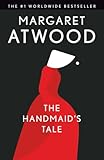
Margaret Atwood’s The Handmaid’s Tale is one of the defining novels of the twentieth century. Published in 1985, it imagines the Republic of Gilead, a theocratic authoritarian state built on the ruins of the United States, in which women have been stripped of all legal rights and sorted into rigid castes by function. Offred — a Handmaid, assigned to bear children for a Commander and his Wife — narrates her survival in a voice that is both meticulous and fractured, cataloguing what has been taken from her with a precision that makes the horror entirely legible. The genius of the novel is that Atwood constructed Gilead entirely from documented history. Nothing in it was invented.
What gives the book its lasting power is not the speculative architecture of Gilead but what Offred notices inside it: small rebellions, the mechanics of complicity, the way women are made to enforce the system that oppresses them, and the survival instinct that makes accommodation possible and resistance costly. It is a novel about bodies, about language, about what it means to hold a self together when everything external is designed to dissolve it. The books below either extend that project directly or explore adjacent territory — feminist dystopia, totalitarian systems, the literature of female endurance.
The Direct Sequel and the Obvious First Next Read
#1 — The Testaments by Margaret Atwood
Set fifteen years after the events of The Handmaid’s Tale, The Testaments returns to Gilead through three narrators — one of whom is Aunt Lydia, the enforcer of Handmaid compliance who is far more complex than she appeared in the original. The novel is more plot-driven than its predecessor and more willing to offer resolution. Atwood co-won the 2019 Booker Prize for it, and while it does not replace the original’s formal austerity, it earns its place as a genuine continuation. Readers who felt the original’s ending was deliberately withheld will find answers here.
Feminist Dystopia: Power, Voice, and the Body
#2 — The Power by Naomi Alderman
Women develop the ability to produce electric shocks from their bodies, and within a generation the power structure of the world has inverted. Men are now the vulnerable ones. Alderman’s novel is not a utopia — it is a mirror: the novel’s argument is that the same patterns of domination, violence, and cruelty re-emerge regardless of who holds physical power. It is Atwood’s obverse: where The Handmaid’s Tale depicts what happens when women are stripped of power, The Power asks what women do when they acquire it. Alderman was mentored by Atwood, and the influence runs deep.
#3 — Vox by Christina Dalcher
In Dalcher’s near-future America, women are legally permitted to speak only one hundred words per day. A counter on each woman’s wrist tracks her usage; exceed it and you receive an electric shock. Vox is a more direct descendant of The Handmaid’s Tale than almost any other novel on this list — the same American setting, the same creeping legislative erosion of rights before the sudden totalitarian consolidation, the same focus on a protagonist who once had a full professional life and now navigates a drastically reduced world. The premise is blunt but the execution is precise.
#4 — Parable of the Sower by Octavia Butler
Lauren Olamina is a teenager living behind the walls of a gated community in a California that has collapsed into violence, poverty, and climate chaos. When the walls come down, she walks north, gathering survivors and developing a new philosophy of change she calls Earthseed. Butler’s dystopia is less about a single oppressive system than about what human communities do when all systems fail — and the particular burdens placed on a young Black woman navigating that collapse. The novel is grimmer and more grounded than most of its genre, and Lauren is one of the most compelling protagonists in American dystopian fiction.
The Foundational Political Dystopias
#5 — 1984 by George Orwell
Winston Smith works at the Ministry of Truth, rewriting the historical record to match the Party’s current position. He begins, quietly, to resist. Orwell’s novel is the foundational text of modern political dystopia, and nearly every subsequent dystopian novel — including The Handmaid’s Tale — is in conversation with it. The mechanisms differ: where Gilead controls through religion and the body, Oceania controls through language and memory. Both novels understand that the deepest tyranny is not merely the restriction of action but the colonization of thought. The romance at the center of 1984 has the same doomed quality as Offred’s.
#6 — Brave New World by Aldous Huxley
Huxley’s World State achieves stability not through fear but through pleasure and conditioning. Citizens are biologically engineered into castes, given unlimited access to the drug soma, and kept perpetually distracted. Brave New World is the dystopia for those who find Orwell’s terror too obvious: Huxley’s argument is that people can be controlled just as completely by comfort as by pain, and that the elimination of suffering might require the elimination of everything that makes life meaningful. The novel’s treatment of reproduction and the female body connects directly to Atwood’s concerns.
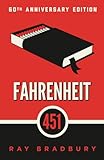
#7 — Fahrenheit 451 by Ray Bradbury
Fireman Guy Montag burns books for a living in a society where reading has been made illegal. The novel is about what is lost when a culture abandons its literary inheritance — the capacity for memory, for solitude, for self-examination. Bradbury’s prose is more lyrical than Orwell’s or Huxley’s, and the novel is shorter and more parable-like. What connects it to The Handmaid’s Tale is the portrait of a society that has made knowledge dangerous and the individual’s experience of waking up to that fact from inside it.
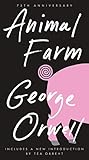
#8 — Animal Farm by George Orwell
The animals of Manor Farm overthrow their human farmer and establish a republic governed by the principle that all animals are equal. Orwell’s allegory of Stalinism is also a precise anatomy of how revolutionary language is corrupted to justify hierarchy, and how those in power rewrite the rules as they go. At ninety pages it is the shortest book on this list, but its argument about ideological capture — the way a system’s founding principles are gradually inverted by those who benefit from inverting them — is as central to understanding Gilead as anything in the longer dystopias.
Beyond the West: Oppression as Lived Reality
#9 — A Thousand Splendid Suns by Khaled Hosseini
Mariam and Laila are two women in Afghanistan, connected across a generation, both caught inside a patriarchal system that restricts their movement, their rights, and their survival options in ways that closely parallel Gilead — except that Hosseini is writing about events that happened. The Taliban-era Afghanistan of the novel’s later sections is not a speculative extrapolation but a recent historical reality, and the novel’s emotional force comes partly from that weight. Readers who think Atwood’s vision is far-fetched will find Hosseini’s novel a reminder of how close the distance is.
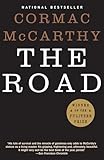
#10 — The Road by Cormac McCarthy
A father and his son walk south through a post-apocalyptic America. There is no society left to oppress anyone — only the violence of scarcity and the question of whether the moral categories that once organized human life retain any meaning when all their structures are gone. McCarthy’s novel is not a feminist dystopia, and women are largely absent from it; what it shares with The Handmaid’s Tale is the precision of its attention to survival and the refusal of easy hope. Both novels end on ambiguous notes of continuance rather than rescue.
Classic Dystopia With a Woman at the Center
#11 — We by Yevgeny Zamyatin
Published in 1924 and the acknowledged forerunner of both 1984 and Brave New World, Zamyatin’s novel imagines the One State, a glass-walled society of pure rational order in which individuals are designated by numbers rather than names. The narrator, D-503, is a mathematician who begins to be destabilized by a woman called I-330, who is part of an underground resistance. We invented most of the genre’s vocabulary, and Atwood has cited it as part of the tradition she was writing into. Reading it alongside The Handmaid’s Tale makes visible how the feminist dystopian tradition transformed what the earlier political dystopia left implicit about gender.
How to Choose Your Next Read
If you want the immediate continuation of Offred’s story: The Testaments.
If you want the closest feminist dystopian parallel: Vox by Christina Dalcher.
If you want a feminist dystopia that argues back against Atwood: The Power by Naomi Alderman.
If you want the foundational political dystopias: 1984 first, then Brave New World.
If you want dystopia grounded in real history: A Thousand Splendid Suns or Atwood’s own notes on the historical sources for The Handmaid’s Tale.
If you want the darkest option on this list: Parable of the Sower.
The Handmaid’s Tale vs 1984
For a direct comparison of Atwood and Orwell’s dystopias — how they differ in method, vision, and ongoing relevance — see our The Handmaid’s Tale vs 1984 guide.
1984 vs Brave New World
For a direct comparison of Orwell and Huxley’s two foundational dystopias — what each predicts, which is more relevant, and which to read first — see our 1984 vs Brave New World guide.
For the Best Dystopian Novels
For the definitive guide to dystopian fiction — from 1984 and Brave New World to contemporary dystopia — see our Best Dystopian Novels list.
For the Best Fiction Books
For the definitive guide to fiction — the greatest novels across literary fiction, classics, and contemporary writing — see our Best Fiction Books of All Time list.
Affiliate disclosure: Links to Amazon on this page are affiliate links. We earn a small commission at no extra cost to you. This does not influence our editorial recommendations.
Frequently Asked Questions
Do I need to read The Testaments after The Handmaid's Tale?
The Testaments is the direct sequel and is set fifteen years after the events of The Handmaid's Tale. It is not required — The Handmaid's Tale ends on its own terms and the ambiguity of that ending is part of its power. That said, The Testaments won the Booker Prize and gives Gilead's story a genuine resolution, so most readers who loved the original find it deeply satisfying rather than a disappointment.
Is The Handmaid's Tale based on real historical events?
Yes, deliberately so. Margaret Atwood has stated that she included nothing in the novel that had not already happened in history or was not already happening somewhere in the world. Every element of Gilead — the stripping of women's rights, the use of religion to justify state control, forced reproduction, class signaling through dress — has a documented historical precedent. Atwood researched extensively and refused to invent atrocities. That commitment to historical grounding is a significant reason the novel feels so credible.
What are the best feminist dystopian novels?
The strongest feminist dystopian novels alongside The Handmaid's Tale are The Power by Naomi Alderman, which inverts gendered violence to expose how power corrupts regardless of who holds it; Vox by Christina Dalcher, which restricts women to 100 spoken words per day; and Parable of the Sower by Octavia Butler, which follows a young Black woman surviving societal collapse. For a broader canvas, 1984 and Brave New World remain the foundational political dystopias from which most others descend.
What is the difference between feminist dystopia and political dystopia?
Feminist dystopia places the gendered mechanics of oppression at the center of the story — the control of women's bodies, reproduction, and speech is the system being depicted, not a side effect of it. The Handmaid's Tale, The Power, and Vox are feminist dystopias in this sense. Political dystopia, as in 1984 or Brave New World, is concerned with broader totalitarian control, surveillance, and the suppression of individual thought. The two categories overlap significantly, and many of the best dystopian novels operate in both registers at once.