The Handmaid's Tale vs 1984: Which Dystopia to Read First?
The Handmaid's Tale and 1984 are the two most studied dystopian novels. Here's how they differ, what each does best, and which to read first — plus what to read after both.
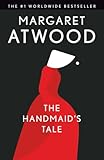
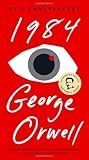
1984 and The Handmaid’s Tale are the two most assigned, most discussed, and most politically invoked dystopian novels in the English language. They share a broad subject — the mechanisms of oppression and what it does to those who live under it — but they are written from different premises, with different methods, and to different ends. Understanding how they differ makes both books more readable and more useful.
The simplest distinction: Orwell is interested in power over thought. Atwood is interested in power over bodies. Both are concerned with the mechanisms by which a society can make people complicit in their own oppression, but the terrains they map are distinct.
At a Glance
| 1984 | The Handmaid’s Tale | |
|---|---|---|
| Author | George Orwell | Margaret Atwood |
| Published | 1949 | 1985 |
| Setting | Oceania (future Britain) | Gilead (future America) |
| Protagonist | Winston Smith (male) | Offred (female) |
| Central oppression | Surveillance, thought control, language | Bodily autonomy, reproductive control, gender hierarchy |
| Tone | Political, analytical, cold | Psychological, intimate, embodied |
| Length | 300 pages | 310 pages |
| Narrative style | Third person, linear | First person, fragmented |
What 1984 Is About
Winston Smith works at the Ministry of Truth in Airstrip One (Orwell’s renamed Britain), rewriting historical records so that the Party’s claims are always retrospectively accurate. He begins a forbidden relationship with Julia and makes contact with what he believes is an underground resistance movement. Orwell’s novel is a systematic analysis of totalitarian power: how it works, how it sustains itself through language manipulation and surveillance, and why it cannot be defeated by the romantic individualism Winston represents.
The political argument in 1984 is carried largely through what Winston reads — the Goldstein book, the appendix on Newspeak — and this gives the novel an analytical quality unusual in fiction. Orwell is not primarily interested in Winston as a psychological subject but as a demonstration case for what Big Brother’s system does to a person. The horror of 1984 is conceptual: the idea that reality itself could be controlled, that the past could be rewritten, that language could be made to carry meaning only its controllers permitted.
The prose is functional rather than beautiful. Orwell was writing against what he called “the gramophone mind” — the kind of political language that sounds meaningful but means nothing — and his own style is stripped of rhetorical flourish by intention. This makes the novel easier to read for pace than The Handmaid’s Tale but less immediately affecting.
What The Handmaid’s Tale Is About
Offred lives in the Republic of Gilead, a theocratic America in which fertile women have been reduced to reproductive vessels for the ruling class. She is a Handmaid — required by law to bear children for the Commander and his Wife. The novel is narrated entirely from inside Offred’s head, with the restricted, carefully managed perspective of a person under total surveillance who has learned to think in approved patterns.
Atwood is working in direct conversation with Orwell and with a much older tradition of dystopian writing — she has said she used only historical events and practices as source material; nothing in Gilead is invented. The systematic reduction of women to their reproductive function has historical precedent everywhere. This is part of what makes The Handmaid’s Tale more viscerally unsettling than 1984 for many readers: its horrors feel more achievable.
The narrative fragmentation — the uncertainty about what Offred is actually remembering versus reconstructing versus concealing — gives the novel its psychological texture. Where Orwell’s Winston experiences his oppression as an intellectual problem, Offred experiences hers as a physical reality. The horror is in the body.
Key Differences
Whose body is in danger. 1984’s central violation is cognitive — Winston’s mind is invaded and reconstructed. The Handmaid’s Tale’s central violation is physical — Offred’s body is legislated and used. These are not equivalent forms of oppression and Atwood is deliberately writing a corrective to the Orwellian tradition’s tendency to treat political oppression as primarily a problem of the mind.
The role of sex. In 1984, sex is both an act of rebellion and ultimately a tool of the Party. In The Handmaid’s Tale, sex is the mechanism of oppression itself — the Ceremony is not pleasure but compulsory reproduction conducted according to rigid ritual. Atwood’s treatment of sexuality is more politically explicit and more physically specific than Orwell’s.
Optimism and resistance. Neither novel is optimistic, but they are pessimistic in different registers. 1984’s ending is one of the most complete defeats in literature — there is no hope, no resistance, no alternative. The Handmaid’s Tale’s ending is ambiguous: the scholarly apparatus added in the final pages implies that Gilead eventually fell, but Offred’s fate remains unknown. Atwood’s dystopia has a historical horizon; Orwell’s does not.
The narrator’s relationship to the reader. Winston’s narrative is largely transparent — he tells us what he thinks and we believe him. Offred’s narrative is explicitly unreliable and managed: she tells us she is constructing a story, that some details may be wrong, that she is saying what she can say rather than everything she knows. This self-awareness makes the reading experience more demanding and more interesting.
Which to Read First
Read 1984 first.
It is shorter, its method is simpler, and it establishes the genre’s vocabulary. Reading The Handmaid’s Tale after 1984 reveals how Atwood is deliberately answering, extending, and challenging the Orwellian framework — particularly his relative inattention to gender as a mechanism of political control. The sequence matters.
If you are reading both for study or discussion: start with 1984, read The Handmaid’s Tale immediately after, and treat them as a paired argument.
What to Read After Both
- Brave New World by Aldous Huxley — the third foundational dystopia, arguing that oppression through pleasure is more durable than oppression through fear; the necessary third voice in this conversation
- Never Let Me Go by Kazuo Ishiguro — a quiet, devastating dystopia about complicity and what we will accept when we have been raised to accept it
- Station Eleven by Emily St John Mandel — the post-collapse version, with more hope than either classic
- The Road by Cormac McCarthy — the most extreme version: after all systems have failed
For the full genre, our best dystopian novels guide covers the essential titles.
Books Like The Handmaid’s Tale
For dystopian novels with The Handmaid’s Tale’s feminist urgency, theocratic horror, and precise prose, see our Books Like The Handmaid’s Tale guide.
Books Like 1984
For dystopian novels with 1984’s political horror, surveillance state, and enduring relevance, see our Books Like 1984 guide.
For the Best Dystopian Novels
For the definitive guide to dystopian fiction — from 1984 and Brave New World to contemporary dystopia — see our Best Dystopian Novels list.
Affiliate disclosure: Links on this site are affiliate links. We earn a small commission at no extra cost to you. This does not influence our editorial recommendations.
Frequently Asked Questions
Should I read 1984 or The Handmaid's Tale first?
Read 1984 first. Orwell's novel is shorter, its satirical method is simpler, and it establishes the vocabulary of dystopian fiction that Atwood's novel works within and extends. Reading The Handmaid's Tale after 1984 reveals how much Atwood is in direct conversation with Orwell — and how differently she answers the questions he raises.
Which is more relevant today, 1984 or The Handmaid's Tale?
Both novels have experienced renewed relevance in recent decades — 1984 after concerns about state surveillance and political language, The Handmaid's Tale after legislative attacks on reproductive rights. They address different aspects of totalitarianism: Orwell focuses on truth and power; Atwood focuses on bodily autonomy and gender. Both feel contemporary for different reasons.
Is The Handmaid's Tale better than 1984?
They are great in different ways and should not be ranked against each other. 1984 is the more politically analytical novel — its argument about language, power, and the mechanics of totalitarian control is unmatched. The Handmaid's Tale is more psychologically interior and more viscerally physical — its horror is embodied rather than conceptual. Many readers find Atwood's novel more emotionally affecting; most find Orwell's more intellectually rigorous.
Is 1984 or The Handmaid's Tale harder to read?
Both are accessible to general readers. 1984 is denser and more explicitly political in its second half, particularly the Goldstein appendix. The Handmaid's Tale is more psychologically immediate but requires engagement with its narrative fragmentation. Neither is technically difficult — both reward careful reading but are not inaccessible to a general audience.
What are the best dystopian novels after 1984 and The Handmaid's Tale?
After both, the essential next reads are Brave New World (Huxley — the other foundational dystopian novel, arguing the opposite case from Orwell), Never Let Me Go (Ishiguro — quiet and devastating), and Station Eleven (Mandel — dystopia via pandemic, with more hope than either classic). Our best dystopian novels guide covers the full genre.