Books Like 1984: 10 Dystopian Novels to Unsettle You
If Orwell's vision of totalitarianism and surveillance left you unsettled, these dystopian and political novels hit the same nerve.

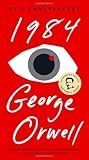
George Orwell’s 1984 is the political novel against which all other political novels are measured. Published in 1949, it follows Winston Smith, a low-ranking Party functionary in the superstate of Oceania, who begins to question the regime he serves — first privately, then in a doomed act of rebellion with Julia, a woman he meets in the Records Department. The world Orwell builds is one of total surveillance, perpetual manufactured war, enforced linguistic poverty, and the systematic destruction of objective truth. The Party does not merely demand compliance; it demands that you believe.
What makes 1984 more than a cold political thought experiment is that Orwell grounds it in the specific texture of Winston’s consciousness — his exhaustion, his small private pleasures, the physical act of writing forbidden thoughts in a diary, the particular quality of his love for Julia. The horror of the novel’s final act is inseparable from how much we have come to inhabit that consciousness. The books below share 1984’s seriousness about political power, its willingness to follow ideas to their most uncomfortable conclusions, and its refusal to offer consolation.
The list is organized by theme and by how closely each book sits to Orwell’s particular concerns. Some are classic literary dystopias in the same tradition; others approach the same territory through satire, allegory, or a different axis of oppression entirely.
Classic Literary Dystopias
#1 — Brave New World by Aldous Huxley
The companion volume to 1984 in the canon of twentieth-century dystopian fiction, and in many ways its mirror image. Huxley’s World State does not rule through terror and scarcity but through pleasure and conditioning: citizens are grown in laboratories, sorted into castes before birth, kept permanently content by the drug soma, and distracted by engineered entertainment. Where Orwell feared that freedom would be crushed by force, Huxley feared it would be surrendered willingly. The two novels are best read together, not because they reach the same conclusions but because together they cover the full range of how power can make itself permanent. Brave New World is more stylistically playful and philosophically discursive than 1984, but no less unsettling.
#2 — We by Yevgeny Zamyatin
Orwell read We before writing 1984 and acknowledged its influence. Zamyatin’s novel, written in Russia in 1920 and suppressed by Soviet censors, is the direct ancestor of the modern political dystopia. The One State is a glass-enclosed civilization where citizens have numbers rather than names, live entirely in view of each other, and are controlled through mathematical rationalism applied to human life. The narrator, a spacecraft engineer known as D-503, begins to experience irrational feelings — love, doubt, the desire for an inner life — and the consequences unfold with terrifying logic. We is shorter and more abstract than 1984, but readers who want to understand where the genre came from will find it essential.
#3 — Darkness at Noon by Arthur Koestler
Where 1984 shows the machinery of totalitarianism from the position of a minor functionary, Darkness at Noon shows it from the inside of the apparatus itself. Rubashov is an aging revolutionary and senior Party official who is arrested during a Stalinist purge. The novel is almost entirely set in his cell, following his interrogations and his attempts to understand both his accusers and himself. Koestler is asking what happens when the logic of a revolutionary movement is taken to its endpoint — how a man who believed in the cause can be destroyed by it. It is arguably the more intellectually rigorous of the two novels, and it has lost none of its force.
The Surveillance State and Modern Control
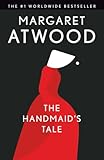
#4 — The Handmaid’s Tale by Margaret Atwood
Atwood’s 1985 novel is set in the Republic of Gilead, a near-future theocratic America where women have been stripped of all legal rights and assigned roles based on their perceived value to the regime. Offred, the narrator, is a Handmaid — one of the fertile women assigned to powerful men for reproductive purposes. Like 1984, the novel is told through the consciousness of a person who remembers a freer world and cannot entirely submit to the one they are forced to inhabit. Atwood is meticulous about the ways in which totalitarian regimes use ritual, language, and the body as instruments of control. The gender politics are different from Orwell’s concerns but the political anatomy is recognizably the same.
#5 — The Circle by Dave Eggers
Eggers’s 2013 novel is 1984 transposed to Silicon Valley. Mae Holland joins a powerful tech company called the Circle — a thinly veiled composite of Google, Facebook, and Apple — and over the course of the novel becomes a true believer in its mission of total transparency and universal connectivity. The dystopia here is not enforced by a Party but by the logic of a platform: surveillance is voluntary, even desired; privacy is reframed as antisocial. The Circle is less literary than Orwell but more immediately topical, and its portrait of how corporate-technological power normalizes the erosion of inner life reads differently now than it did in 2013. It is a useful provocation for readers who found 1984’s totalitarianism too distant from contemporary experience.
Political Allegory and Satire
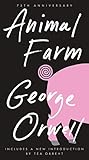
#6 — Animal Farm by George Orwell
The companion to 1984 from the same author — shorter, more accessible, and differently devastating. The animals of Manor Farm overthrow their human farmer and attempt to build a society on the principles of Animalism: all animals are equal, two legs bad, four legs good. What follows is a compressed and remorseless allegory of revolutionary betrayal, modeled on the Soviet Union but applicable to any movement that consolidates power in the hands of those who understand the rules well enough to rewrite them. The famous final line — “The creatures outside looked from pig to man, and from man to pig, and from pig to man again: but already it was impossible to say which was which” — is Orwell at his most concentrated. Readers who find 1984’s length daunting can start here.
#7 — It Can’t Happen Here by Sinclair Lewis
Published in 1935, Lewis’s novel imagines the election of a fascist president in the United States — a demagogue named Buzz Windrip who campaigns on populist resentment and the promise of national restoration. The protagonist is a small-town Vermont newspaper editor who watches the country transform around him with a mixture of disbelief and helplessness. Lewis is angrier and more satirical than Orwell; the novel has the quality of a warning written in real time. Its reputation has risen sharply in recent decades as its premise has seemed less hypothetical. It is less stylistically distinguished than 1984 but more emotionally direct about the specifically American pathways to authoritarianism.
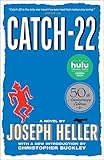
#8 — Catch-22 by Joseph Heller
Heller’s approach to the same questions of power, institutional logic, and the individual trapped inside a system that defines sanity as compliance is comedic rather than tragic — but the comedy is a delivery mechanism for conclusions as dark as Orwell’s. Yossarian, a bombardier in World War Two, desperately wants to be grounded as unfit for duty. The catch is that requesting a psychiatric evaluation proves sanity, because only a sane man would want to avoid certain death. The novel’s logic is circular in the same way Newspeak is circular: the system is designed to eliminate the possibility of dissent from within its own terms. Catch-22 is longer and looser than 1984 but shares its diagnosis of how institutions use language to make resistance impossible.
After Civilization Falls
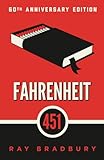
#9 — Fahrenheit 451 by Ray Bradbury
Bradbury’s 1953 novel is the most accessible entry on this list and the best starting point for readers who found 1984 demanding. In the future America of Fahrenheit 451, firemen do not put out fires — they start them, burning books wherever they are found. Guy Montag is a fireman who begins to wonder what is in the books he burns. Bradbury is less interested in the political mechanics of how this society came to be than in the emotional texture of a world without depth, reflection, or the friction of difficult ideas. The novel reads as a lament for what reading does to consciousness — for interiority itself. Less rigorous than Orwell but warmer, and its concerns are not entirely separate from his.
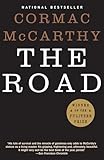
#10 — The Road by Cormac McCarthy
McCarthy’s 2006 novel is not a political dystopia in Orwell’s sense — there is no state, no surveillance, no ideology. A man and his young son move through the ash-covered remnants of a dead America, pushing a shopping cart south toward a coast that may offer nothing. What connects it to 1984 is its seriousness about the conditions under which human dignity can survive — or cannot. Orwell’s Winston holds onto his inner life as the last form of resistance; McCarthy’s man holds onto something similar, and the novel is as much about what that effort costs as about the world that makes it necessary. The Road is bleaker than anything on this list and should be approached accordingly.
How to Choose Your Next Read
If you want the closest philosophical companion to 1984: Brave New World — the two novels are in explicit dialogue.
If you want the historical root of the genre: We by Zamyatin, which Orwell himself acknowledged as the template.
If you want the most politically urgent reading today: The Handmaid’s Tale or It Can’t Happen Here.
If you want more Orwell: Animal Farm first — it is shorter and clarifies the political thinking behind 1984.
If you want the sharpest intellectual treatment of the Stalinist purge: Darkness at Noon.
If you want the most accessible entry point: Fahrenheit 451.
1984 vs Brave New World
For a direct comparison of Orwell and Huxley’s two foundational dystopias — what each predicts, which is more relevant, and which to read first — see our 1984 vs Brave New World guide.
The Handmaid’s Tale vs 1984
For a direct comparison of Atwood and Orwell’s dystopias — how they differ in method, vision, and ongoing relevance — see our The Handmaid’s Tale vs 1984 guide.
For the Best Dystopian Novels
For the definitive guide to dystopian fiction — from 1984 and Brave New World to contemporary dystopia — see our Best Dystopian Novels list.
For the Best Fiction Books
For the definitive guide to fiction — the greatest novels across literary fiction, classics, and contemporary writing — see our Best Fiction Books of All Time list.
Affiliate disclosure: Links to Amazon on this page are affiliate links. We earn a small commission at no extra cost to you. This does not influence our editorial recommendations.
Frequently Asked Questions
Is 1984 still relevant today?
Yes, and more so than many of Orwell's contemporaries anticipated. The novel's core concerns — mass surveillance, the manipulation of language to restrict thought, the rewriting of historical records, and the use of perpetual war to maintain domestic compliance — map directly onto modern debates about state surveillance, disinformation, algorithmic control, and authoritarian politics. The vocabulary Orwell invented (doublethink, Newspeak, memory hole, Big Brother) has entered everyday political language precisely because the concepts keep proving useful.
What is the best order to read George Orwell?
Most readers encounter Orwell through 1984, which is fine — it is his most ambitious work. The natural companion is Animal Farm, which Orwell wrote first and which covers adjacent territory through political allegory rather than immersive dystopia. After those two, Homage to Catalonia (his memoir of the Spanish Civil War) illuminates the real-world sources of both novels. Down and Out in Paris and London and The Road to Wigan Pier round out the picture of the political formation behind the fiction.
What is the difference between 1984 and Brave New World?
Both novels depict future societies where individual freedom has been eliminated, but through opposite mechanisms. Orwell's Oceania maintains control through pain, fear, perpetual surveillance, and deliberate scarcity. Huxley's World State controls through pleasure, conditioning, and abundance — citizens are kept compliant by giving them exactly what they want. The two novels are often read as a debate: Orwell feared those who would ban books, Huxley feared there would be no need to ban them. Both fears have proven prescient in different ways.
Is 1984 appropriate for younger readers?
1984 is commonly assigned in secondary schools and is generally considered appropriate for readers from around age 14 or 15 upward. The novel contains some sexual content and scenes of torture and psychological degradation that are not graphic by adult standards but are significant enough to be worth flagging. The political and philosophical ideas are demanding but accessible to a motivated younger reader. Fahrenheit 451 and Animal Farm cover some of the same political territory and are better entry points for readers under 14.