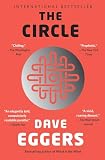
Editors Reads Verdict
Dave Eggers's satirical novel targets Silicon Valley's surveillance capitalism ethos with blunt force, and its diagnosis of tech-utopian rhetoric has only looked more accurate with time — even if the literary machinery that delivers that diagnosis is less subtle than its subject deserves.
What We Loved
- The satire of tech-utopian rhetoric is precise and consistently on-target
- The Circle's internal slogans and corporate culture are rendered with uncomfortable accuracy
- Mae's gradual capture by the company's ideology is more chilling than an outright villain would be
- The novel's extrapolations about surveillance have aged into near-documentary status
- The pacing through the first two-thirds maintains genuine dread
Minor Drawbacks
- Mae is a thin protagonist — her interiority is underdeveloped by design but the trade-off costs the novel emotionally
- The satire is too unsubtle in places, with corporate villains who speak in pure manifesto
- The ending is abrupt and forecloses ambiguities the novel had been carefully building
- Secondary characters function mostly as ideological mouthpieces rather than people
Key Takeaways
- → Radical transparency is a power move: forcing exposure on individuals while institutions remain opaque
- → Corporate positivity culture suppresses dissent more effectively than overt coercion
- → The rhetoric of connection and openness can be the ideological cover for total surveillance
- → True believers are more dangerous than cynics — they do not experience the contradiction
- → Privacy is not secrecy; it is the condition under which an autonomous self can exist at all
| Author | Dave Eggers |
|---|---|
| Publisher | Vintage |
| Pages | 491 |
| Published | October 8, 2013 |
| Language | English |
| Genre | Dystopian Fiction, Satirical Fiction, Literary Fiction |
| Difficulty | Beginner |
| Best For | Readers interested in technology criticism, dystopian fiction, and satire of Silicon Valley culture — particularly those who want a novel that engages directly with the surveillance capitalism debate. |
How The Circle Compares
The Circle at a glance against 3 similar books readers weigh alongside it.
| Book | Author | Rating | Best for |
|---|---|---|---|
| The Circle (this book) | Dave Eggers | ★ 3.5 | Readers interested in technology criticism, dystopian fiction, and satire of |
| 1984 | George Orwell | ★ 4.7 | Every adult in a democracy |
| Brave New World | Aldous Huxley | ★ 4.5 | Readers of 1984 and other dystopian fiction, philosophy and ethics enthusiasts, |
| The Power of the Dog | Don Winslow | ★ 4.4 | Readers of serious crime fiction and anyone interested in the politics of the |
The Ideology of Completion
The Circle is built on a set of interlocking arguments that Eggers renders with uncomfortable fidelity to their real-world sources. The company’s philosophy holds that privacy is theft — that any information withheld from the collective is a form of hoarding that damages social trust. Transparency, in the Circle’s framing, is not surveillance but liberation: if everyone can see everything, corruption becomes impossible, crime disappears, and human beings finally become their best selves.
These arguments are not invented. They are reconstructed almost verbatim from the rhetoric that circulated through Silicon Valley in the early 2010s — from Mark Zuckerberg’s claim that privacy was no longer a social norm, from the rhetoric around radical openness as a democratic force, from the genuine idealism that animated early social media discourse before its consequences became visible. Eggers is targeting a specific intellectual tradition, and he has done his research. The Circle’s internal slogans — “Secrets are lies,” “Sharing is caring,” “Privacy is theft” — sound like parody but sit a sentence away from things that were said publicly, sincerely, by people with enormous influence.
The novel’s central target is the asymmetry that hides inside the transparency argument. The Circle demands that its users become fully visible while the company itself remains opaque. The rhetoric of openness flows downward — onto individuals, onto politicians, onto anyone the Circle can surveil — but never inward, never toward the institutions doing the watching. Eggers understands that this asymmetry is the point, not a bug.
Mae Holland: True Believer or Dupe
Mae Holland is a frustrating protagonist, and this is probably deliberate. She arrives at the Circle as an outsider with genuine reservations — she finds the mandatory social participation exhausting, she values her solitary kayaking, she has a father with MS and a childhood friend named Mercer who represents everything the Circle is not. She is given multiple opportunities to see clearly. She does not take them.
The novel’s central interpretive question is whether Mae’s eventual capture by the Circle’s ideology represents a failure of character or a demonstration of how the ideology works on ordinary, well-meaning people. Eggers does not resolve this cleanly. Mae is never shown to be stupid or particularly venal. She is shown to be approval-seeking, socially anxious, genuinely moved by the sense of belonging the Circle provides, and responsive to incremental normalization — each step toward full transparency is made to feel like a small and reasonable extension of the previous step.
This ambiguity matters because it determines what kind of book The Circle is. If Mae is a dupe, the novel is a tragedy about an individual captured by a system she could have seen through. If she is a true believer, it is a darker book — a portrait of how ideological commitment works to close off the perception of harm. The second reading is more interesting and more disturbing, and the novel supports it more strongly than the first. Mae does not sleepwalk into the Circle’s ideology; she walks into it with her eyes partially open, because the ideology offers her something real.
The Completion Arc
The Circle’s project of “completion” — achieving total coverage of all human activity, all information, all moments — is the novel’s central extrapolation. Eggers is asking: if you follow the logic of social media, of ubiquitous cameras, of always-on connectivity, of algorithmic life documentation, where does it end. His answer is that it ends with the elimination of private life entirely, framed at every step as an improvement.
The completion arc tracks with what has actually happened in the intervening decade, which is part of why the novel reads differently now than it did in 2013. Eggers imagined a single dominant platform achieving total integration; what actually emerged was a more distributed but functionally equivalent architecture — multiple platforms, each capturing different domains of life, collectively achieving something close to the saturation Eggers described. The facial recognition technology the Circle deploys, which seemed speculative in 2013, is now in airports. The “SeeChange” cameras — small, cheap, everywhere — have a real-world equivalent in the network of doorbell cameras, dashcams, and municipal surveillance systems that now cover most urban space in wealthy countries.
The novel’s extrapolation is not predictive in a precise sense — it compresses and dramatizes rather than forecasts. But it identifies the direction correctly, and the logic of the technology it depicts is the logic that actually operated.
How the Novel Has Aged
The Circle was received in 2013 with a mixture of admiration for its prescience and skepticism about its literary subtlety. The skepticism was fair: Eggers’s satirical targets sometimes talk in pure thesis statement, the villains are too comfortably villainous, and the novel lacks the formal compression that makes Orwell’s or Zamyatin’s dystopias feel inevitable rather than illustrative.
What the subsequent decade has done is shift the balance of that assessment. The arguments Eggers was satirizing — which some reviewers in 2013 found too easy, too cartoonish to take seriously as targets — turned out to be exactly the arguments that shaped the architecture of daily life for the following decade. The surveillance capitalism that Shoshana Zuboff would describe systematically in The Age of Surveillance Capitalism (2019) operated on precisely the logic Eggers had dramatized: behavioral data as raw material, prediction as product, the modification of human behavior as the actual business model behind the rhetoric of connection.
The novel has aged into something more troubling than a warning: it has aged into a period document that happened to be set slightly in the future. Its satirical exaggerations have mostly been absorbed by reality. What felt like a blunt instrument in 2013 looks, from 2026, more like accurate description with a thin layer of fictional dressing. The argument that it is too unsubtle has become harder to sustain when the subtlety was always in the subject, not in the critique that was required to land.
Our rating: 3.5/5 — A novel whose literary limitations have been partially redeemed by the decade that followed it: the satire was blunter than it needed to be, but the diagnosis was correct, and correctness in this case turns out to count for a great deal.
Frequently Asked Questions
What is "The Circle" about?
Mae Holland lands her dream job at the Circle — a technology company that has combined Google, Facebook, and Apple into one dominant platform — and becomes a true believer as the company pushes toward universal transparency and the erosion of all private life.
Who should read "The Circle"?
Readers interested in technology criticism, dystopian fiction, and satire of Silicon Valley culture — particularly those who want a novel that engages directly with the surveillance capitalism debate.
What are the key takeaways from "The Circle"?
Radical transparency is a power move: forcing exposure on individuals while institutions remain opaque Corporate positivity culture suppresses dissent more effectively than overt coercion The rhetoric of connection and openness can be the ideological cover for total surveillance True believers are more dangerous than cynics — they do not experience the contradiction Privacy is not secrecy; it is the condition under which an autonomous self can exist at all
Is "The Circle" worth reading?
Dave Eggers's satirical novel targets Silicon Valley's surveillance capitalism ethos with blunt force, and its diagnosis of tech-utopian rhetoric has only looked more accurate with time — even if the literary machinery that delivers that diagnosis is less subtle than its subject deserves.
Ready to Read The Circle?
Check the current price on Amazon.
Check Price on Amazon (paid link)Prices and availability are subject to change. See Amazon for current price.
Review last updated: