Arundhati Roy Books in Order: Complete Reading Guide
Both Arundhati Roy novels in order — The God of Small Things and The Ministry of Utmost Happiness — plus her essential non-fiction essays.
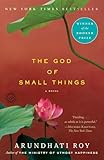
Arundhati Roy is an Indian author who has published two novels twenty years apart and, between them, a body of political non-fiction that is as significant as her fiction. She is one of the most important Indian voices in contemporary literature.
Arundhati Roy Novels in Publication Order
1. The God of Small Things — 1997
Start here. The Booker Prize-winning novel set in a Syrian Christian family in Kerala — a tragedy told in fragments, moving between 1969 and 1993, centred on the forbidden love between a widow and an Untouchable and the consequences it has on two children. Roy’s prose is among the most beautiful in contemporary English fiction. One of the essential Indian novels of the 20th century.
➡ Full review → | Buy on Amazon →
2. The Ministry of Utmost Happiness — 2017
A sweeping novel that moves across contemporary India — Delhi, Kashmir, the slums, the political uprisings — following a transgender woman who builds a graveyard at a traffic island, a journalist who falls in love with a woman who may be a spy, and a baby left at a protest. More ambitious in scope than The God of Small Things; less perfectly controlled.
➡ Full review → | Buy on Amazon →
Arundhati Roy’s Essential Non-Fiction
The Algebra of Infinite Justice — Essays on nuclear tests, globalisation, and the Narmada dam displacement. The best introduction to her political thinking.
Field Notes on Democracy — Essays on India’s democratic backsliding, Hindu nationalism, and Kashmir.
A Debut That Won the Booker
Arundhati Roy announced herself to the world with a debut novel of extraordinary power and originality, The God of Small Things, which won the Booker Prize and established her immediately as a major literary voice. The novel was a sensation, a first work of such accomplishment, beauty, and ambition that it won the most prestigious prize in British literary fiction and earned its author international acclaim and a vast readership. The God of Small Things is a novel of remarkable richness, marked by its lush and inventive prose, its intricate non-linear structure, its deep engagement with the realities of Indian society, and its profound emotional power, and its success established Roy as a significant literary figure on the strength of a single, dazzling debut. The achievement of winning the Booker Prize with a first novel is rare and significant, and it marked Roy’s arrival as a major voice in contemporary literature, a writer of extraordinary gifts whose debut combined stylistic brilliance with emotional depth and social engagement. For readers, The God of Small Things is the essential starting point and the foundation of Roy’s literary reputation, the dazzling debut that won the Booker Prize and established her as a major voice. A debut that won the Booker, The God of Small Things announced Arundhati Roy as a major literary voice, a first novel of extraordinary power and originality that won the most prestigious prize in British literary fiction and established her reputation on the strength of a single, dazzling work.
The Personal and the Political
Arundhati Roy’s body of work is distinguished by the long interval between her two novels, an interval she devoted not to fiction but to political activism and non-fiction writing, and this division reflects the deep connection in her work between the personal and the political. After the extraordinary success of The God of Small Things, Roy turned away from fiction for two decades, devoting herself instead to political activism and to a substantial body of non-fiction writing engaging the political realities of India and the world, addressing issues of injustice, power, development, and resistance. This long turn from fiction to political engagement reflects the centrality of political concern in Roy’s work and life, for even her fiction is deeply engaged with questions of social injustice, power, and oppression, and her activism and non-fiction extended this engagement into direct political advocacy. When she finally returned to fiction with her second novel, The Ministry of Utmost Happiness, after two decades, the novel reflected the political concerns that had occupied her in the intervening years, weaving together the personal and the political, the intimate and the social, in an ambitious engagement with the realities of contemporary India. The deep connection between the personal and the political runs through Roy’s work, in her socially engaged fiction and her political activism alike, and it defines the character of her literary career, marked by the long turn from fiction to political engagement and the eventual return to a fiction shaped by political concern. For readers, this connection illuminates Roy’s work and career, the deep engagement with social injustice and political reality that runs through her fiction and her activism alike. The personal and the political are deeply connected in Roy’s work, her career marked by the long turn from fiction to political activism and non-fiction, and her fiction and her direct political engagement alike shaped by a profound concern with injustice, power, and oppression.
The Small Things and the Large
The distinctive vision of The God of Small Things, captured in its very title, lies in its attention to the small things, the intimate and the particular, and in its revelation of how these small things are shaped by the large forces of society, history, and power. The novel attends with exquisite care to the small things, the intimate details of family life, the particular textures of childhood, the small moments and gestures that compose human experience, and it renders these small things with a richness and precision that give the novel its emotional power and its beauty. Yet the novel reveals how these small things, the intimate and the particular, are shaped and often destroyed by the large forces of society, by the rigid structures of caste, class, and power, by the social rules and prohibitions that govern Indian society, and by the weight of history and politics. The novel’s vision lies in this connection between the small things and the large, in its revelation of how the intimate and particular lives of its characters are shaped, constrained, and damaged by the large social forces that surround them, by caste and class and the prohibitions they enforce. This attention to the small things and their relationship to the large forces of society gives the novel its distinctive vision and its profound power, for it illuminates how the intimate textures of human life are bound up with and shaped by the great structures of social power and injustice. For readers, this vision is central to the novel’s power and its enduring significance, the attention to the small things and the revelation of how they are shaped by the large forces of society and history. The small things and the large are connected in the distinctive vision of The God of Small Things, which attends with exquisite care to the intimate and particular while revealing how these small things are shaped and destroyed by the large forces of caste, class, power, and history.
Why The God of Small Things Endures
The God of Small Things works because Roy’s prose carries the weight of its tragedy in every sentence. The novel is structured as an accumulation of details — the specific smell of a room, the exact colour of a sari, the way a word sounds — that converge into a moment of catastrophe. The caste system is not explained but rendered: the reader understands it through its effects on people rather than through sociological description.
Affiliate disclosure: Links to Amazon on this page are affiliate links. We earn a small commission at no extra cost to you.
Frequently Asked Questions
What order should I read Arundhati Roy's novels in?
Read The God of Small Things first — it is her masterpiece and one of the greatest novels of the 1990s. The Ministry of Utmost Happiness (2017) came twenty years later and is a different kind of book — broader, more politically explicit, and more demanding.
Should I read Roy's non-fiction as well as her novels?
If the political and environmental themes in her fiction interest you, yes. Her essay collections — The God of Small Things won the Booker, and The Algebra of Infinite Justice is an excellent introduction to her political writing — offer the same intelligence in a more direct form.
Why did it take Arundhati Roy twenty years to publish a second novel?
Roy spent the two decades between novels writing political non-fiction — essays on dam displacement, nuclear weapons, nationalism, and Kashmir. The Ministry of Utmost Happiness emerged from that political engagement. She has said she did not want to write another novel until she had something different to say.