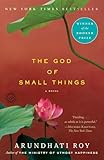
Editors Reads Verdict
Roy's debut novel is one of the most formally original and emotionally devastating novels of the 1990s — a non-linear account of a family's destruction that is also one of the most precise literary treatments of caste, colonialism, and the violence of social order.
What We Loved
- The prose is among the most distinctive in contemporary literary fiction — sensory, invented, unforgettable
- The non-linear structure builds toward its revelation with extraordinary control
- The treatment of caste and the Love Laws is both specific to Kerala and universally legible as social violence
Minor Drawbacks
- The stylistic idiosyncrasies — invented compound words, repeated phrases, unconventional syntax — can resist some readers
- The darkness of the novel's conclusion is unrelenting; there is no comfort offered
- Some secondary characters receive less development than the twins at the novel's core
Key Takeaways
- → The Love Laws — who can love whom, and how much — are the real subject of the novel; the plot is their consequence
- → History enters private life through the bodies and choices of ordinary people
- → The things that are not supposed to be noticed — small things — determine the shape of lives
| Author | Arundhati Roy |
|---|---|
| Publisher | Random House |
| Pages | 321 |
| Published | June 3, 1997 |
| Language | English |
| Genre | Literary Fiction, Historical Fiction |
| Difficulty | Intermediate |
| Best For | Readers of literary fiction drawn to formally ambitious prose, family sagas with historical and political depth, and novels set outside the Western canon's dominant geographies. |
How The God of Small Things Compares
The God of Small Things at a glance against 3 similar books readers weigh alongside it.
| Book | Author | Rating | Best for |
|---|---|---|---|
| The God of Small Things (this book) | Arundhati Roy | ★ 4.4 | Readers of literary fiction drawn to formally ambitious prose, family sagas |
| Beloved | Toni Morrison | ★ 4.5 | Serious readers of literary fiction with the patience for challenging, |
| Interpreter of Maladies | Jhumpa Lahiri | ★ 4.2 | Short story readers and literary fiction fans interested in the Indian-American |
| Pachinko | Min Jin Lee | ★ 4.6 | Historical fiction readers interested in Korean and Japanese history, fans of |
Kerala and the Love Laws
Ayemenem is a small town in Kerala in 1969, and the Ipe family — Syrian Christians of middling social standing — runs a pickle factory called Paradise Pickles and Preserves. Pappachi was an entomologist with frustrated ambitions and a violent temper; Mammachi runs the factory and plays the violin; their daughter Ammu has returned to Ayemenem after a failed marriage, bringing her fraternal twins Estha and Rahel. The family’s social position is intricate and anxious: Syrian Christians occupy a peculiar place in Kerala’s hierarchy, neither at the top of the Hindu caste system nor at its bottom, Christian enough to feel culturally distinct, Indian enough to enforce distinctions of their own.
The Love Laws are Roy’s central conceptual invention, and they govern everything in the novel. They are the unwritten, fiercely enforced rules that determine who may love whom, and how much, and in what ways. Ammu falls in love with Velutha, an Untouchable carpenter who works at the factory — a man of extraordinary dignity and skill who is also, by the immovable logic of caste, a man she is absolutely forbidden to love. Their affair is the transgression around which everything in the novel turns. The twins Rahel and Estha are the witnesses whose lives are permanently shaped by what they see and, more devastatingly, by what they are compelled to say. Roy withholds the full mechanics of what happens to Velutha until late in the novel, but the reader understands early that a terrible injustice was done, that the family participated in it, and that the small things — a touch, a glance, a child’s testimony — were what made the machinery run.
Structure and Revelation
Roy’s novel moves between two time periods with a control that is one of its principal formal achievements. The primary setting is Ayemenem in December 1969, the weeks during which the events that destroyed the family unfolded. The secondary setting is 1993, when Rahel returns to Ayemenem after years abroad following the collapse of her marriage, and she and Estha — who has been returned to the family after years of enforced silence — are reunited. The 1993 sequences establish the damage — the twins’ brokenness, the pickle factory’s decay, the weight of something that cannot be spoken — before the 1969 sequences show us its cause.
This structure creates a sustained atmosphere of dread that is inseparable from the novel’s moral argument. We know that something terrible happened before we understand precisely what it was or how, and this knowledge shapes every scene: the joy of the twins’ early childhood is shadowed by the foreknowledge of its destruction. The technique enacts the novel’s politics. The family’s caste position had already determined the conclusion before any of the individuals made their choices; the social order had already written the ending before the Love Laws were transgressed. Roy’s title comes from a chapter near the novel’s emotional center, where the god of small things — the force that attends to what the large forces of history and society ignore — is revealed as the only true witness to Velutha and Ammu’s love, because the human witnesses proved incapable of honoring it.
The Politics of the Personal
The political context of The God of Small Things is woven into every scene without ever becoming the novel’s overt subject. The Marxist movement in Kerala — theoretically committed to caste abolition and workers’ rights — appears in the figure of Comrade Pillai, a local party organizer who is also an opportunist and a coward, who uses Velutha’s situation for his own political purposes and then abandons him. This is one of Roy’s sharpest observations: that the political movements ostensibly opposed to caste have their own investments in the social order they claim to be dismantling.
The colonial legacy is present in the family’s complicated Anglophilia — in Chacko’s Oxford education, in the theatrical reverence for English manners that coexists with resentment of English dominance, in the way “Englishness” functions as a marker of aspiration even in independent India. The Love Laws are not the product of any single ideology; they are enforced by family, community, church, caste, and state simultaneously, by ordinary people who have internalized the hierarchy so thoroughly that its violence feels like nature rather than choice. The novel’s argument is that there is no private life that is not political — that Ammu and Velutha’s love was not destroyed by an abstraction called caste but by specific individuals making specific decisions, and that those individuals are responsible. Roy waited twenty years before writing her second novel, The Ministry of Utmost Happiness (2017), but the political intelligence of The God of Small Things — its insistence on naming who benefits from which silences — was always pointing in that direction.
Our rating: 4.4/5 — A formally brilliant and emotionally devastating debut that makes caste and the violence of social order as intimate and inescapable as a family story.
A Novel Told in Fragments
The most striking thing about The God of Small Things is its structure. Roy refuses to tell her story in order, instead circling a central tragedy — glimpsed, withheld, and only gradually revealed — through a mosaic of memories that move freely across time. The reader pieces together what happened to the twins Rahel and Estha, and to their family in Kerala, from fragments scattered out of sequence, so that the novel accumulates its devastating power through repetition and dread rather than linear suspense. This circling, poetic method mirrors the workings of memory and grief, and it is central to the book’s effect.
Language as the Real Achievement
Roy writes in a dazzling, inventive, idiosyncratic prose — coining words, bending grammar, seeing the world through the eyes of children — that is the novel’s chief glory and the reason it won the Booker Prize. Her language is sensuous and strange, alive to the textures of Kerala and to the small things, the title’s small things, that the great forces of caste, politics, and family crush underfoot. Some readers find the style mannered; far more find it intoxicating, and it gives the tragedy its lyrical, almost unbearable beauty.
Small Things, Great Forces
Beneath its intimate family story, the novel is a powerful indictment of the rigid structures that govern lives in India — caste, class, gender, and what Roy calls the Love Laws, the rules that lay down who can be loved, and how, and how much. The tragedy at its centre flows directly from the transgression of those laws, and Roy shows how the largest social forces destroy the smallest, most private moments of tenderness. It is this fusion of the political and the achingly personal that gives the novel its weight.
Why It Endures
The God of Small Things remains one of the defining novels of contemporary Indian literature because it marries a heartbreaking story to a genuinely original voice, and because it takes seriously both the inner lives of children and the crushing power of the social order around them. It is a demanding, non-linear, emotionally intense novel that rewards patient and attentive reading, and readers should be prepared for genuine tragedy. But for those willing to surrender to its fractured structure and luminous language, it is among the most powerful and beautifully written novels of its era.
Frequently Asked Questions
What is "The God of Small Things" about?
Set in the small town of Ayemenem in Kerala, India, Arundhati Roy's Booker Prize-winning novel traces the lives of fraternal twins Rahel and Estha and the catastrophic consequences of their family's transgression of the Love Laws — the laws that determine who can love whom, and how, and how much.
Who should read "The God of Small Things"?
Readers of literary fiction drawn to formally ambitious prose, family sagas with historical and political depth, and novels set outside the Western canon's dominant geographies.
What are the key takeaways from "The God of Small Things"?
The Love Laws — who can love whom, and how much — are the real subject of the novel; the plot is their consequence History enters private life through the bodies and choices of ordinary people The things that are not supposed to be noticed — small things — determine the shape of lives
Is "The God of Small Things" worth reading?
Roy's debut novel is one of the most formally original and emotionally devastating novels of the 1990s — a non-linear account of a family's destruction that is also one of the most precise literary treatments of caste, colonialism, and the violence of social order.
Ready to Read The God of Small Things?
Check the current price on Amazon.
Check Price on Amazon (paid link)Prices and availability are subject to change. See Amazon for current price.
Review last updated: