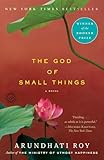
Arundhati Roy is an Indian author whose debut The God of Small Things won the Booker Prize in 1997, and who spent two decades as a prominent political essayist before returning to fiction with The Ministry of Utmost Happiness.
Arundhati Roy published The God of Small Things in 1997, won the Booker Prize, and spent the next twenty years writing political essays about nuclear weapons, corporate globalization, Kashmir, and the Indian state. The novel’s success seemed to produce a pressure she resolved by becoming an activist and public intellectual rather than a novelist — a choice that divided critics but was clearly her own.
The God of Small Things remains one of the most formally accomplished debut novels of the late twentieth century. Set in Kerala and moving between 1969 and 1993, it tells the story of twins, their family, and the consequences of crossing the Love Laws — the unspoken social codes that dictate who may love whom — through a prose style that returns obsessively to the moment of catastrophe without approaching it directly until the novel is almost over. The prose is dense with imagery and metaphor, self-consciously literary, and the emotional impact and structural control are remarkable.
The Ministry of Utmost Happiness (2017) was her return to fiction after two decades. It is a more formally experimental novel, moving across multiple characters and decades, and its political scope — encompassing Kashmir, the caste system, state violence, and queer identity in India — is ambitious. It was divided in its reception: celebrated by those who valued its political urgency, criticized by those who found its narrative less controlled than the first novel. Roy remains one of the most important writers working in English about post-Independence India.
Reading Guides