Books Like Fahrenheit 451: Dystopias on Censorship
Ray Bradbury's Guy Montag — a fireman who burns books in a future where they are illegal — is the definitive novel about what is lost when a society chooses not to think. These books share its urgency about reading, its warning about comfort culture, and the people who memorize books to keep them alive.
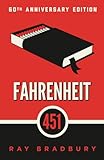
Ray Bradbury’s Fahrenheit 451 was published in 1953, assembled partly from a short story called “The Fireman” that appeared two years earlier, and it belongs to a very specific moment in American cultural anxiety: the early years of television, the McCarthy hearings, the sense that something was changing about how people received information and what they were willing to tolerate in exchange for comfort. Bradbury’s fireman Guy Montag burns books for a living, and the novel traces his slow awakening to what that means.
What Bradbury was arguing — and he spent decades clarifying this — was not primarily about government censorship. The firemen in his novel did not arise from tyranny; they arose from preference. People stopped reading because they found it difficult and unrewarding. The books came down because no one wanted them anymore, and the burning was simply the final administrative act of a preference that had already been made. The government in Fahrenheit 451 is not forcing ignorance on an unwilling population; it is managing the ignorance people chose.
The books below were chosen for readers who responded to that argument: the comfort culture that hollows out the capacity for sustained thought, the people who preserve books by memorizing them, the question of what a society loses when it stops being willing to be uncomfortable. They are grouped by what they share most closely with Bradbury’s novel.
The Dystopian Canon
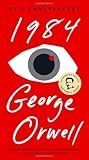
#1 — 1984 by George Orwell
Winston Smith works in the Ministry of Truth, rewriting historical records to match whatever the Party currently claims to be true. Orwell’s 1949 novel is the other pole of Bradbury’s argument: where Fahrenheit 451 imagines a society that gave up thinking voluntarily, 1984 imagines a state that actively destroys the capacity for independent thought through Newspeak, doublethink, and the systematic elimination of any language capable of expressing dissent. Both novels end with the same result — a population that cannot think clearly — but by different routes. Reading them together is essential.
#2 — Brave New World by Aldous Huxley
In Huxley’s World State, stability is maintained not through terror but through pleasure: soma, unlimited sex, constant entertainment, and a caste system that conditions people from birth to love their place in it. No books are banned because no one wants to read them. Huxley published his novel in 1932, twenty years before Bradbury, and the argument Bradbury was partly answering — that the danger to freedom was not oppression but comfort — is Huxley’s argument first. Bernard Marx’s discomfort with happiness, and John the Savage’s insistence that he has a right to be unhappy, are the direct ancestors of Montag’s awakening.
#3 — We by Yevgeny Zamyatin
Written in 1921 and banned in the Soviet Union for decades, Zamyatin’s novel follows D-503, a mathematician in a glass-walled future state called the One State, who begins to develop something his society considers a disease: a soul. We is the original — Orwell acknowledged it as a direct influence on 1984, and both Huxley and Bradbury are working in its shadow. The transparent walls, the numbered citizens, the state that has made rebellion literally unthinkable: everything the dystopian canon does, Zamyatin did first.
Books About Books and Reading
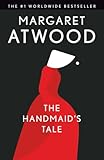
#4 — The Handmaid’s Tale by Margaret Atwood
In the Republic of Gilead, women are forbidden to read. The act of reading — a woman encountered with a book — is treated as a form of sedition, because reading produces the independent thought that the theocracy requires to suppress. Offred’s narrative is a recorded memory, a book being made in secret, its existence an act of resistance. Atwood shares Bradbury’s urgency about what literacy means — the Gilead that forbids women to read and the Fahrenheit society that burned books are different mechanisms for the same end: the elimination of the inner life that independent reading produces.
#5 — The Shadow of the Wind by Carlos Ruiz Zafón
In postwar Barcelona, a young boy named Daniel is taken by his father to the Cemetery of Forgotten Books, a secret library where books no one else preserves are kept alive, and he chooses a novel by an obscure author named Julián Carax. What follows is a mystery that spans decades and implicates the Francoist state’s systematic destruction of Carax’s work. Zafón’s novel is the direct romantic inversion of Fahrenheit 451: where Bradbury imagines a world that burns books, Zafón imagines the people who hide them, and the love of books as a form of political resistance. It is long, atmospheric, and deeply felt.
#6 — The Book Thief by Markus Zusak
In Nazi Germany, a young girl named Liesel Meminger steals books — from a book-burning, from a mayor’s library, from wherever she can find them — and learns to read them with the help of the Jewish man hiding in her family’s basement. Zusak’s novel, narrated by Death, shares Bradbury’s central premise: that books become most precious when they are made illegal, that the act of reading is a form of survival, and that the people who preserve words in times of destruction are doing something important. It is more emotionally direct than Fahrenheit 451 and set in a historical reality that makes the stakes concrete.
#7 — Ex Libris: Confessions of a Common Reader by Anne Fadiman
Fadiman’s 1998 collection of essays about reading — about the merging of book collections in a marriage, about the etiquette of annotation, about the difference between courtly and carnal reading — is the antidote to Bradbury’s dystopia: an extended argument for why books matter, told through the specific and personal. It belongs on this list not as a parallel dystopia but as the explanation of what Fahrenheit 451 is mourning. Fadiman’s love of books is exactly the thing Bradbury’s society has lost, and reading her essays after Fahrenheit 451 clarifies what the novel is actually about.
Rebellion and the Individual Against the State
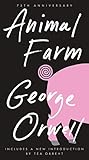
#8 — Animal Farm by George Orwell
The animals of Manor Farm overthrow their human farmer and establish a society based on equality, which the pigs gradually transform into a dictatorship indistinguishable from what it replaced. Orwell’s 1945 fable is about the rewriting of history — the pigs literally amend the Commandments until the original meaning has been destroyed — and it shares Fahrenheit 451’s understanding that the control of language and text is the control of thought. The famous commandment that becomes “All animals are equal, but some animals are more equal than others” is the Newspeak principle applied to a barnyard.
#9 — Parable of the Sower by Octavia Butler
In a collapsing near-future America, Lauren Olamina escapes her walled neighborhood after it is destroyed and begins walking north, gathering survivors and building a community around a philosophy she calls Earthseed. Butler’s 1993 novel is about what comes after the society Bradbury warned against: the people who survive the collapse of comfort culture and have to rebuild something from the wreckage. Lauren keeps a journal, quotes scripture, and understands that ideas written down outlast the people who held them. It is Fahrenheit 451 decades later, after the burning has already happened.
#10 — Never Let Me Go by Kazuo Ishiguro
Kathy H. and her friends at Hailsham know their fate and do not rebel against it. Ishiguro’s novel is the counterpoint to Montag’s choice: the people who see the shape of the world they inhabit and accept it anyway, who are given glimpses of art and books and beauty and understand none of it saves them. Where Montag chooses the books and pays the price, Kathy lets go of everything quietly. Both novels are about what a society does to the people inside it when thinking clearly is inconvenient — and both suggest that the cost of clarity is very high.
How to Choose Your Next Read
If you want the essential companion dystopia: Brave New World — Huxley’s pleasure-society that Bradbury was arguing against.
If you want the historical reality version: The Book Thief — books as contraband in Nazi Germany.
If you want the most romantic version of book-love: The Shadow of the Wind — the library as resistance.
If you want what came before all of them: We — Zamyatin’s original, the source of the whole tradition.
If you want the counterpoint: Never Let Me Go — what happens when people don’t choose to rebel.
For the Best Dystopian Novels
For the definitive guide to dystopian fiction — from 1984 and Brave New World to contemporary dystopia — see our Best Dystopian Novels list.
For the Best Science Fiction Books
For the definitive guide to science fiction — from Asimov and Herbert to Andy Weir and Ursula K. Le Guin — see our Best Sci-Fi Books of All Time list.
For the Best Fiction Books
For the definitive guide to fiction — the greatest novels across literary fiction, classics, and contemporary writing — see our Best Fiction Books of All Time list.
Affiliate disclosure: Links to Amazon on this page are affiliate links. We earn a small commission at no extra cost to you. This does not influence our editorial recommendations.
Frequently Asked Questions
What is Fahrenheit 451 actually about?
Fahrenheit 451 is commonly described as a novel about censorship and book-burning, but Bradbury always insisted it was really about television — about a society that chose distraction over thought, that stopped reading not because books were banned but because people stopped wanting them. The book-burning followed naturally from the cultural preference for entertainment over complexity. The novel's warning is less about government repression than about the voluntary surrender of interiority: the society in Fahrenheit 451 is comfortable, and that comfort is the problem.
How does Fahrenheit 451 compare to 1984 and Brave New World?
The three novels form a kind of dystopian argument. Orwell's 1984 imagines repression through terror and surveillance — the state controls through fear. Huxley's Brave New World imagines repression through pleasure — the state controls by making people happy enough not to care. Bradbury's Fahrenheit 451 imagines repression through distraction — the state controls by keeping people constantly entertained. Bradbury was explicitly responding to Huxley's argument, and all three are more useful read together than separately.
Is Fahrenheit 451 still relevant today?
More relevant than when it was written, by Bradbury's own diagnosis. He lived long enough to see the rise of television give way to the internet and social media, and he regarded both as confirmation of his central argument: that the danger was not government censorship but voluntary distraction, the preference for short bursts of stimulation over the sustained attention that reading requires. The people in Fahrenheit 451 do not read because they do not want to. That concern has not diminished.