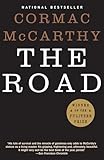
Books Like The Road: 11 Post-Apocalyptic Novels
If Cormac McCarthy's The Road left you wrecked and searching for more, these dark, beautiful novels share its emotional weight.

Cormac McCarthy’s The Road is a novel about the end of everything except love. A father and his young son walk south through a dead America — the trees bare, the sky ash-grey, the roads choked with the remnants of a civilization that never explains its own collapse. They carry a pistol with two bullets: one for each of them, if the worst comes. They call themselves the good guys. They carry the fire.
Published in 2006 and awarded the Pulitzer Prize, The Road is one of the most formally distinctive novels of the past fifty years. McCarthy strips his prose of quotation marks, apostrophes, and ornament, leaving sentences that feel like exposed bone. The effect is not coldness but a kind of brutal clarity — every word earns its place, and the love between the man and the boy arrives with a force that purely lyrical prose could not achieve. It is also genuinely and unrelentingly dark. There is no twist, no rescue, no restoration of the world. Readers who come to it expecting a plot-driven survival thriller often find themselves unprepared for what it actually is: an elegy for the world, and a portrait of parental love as the last thing that survives when everything else is gone.
Before recommending what to read next, a warning: the books below were chosen because they share The Road’s literary seriousness, its emotional weight, or its willingness to look at darkness without flinching. None of them are feel-good reads. Several will stay with you for a long time in ways you did not expect. That is precisely why they are worth reading.
More Cormac McCarthy
#1 — Blood Meridian by Cormac McCarthy
The novel McCarthy’s reputation ultimately rests on, and the most difficult book on this list. A teenage drifter known only as the Kid joins a company of scalp hunters ravaging the Texas-Mexico borderlands in the 1850s, led by the Judge — a towering, hairless, philosophically eloquent figure of pure violence who may be the most frightening character in American fiction. Blood Meridian is an anti-Western: a systematic dismantling of every myth the genre built. The prose is biblical and hallucinatory, the violence extreme and purposeful. It demands a great deal from the reader and offers no comfort in return. It is also, by almost any measure, a masterpiece.
#2 — No Country for Old Men by Cormac McCarthy
A Vietnam veteran stumbles across the aftermath of a drug deal gone wrong in the Texas desert and takes the money. Anton Chigurh — a contract killer of almost supernatural implacability — comes after it. Sheriff Ed Tom Bell, ageing and exhausted, tries to stay ahead of what he cannot fully understand. No Country for Old Men is the most accessible of McCarthy’s major novels: faster, more plot-driven, and structured partly as a thriller. But the same moral questions run underneath it — what do you do when evil is not dramatic or explicable but simply continuous, indifferent, and unstoppable. The ending refuses the reader the resolution the genre usually provides.
Literary Post-Apocalyptic Fiction
#3 — Station Eleven by Emily St. John Mandel
A flu pandemic kills most of the world’s population. Twenty years later, a traveling theatre company moves between the settlements of the Great Lakes region, performing Shakespeare. Station Eleven is a post-apocalyptic novel built around what survives rather than what was lost — art, memory, the need to perform and to witness. It is structurally inventive, moving between timelines to construct a portrait of how lives connect across catastrophe. Where The Road is relentlessly linear and stripped bare, Mandel’s novel is expansive and elegiac. The two books share a refusal to explain the collapse and a conviction that what survives is what mattered most.
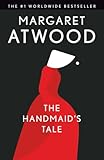
#4 — The Handmaid’s Tale by Margaret Atwood
The Republic of Gilead has replaced the United States: a theocratic totalitarian state in which fertile women are assigned to powerful men as reproductive vessels. Offred, formerly June, narrates her life as a Handmaid — a function, a body, a name that is not a name. Atwood wrote The Handmaid’s Tale as a near-future extrapolation of existing ideologies, and it remains one of the most prescient novels in the English language. The prose has McCarthy’s sense of austerity and witness, and the novel’s portrait of what people do to survive the unsurvivable is among the most searching in contemporary fiction. A different kind of darkness from The Road, but no less serious.
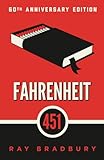
#5 — Fahrenheit 451 by Ray Bradbury
In a future America, firemen burn books. Guy Montag is a fireman who begins to read. Bradbury’s short novel is the most fable-like entry on this list — its world is more schematic than McCarthy’s or Atwood’s, its dangers more allegorical than literal. But it belongs here because its subject is the same: what happens to the human spirit when the things that make us human are systematically destroyed, and what it costs to resist that destruction. The ending, in which a group of book-memorizers walks through a burning city, has an image of endurance that rhymes with The Road’s own.
#6 — Brave New World by Aldous Huxley
Where 1984 fears a future of pain, Brave New World fears a future of pleasure — a world state in which conditioning and soma have eliminated discomfort, dissent, and genuine feeling. Bernard Marx is vaguely unhappy in a world designed to make unhappiness impossible; John the Savage, raised outside the World State, arrives with literature and faith and passion and is destroyed by both. Huxley’s novel sits at a different angle from The Road — it is a critique of comfort rather than a portrait of extremity — but the question underneath both books is the same: what does it mean to be human when the conditions of humanity have been stripped away.
Parental Love in Extremis
#7 — A Fine Balance by Rohinton Mistry
Four strangers share an apartment in an unnamed Indian city during Indira Gandhi’s Emergency of the mid-1970s: a widow, her nephew’s friend, and two tailors from a lower caste who have come to the city looking for work. A Fine Balance is one of the most emotionally devastating novels of the twentieth century — not post-apocalyptic in setting, but apocalyptic in its portrait of what history does to ordinary people who have no power over it. Mistry writes with the same refusal to look away that McCarthy brings to The Road, and the love between his characters — not romantic love but the love of people who have survived together — is equally hard-won and equally real. It will break you.
#8 — All Quiet on the Western Front by Erich Maria Remarque
Paul Baumer enlists in the German army in the First World War at nineteen and watches his generation be consumed. Remarque’s novel is the defining anti-war novel in the English-language canon, and it belongs here because of what it shares with The Road: the stripped-back prose, the accumulating losses, the way violence erodes the self, and the question of how to remain human under conditions designed to unmake you. There is no father-son bond here, but there is a brotherhood — men keeping each other alive as long as they can — and the grief when it finally ends is of a kind with McCarthy’s.
Bleak and Beautiful Literary Fiction
#9 — On the Beach by Nevil Shute
A nuclear war has rendered the Northern Hemisphere uninhabitable. The fallout is drifting south. In Melbourne, Australia, the remaining population waits for the radiation cloud that is already killing everything above them. Shute’s 1957 novel is among the most quietly devastating works of the twentieth century: it contains no explosions, no action, no survival. Only the ordinary lives of ordinary people trying to find meaning in the time they have left, making plans they know they will not live to carry out. Where The Road is about surviving at all costs, On the Beach is about dying with dignity, and the sadness of the latter is as profound as the terror of the former.
#10 — The Stand by Stephen King
A weaponized flu kills ninety-nine percent of the world’s population. The survivors are drawn toward two poles: the benevolent Mother Abagail in Nebraska and the demonic Randall Flagg in Las Vegas. The Stand is everything The Road is not — long, populated, plotted, and ultimately hopeful — and that contrast is precisely why it belongs on this list. For readers who find McCarthy’s novel too unrelenting, King’s novel offers the same catastrophic premise processed through a more traditional narrative architecture: community, purpose, the possibility of rebuilding. It is also King at full stretch, one of the great American popular novels.
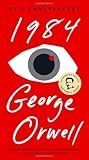
#11 — 1984 by George Orwell
Winston Smith works for the Party in Oceania, rewriting the past to suit the needs of the present. He begins, in secret, to think for himself. Orwell’s novel is the foundational text for a great deal of what came after it, including The Handmaid’s Tale, and it belongs here because of what it shares with The Road at the level of texture: the grey, exhausted world, the sense of existing under permanent surveillance, and the love story that takes place in the ruins of freedom. The torture sequence in Room 101 is the novel’s most famous passage, but its most devastating scene may be the one immediately after — the complete unmaking of a person — which echoes the worst thing The Road asks you to contemplate.
How to Choose Your Next Read
If you want more McCarthy: start with No Country for Old Men, then Blood Meridian when you are ready for something harder.
If you want post-apocalyptic fiction with more hope: Station Eleven is the natural choice — same collapsed world, different emotional register.
If you want the most emotionally devastating literary fiction: A Fine Balance or On the Beach, depending on whether you want the twentieth century or a near future.
If you want the closest match in dystopian scope: The Handmaid’s Tale or 1984.
If you want something longer and more plot-driven: The Stand.
For the Best Fiction Books
For the definitive guide to fiction — the greatest novels across literary fiction, classics, and contemporary writing — see our Best Fiction Books of All Time list.
More Post-Apocalyptic Fiction Reading Guides
- Books Like Station Eleven: Pandemic, Memory, and Art
- Books Like Never Let Me Go: Quiet Dystopia and Memory
Affiliate disclosure: Links to Amazon on this page are affiliate links. We earn a small commission at no extra cost to you. This does not influence our editorial recommendations.
Frequently Asked Questions
Should I read The Road if I have children?
That depends on your tolerance for devastation. Many parents report that The Road hits differently — and far harder — after having children, because the father's love and terror become viscerally real in a way they are not when read younger. It is not a book that offers comfort, and the father's constant fear of what will happen to his son if he dies first is relentless. You will get through it. You may not be entirely okay afterward. It is still worth reading.
What other Cormac McCarthy books should I read after The Road?
If you want to stay with McCarthy's most accessible and emotionally direct work, No Country for Old Men is the natural next step — quieter in its violence but equally bleak in its worldview. Blood Meridian is his most acclaimed and most extreme novel, a historical epic of scalp hunters on the Texas-Mexico border that is among the most violent books in American literature. The Border Trilogy, beginning with All the Pretty Horses, is McCarthy at his most romantic and most readable. Start with No Country for Old Men if you are unsure.
How does The Road end?
The father dies. After weeks of walking south, he is too ill to continue, and he spends his remaining days preparing his son as best he can. The boy, alone and terrified, is found by a family — a man, a woman, and their children — who appear to be among the 'good guys' the father always insisted existed. The boy goes with them. The novel ends on a note of fragile, hard-won hope: not a rescue or a resolution, but the boy finding people willing to carry him forward. It is one of the most quietly devastating and quietly hopeful endings in contemporary fiction.