Books Like Station Eleven: Post-Pandemic Novels
Emily St. John Mandel's flu pandemic that destroys civilization — and the Travelling Symphony performing Shakespeare in the ruins — is the most hopeful post-apocalyptic novel ever written. These books share its belief that art survives, its non-linear structure, and its elegiac beauty.
Emily St. John Mandel’s Station Eleven was published in 2014, six years before a pandemic restructured the world’s understanding of what civilizational collapse might actually look like. It begins with a famous actor dying on stage during a production of King Lear in Toronto, and within weeks a flu pandemic has killed most of the world’s population. The novel then moves between the weeks before the collapse, the night of the actor’s death, and twenty years later, when a traveling troupe of musicians and actors called the Travelling Symphony performs Shakespeare and classical music for the scattered settlements of the Great Lakes region. On the side of their caravan: survival is insufficient.
What Mandel does with this premise is not what post-apocalyptic fiction usually does. She is not interested in the mechanics of collapse or in the action-thriller logic of survival. She is interested in what people keep when they lose everything, and in the invisible connections between lives — the actor who dies on stage, the paramedic who tried to save him, the actress who loved him, the child who witnessed his death and grows up to be a member of the Symphony. The novel’s non-linear structure makes those connections visible slowly, so that by the end each character is surrounded by a web of relationships they could not have mapped and the reader can. It is a novel about interconnection, rendered in prose that earns every moment of beauty it reaches for.
The books below were chosen for readers who responded to its post-apocalyptic hope, its non-linear architecture, its central argument about art and survival, or its specific elegiac register — the grief for a world that is gone combined with faith that something essential persists.
Post-Apocalyptic Literary Fiction
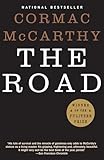
#1 — The Road by Cormac McCarthy
McCarthy’s version of the end of the world is the bleakest possible counter-argument to Mandel’s. A man and his son walk through a dead America after an unspecified catastrophe, carrying fire — by which the novel means something like the last remaining goodness — through a landscape where everything has been reduced to ash and the primary danger is other people. Where Mandel’s post-collapse world contains Shakespeare and music and the gradual reconstruction of community, McCarthy’s contains nothing: no art, no beauty, no surviving civilization, only a father’s love for his son and the question of whether that is enough to justify continuing. Reading both novels together is the most honest post-apocalyptic education available.
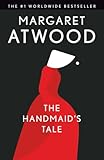
#2 — The Handmaid’s Tale by Margaret Atwood
Atwood’s Gilead is a civilization reorganized by catastrophe — environmental collapse and mass infertility — according to a theocratic logic that redistributes women as reproductive property. What Station Eleven and The Handmaid’s Tale share is the sense of a world that still exists but has been fundamentally reordered, and the question of what survives inside the people who live in it. Offred, like the members of the Travelling Symphony, preserves something essential in secret — her voice, her irony, her memory of who she was. Atwood’s tone is colder and more politically explicit, but the underlying question is the same: what does humanity keep when the civilizational container is destroyed?
#3 — The Leftovers by Tom Perrotta
On one ordinary day, two percent of the world’s population simply vanishes. No explanation. No pattern. The people left behind — the leftovers — must construct a life inside an absence they cannot account for. Perrotta’s novel is less interested in the mechanics of survival than in the psychology of the people who remain: the Guilty Remnant, a cult that wears white and never speaks; the man who becomes a kind of secular saint; the families fragmenting under the weight of unprocessable grief. It shares with Station Eleven the focus on how people make meaning after catastrophe and the sympathy with which it treats the full range of human responses to the unthinkable.
#4 — On the Beach by Nevil Shute
A nuclear war has destroyed the Northern Hemisphere and the radiation is moving south. The people of Australia wait. Shute’s 1957 novel is the civilian apocalypse without survival — the end is certain and everyone knows it — and the question is not how to rebuild but how to spend the remaining months. The novel’s response is nearly Mandel’s: people plant gardens, run car races, fall in love, maintain their habits and their dignity. It is less a novel about dying than about how to live inside the knowledge that everything ends. For readers drawn to Station Eleven’s elegiac quality — the grief for what is already gone — On the Beach is the purest expression.
Memory, Art, and What Survives
#5 — Never Let Me Go by Kazuo Ishiguro
Three friends who grew up in a boarding school called Hailsham are shown living out the purpose for which they were created, in a world that has decided their purpose justifies their existence. Ishiguro’s novel shares with Station Eleven the elegiac register — the narrator speaking from a vantage point of retrospection about a past whose shape is only now becoming clear — and the central question of what art and love mean inside a life that has been constrained by forces larger than any individual. The Hailsham students make art as obsessively as the Travelling Symphony performs. Both novels ask whether the making matters even when the world is indifferent to it, and both answer yes, cautiously, with full knowledge of the cost.
#6 — The Glass Bead Game by Hermann Hesse
In an unspecified future, an intellectual order called Castalia devotes itself to the Glass Bead Game — an elaborate synthesis of all human artistic and intellectual achievement — in deliberate isolation from the political world outside. Hesse’s novel asks the most direct form of Station Eleven’s question: can culture preserve itself by withdrawing from the world that produces it, or does the withdrawal make it sterile? The Travelling Symphony answers by going out into the ruins; Castalia answers by staying in. The dialogue between them is one of the most interesting you can construct from books alone, and The Glass Bead Game is the most serious literary treatment of the idea that art is what civilization is actually for.
#7 — A Gentleman in Moscow by Amor Towles
Count Alexander Rostov, confined to the Metropol Hotel for life, responds by becoming the most civilized possible version of himself — preserving literature, taste, friendship, and beauty within the constraint of four walls and a history moving catastrophically outside them. He is the Travelling Symphony in a single person: the argument that art and grace are not luxuries but the core of what it means to be human, maintainable under any conditions. Towles’s prose has the same formal elegance as Mandel’s, and the novel shares her faith that the civilized impulse — the desire to make beautiful things and attend to them — survives whatever history does to the buildings that contain it.
Non-linear Structure and the Haunted Present
#8 — Beloved by Toni Morrison
Sethe, a formerly enslaved woman living in Cincinnati after the Civil War, is haunted by the ghost of a daughter she killed to prevent her recapture into slavery. Morrison’s novel does not move linearly — it circles its central trauma, approaching and retreating, letting the past seep into the present in the way actual traumatic memory works. Station Eleven borrows this structure for a different purpose: the pre-collapse world seeping into the post-collapse present, the dead actor whose life connects everyone. Both novels are built on the premise that the past is not past, that it inhabits the present in bodies and houses and the way people hold themselves.
#9 — Cloud Atlas by David Mitchell
Six interconnected narratives across five centuries — from a nineteenth-century Pacific voyage to a post-apocalyptic future — each nested inside the next, each concerning the relationship between power and survival and the question of whether human nature changes. Mitchell’s structural ambition is greater than Mandel’s, and the post-apocalyptic Sloosha’s Crossin’ section is the most direct parallel to Station Eleven’s future timeline: a world after collapse where oral storytelling is the primary technology of memory. Both novels ultimately argue that something passes from person to person across time — a comet-shaped birthmark in Mitchell, a graphic novel called Station Eleven in Mandel — and that this transmission is what culture actually is.
#10 — American War by Omar El Akkad
In the late twenty-first century, the American South has seceded again over oil, and a civil war has reduced parts of the country to refugee camps and occupied territories. Sarat Chestnut, a girl from Louisiana, grows up inside the war and is shaped by it in ways she cannot fully understand. El Akkad’s novel shares with Station Eleven the future-America setting and the interest in ordinary civilians caught inside historical catastrophe, but replaces Mandel’s hope with a clear-eyed account of how trauma transmits through generations and how the powerful manufacture the soldiers they need. It is the darker answer to the same question about what survives.
How to Choose Your Next Read
If you want the bleakest possible counter-argument: The Road — no art survives, only the fire.
If you want the most politically explicit parallel: The Handmaid’s Tale — civilization reorganized, not destroyed.
If you want the closest in prose elegance and faith: A Gentleman in Moscow — the Count as one-man Travelling Symphony.
If you want the most structurally ambitious: Cloud Atlas — six nested timelines, post-apocalyptic future included.
If you want the elegiac register without the hope: Never Let Me Go — the shadow version of the same argument.
For the Best Fiction Books
For the definitive guide to fiction — the greatest novels across literary fiction, classics, and contemporary writing — see our Best Fiction Books of All Time list.
More Literary Speculative Fiction Guides
- Books Like The Road: Survival, Love, and the End of the World
- Books Like Never Let Me Go: Quiet Dystopia and Loss
Affiliate disclosure: Links to Amazon on this page are affiliate links. We earn a small commission at no extra cost to you. This does not influence our editorial recommendations.
Frequently Asked Questions
Is Station Eleven a pandemic novel?
Yes, though calling it a pandemic novel undersells what it is doing. The Georgian Flu that kills most of humanity in the first pages is less the subject of the novel than its premise — a way of removing civilization to see what people choose to preserve once it is gone. Mandel is less interested in the mechanics of collapse than in the question of what survives: art, memory, love, the desire to perform Shakespeare for people who have never seen a theater. The pandemic is the wound; the novel is about whether the wound heals and what scar tissue looks like. Readers who picked it up during the Covid pandemic in 2020 and 2021 found it unusually resonant for exactly this reason.
What is the meaning of 'survival is insufficient' in Station Eleven?
The Travelling Symphony has painted 'survival is insufficient' on the side of their caravan — the phrase borrowed from a Star Trek: Voyager episode that one of the characters watched before the collapse. In context it means that merely staying alive is not enough: humans require art, beauty, meaning, community, and the specific pleasures of made things to be fully human. The novel builds its entire argument around this claim. The Symphony performs Shakespeare in the ruins because the audiences need it, and because the performers need it, and because a world in which people only survive and do not create or attend to beauty is not a world worth preserving. The phrase is the novel's thesis in four words.
What are the best books like Station Eleven for readers who want more hope than despair?
Station Eleven is unusual among post-apocalyptic novels for its hopefulness, and that hope is the hardest quality to find elsewhere. A Gentleman in Moscow by Amor Towles is the closest in spirit — a man who preserves civilization and beauty within extreme constraint, with the same elegance of prose and faith in human creativity. The Midnight Library by Matt Haig is more contemporary and explicit in its optimism. For readers who want the non-linear structure and the sense of multiple timelines braided together, Cloud Atlas by David Mitchell covers similar ground with more ambition. Never Let Me Go by Kazuo Ishiguro offers the elegiac register and the love story within constraint, but without the hope — it is the shadow version of Station Eleven's argument.