Books Like Never Let Me Go: Quiet Dystopias
Ishiguro's novel about clones who accept their fate with heartbreaking passivity is unlike any other dystopia. These books share its quality of muted devastation — lives shaped by systems they cannot name or escape.
By Lena Fischer

Kazuo Ishiguro’s Never Let Me Go is a dystopia that refuses to behave like one. There are no armed guards, no dramatic escapes, no rebel underground. Kathy H., narrating in a flat and careful voice from somewhere in the 1990s, recalls her childhood at Hailsham, an English boarding school where the students made art, fell in love, argued over cassette tapes, and were slowly, gently prepared for the fact that they would one day donate their organs and die. They know this from an early age. They do not revolt. The horror of the novel accumulates in the gap between what the characters know and what they allow themselves to feel about it, and that gap turns out to be something most readers recognize in themselves.
The book belongs to at least three traditions at once. It is science fiction in its premise, literary fiction in its execution, and a novel of memory in its structure — Kathy narrates retrospectively, circling back, qualifying, revising, in the way that memory actually works rather than the way novels usually represent it. This retrospective mode is Ishiguro’s signature: his narrators are always looking backward at a life whose shape was different from what they believed while they were living it. The cost of what was not said, not done, not acknowledged in time — this is the emotional territory he has staked out across his career, and Never Let Me Go is its most devastating expression.
The books below were chosen for readers who responded to that specific emotional register — the muted devastation, the lives shaped from the outside by systems the characters cannot name or escape — or to its companion concerns: memory as both preservation and distortion, the institutional shaping of selfhood, and the question of what it means to love someone when everything about the arrangement is wrong. They are grouped by what they share most closely with Ishiguro.
More Kazuo Ishiguro
#1 — The Remains of the Day by Kazuo Ishiguro
Stevens, a meticulous English butler at Darlington Hall, takes a motoring holiday through the English countryside and spends it recalling his decades of service to Lord Darlington — a man who turned out to have been a Nazi sympathizer — and the housekeeper Miss Kenton, with whom he may or may not have been in love, and will not quite admit to either. The Remains of the Day is the clearest structural parallel to Never Let Me Go: the same retrospective narrator, the same repression, the same catastrophic gap between what was felt and what was said. The difference is that Stevens’s prison is not biological but psychological, which in the end feels like no less of a sentence.
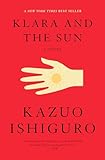
#2 — Klara and the Sun by Kazuo Ishiguro
Klara is an Artificial Friend — a solar-powered robot displayed in a store window, waiting to be chosen by a child. She is chosen by Josie, a teenager whose health is failing, and spends the novel observing human behavior with a precision and a devotion that gradually become indistinguishable from love. Ishiguro’s most recent major novel revisits the terrain of Never Let Me Go from the inside of the non-human consciousness that is asked to care: Klara, like the Hailsham students, has been made for a purpose she did not choose, and accepts it with a serenity that the reader finds beautiful and disturbing in equal measure.
#3 — The Buried Giant by Kazuo Ishiguro
An elderly British couple, Axl and Beatrice, journey across a post-Arthurian landscape where a strange mist has caused everyone to forget the recent past — including, they gradually realize, a massacre. Ishiguro’s most formally unusual novel asks whether collective memory can be merciful: if the forgetting is protecting people from grief and guilt, is unearthing the past an act of justice or cruelty? The same question runs under Never Let Me Go — what the characters know, what they choose not to know, what knowing costs them — but here it is rendered as fable, at the scale of a nation rather than three friends.
Quiet Dystopias
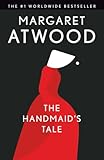
#4 — The Handmaid’s Tale by Margaret Atwood
In the Republic of Gilead, a theocratic state that has replaced the United States, fertile women are assigned as Handmaids to powerful men and required to bear children for them. Offred, the narrator, moves carefully through a world of enforced silence, coded communication, and daily ceremonies of degradation. Atwood’s 1985 novel is more overtly political than Ishiguro and more angry — Offred’s resistance is more pointed than Kathy’s acceptance — but it shares the quality of a recognizable world turned slightly wrong, and the same retrospective structure: we are reading a testimony recorded after the fact, its truth uncertain. The essential companion for readers interested in the literary dystopia.
#5 — The Road by Cormac McCarthy
A father and his young son walk south through a post-apocalyptic America, carrying almost nothing, hiding from the people who remain. McCarthy’s Pulitzer Prize-winning novel is the most extreme version of Never Let Me Go’s central question — what do you hold onto when everything is being taken? — stripped of all comfort and rendered in a prose so bare it approaches silence. The father’s love for the boy, and the boy’s innate moral sense in a world with no basis for morality, are set against a landscape of absolute desolation. Where Ishiguro keeps the horror at a distance through indirection, McCarthy brings it entirely close.
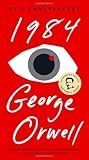
#6 — 1984 by George Orwell
Winston Smith in Airstrip One keeps a diary, falls in love, and is destroyed by the state he has committed the crime of doubting. Orwell’s novel is the founding document of the literary dystopia and the essential reference point for the form: everything that comes after it — including Atwood, including Ishiguro — is in some sense a response to what Orwell imagined. Where Never Let Me Go shows people who accept the system, 1984 shows what happens when someone tries to refuse it and fails. The telescreens, the doublethink, the Room 101 — these have become part of the shared vocabulary of how we think about power and the self.
#7 — Beloved by Toni Morrison
Sethe, a formerly enslaved woman living in Cincinnati in 1873, is haunted by the ghost of the daughter she killed rather than allow to be returned to slavery. Morrison’s novel is not a dystopia in the science-fiction sense, but it is the most profound literary treatment of people processed as property and the task of reconstruction that follows — the emotional territory of Never Let Me Go (systematic violation of persons, the question of what selfhood survives institution) rendered through the actual history of American slavery. The ghost is real. The horror is historical. The novel is among the greatest works of American fiction.
Retrospective Narrators and Lost Innocence
#8 — The Sound and the Fury by William Faulkner
The Compson family of Jefferson, Mississippi, told four times from four perspectives — including Benjy, who is severely cognitively disabled, and Quentin, who narrates the day of his suicide at Harvard from inside the fractured loops of his own memory. Faulkner’s 1929 novel is the most technically demanding book on this list, and the most different from Ishiguro in tone and method. But Quentin Compson’s section — a man trapped in a past he cannot survive, narrating from within the hours before he drowns himself — is the most extreme version of the retrospective narrator destroyed by what he cannot stop remembering. The lost innocence here is not just personal but historical: the fall of a Southern family as the fall of a way of life.
#9 — Human Acts by Han Kang
In 1980, the South Korean army massacred pro-democracy protesters in Gwangju. Han Kang’s 2014 novel moves through multiple perspectives — survivors, perpetrators, the ghost of a boy who died — across the decades that followed, asking what the people who lived through it owe to the people who did not. Like Never Let Me Go, it is structured around the retrospective reckoning with an event whose full horror could not be absorbed at the time. Han Kang writes violence the way Ishiguro writes the absence of feeling: quietly, precisely, in a way that makes the reader carry more than they expected.
#10 — A Pale View of Hills by Kazuo Ishiguro
Ishiguro’s very first novel, published in 1982, follows Etsuko, a Japanese woman living in England, who receives a visit from her daughter and spends it recalling a friendship formed in postwar Nagasaki — a friendship with a disturbed young mother and her strange child. A Pale View of Hills is slimmer and less polished than his later work, but it contains in miniature everything Never Let Me Go would later expand: the unreliable retrospective narrator, the sense of memory as displacement rather than recovery, the loss that cannot be named directly but shapes every sentence. It is the earliest version of the mode he would spend forty years perfecting.
How to Choose Your Next Read
If you want the closest Ishiguro parallel: The Remains of the Day — the same repression, the same retrospective devastation, without the speculative premise.
If you want the most contemporary Ishiguro: Klara and the Sun — the same questions about personhood and acceptance, from inside a non-human consciousness.
If you want the essential literary dystopia: The Handmaid’s Tale — more overtly political, equally retrospective, the founding text of the form.
If you want the most emotionally extreme: The Road — McCarthy’s version of the same central question, with every comfort stripped away.
If you want the most profound literary companion: Beloved — Morrison on what it costs to survive being processed as property, the greatest of all American novels on that subject.
For the Best Fiction Books
For the definitive guide to fiction — the greatest novels across literary fiction, classics, and contemporary writing — see our Best Fiction Books of All Time list.
More Literary Speculative Fiction Guides
- Books Like The Remains of the Day: Repression and the Life Unlived
- Books Like Station Eleven: Pandemic and the Persistence of Art
Affiliate disclosure: Links to Amazon on this page are affiliate links. We earn a small commission at no extra cost to you. This does not influence our editorial recommendations.
Frequently Asked Questions
What is Never Let Me Go really about?
On the surface, it is a novel about clones raised at an English boarding school to donate their organs in adulthood. But Ishiguro has said the clones are not really about biotechnology — they are about all of us, and the way we absorb and accept the conditions of our existence without fully confronting them. The real subject is deferral: the way Kathy, Tommy, and Ruth know what is coming and never quite face it, maintaining the small dramas of friendship and romance as the larger horror assembles around them. The horror is not the science fiction premise but the recognizable human capacity for acceptance.
Is Never Let Me Go science fiction?
It uses a science fiction premise (a world where human clones are created for organ donation) but operates as literary fiction — the technology is kept vague, the world's differences from ours are minimal, and the focus is entirely on the interior lives of three friends. Ishiguro has said he wanted to explore memory, loss, and the acceptance of mortality, and that the clone premise was simply the cleanest way to make that structure visible. Readers who don't normally read science fiction will not find it alienating; readers who want hard SF worldbuilding will find it thin. It belongs to both genres and fully satisfies neither, which is exactly what literary fiction usually does with genre premises.
What should I read after Never Let Me Go?
Ishiguro's The Remains of the Day covers the same emotional territory — a repressed narrator, a life shaped by service to an institution, the cost of what was never said — in a historical rather than speculative setting. The Buried Giant is his most experimental novel, a post-Arthurian fable about collective memory. Beyond Ishiguro, Margaret Atwood's The Handmaid's Tale and Kazuo Ishiguro's own Klara and the Sun (about an AI companion) share the quiet dread; Donna Tartt's The Secret History shares the retrospective narrator who knows the ending from the beginning.