Books Like The Remains of the Day: Regret & Restraint
Kazuo Ishiguro's Stevens — an English butler who drove across England to visit a former housekeeper, examining his service to a Nazi-sympathizing lord and the love he never allowed himself — is one of fiction's great portraits of self-deception. These books share its quietly devastating account of the unlived life.

Kazuo Ishiguro’s The Remains of the Day is not a novel about what happens. It is a novel about what does not happen, and what a life looks like when you catalogue what you chose not to feel. Stevens, the head butler of Darlington Hall, drives across England in a borrowed car to visit Miss Kenton, a former housekeeper, and narrates the journey while narrating, obliquely and with enormous care, the twenty years of service he gave to a lord who turned out to be a Nazi sympathizer — and the love he never allowed himself to acknowledge. The novel won the Booker Prize in 1989. It is one of the best-constructed literary performances of the twentieth century.
The technique is unreliable narration carried to its logical extreme. Stevens believes what he says. He believes that professional dignity — what he calls “greatness” in a butler — required the suppression of all personal feeling. He believes his service to Lord Darlington was honorable. The reader can see, in the gaps between his sentences, that he is wrong about both, and has been for thirty years. Ishiguro does not editorialise. He simply gives Stevens the rope and lets the character construct his own quietly devastating self-indictment.
The books below were chosen for readers who responded to that portrait of self-deception, that particular English quality of understatement carried until it becomes a form of dishonesty, and the unlived life as the novel’s true subject. They are grouped by what they most closely share: Ishiguro’s other explorations of the same territory, the literature of repression and duty, and the novels that treat nostalgia and irrecoverable time with equal seriousness.
More Kazuo Ishiguro
#1 — Never Let Me Go by Kazuo Ishiguro
Kathy H., looking back on her childhood at Hailsham and her friendships with Tommy and Ruth, tells her story with the same controlled, careful voice Stevens uses — the same avoidances, the same sense that understanding is being deferred until the narrator is ready to face it. Never Let Me Go is Ishiguro’s other masterpiece of repression, and it arrives at the same place as The Remains of the Day: characters who accepted lives not of their choosing and found dignity, or something like dignity, within them. The science fiction premise — Hailsham’s students are clones raised to donate their organs — makes Stevens’s self-imposed constraints visible as a structural condition. The life not fully lived is not a personal failure but a systemic one.
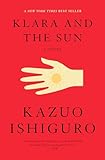
#2 — Klara and the Sun by Kazuo Ishiguro
Klara is an Artificial Friend — a solar-powered companion robot — who observes the family that buys her with the same careful, slightly distanced attention Stevens brings to Darlington Hall. Ishiguro gives her a narrator’s voice of extraordinary precision: she notices everything, interprets some things wrongly, and understands more than she is supposed to. The novel is his most recent major work and the one most directly in conversation with The Remains of the Day: what does it mean to serve, to be devoted, to subordinate your own interiority to someone else’s needs? Klara’s devotion is as absolute as Stevens’s, and Ishiguro is as interested in what it costs.
#3 — The Buried Giant by Kazuo Ishiguro
An elderly couple, Axl and Beatrice, travel across a post-Arthurian England where a mysterious mist has caused everyone to forget their past. The novel is Ishiguro’s most overtly allegorical work and his most underread: critics were confused by the fantasy setting, but the theme is continuous with everything else he has written. The collective amnesia is Stevens’s personal amnesia writ large — a society that has chosen not to remember an atrocity in order to sustain a peace. The question of whether some forgetting is necessary and whether it always costs the same thing is the question Stevens’s self-deception raises at the individual level.
Repression, Duty, and the Price of Service
#4 — A Gentleman in Moscow by Amor Towles
Count Alexander Rostov is placed under house arrest in the Metropol Hotel by a Bolshevik tribunal and confined to its rooms for the rest of his life. What Stevens achieves through self-imposed emotional constraint, the Count achieves through externally imposed physical constraint — and both arrive at the same paradox: the constrained life, fully inhabited, may contain as much as any life of freedom. Towles’s novel is warmer than Ishiguro’s and more comic, but the central argument is the same. The question of what a man owes to his time, his class, and his own sense of dignity — and what he sacrifices in paying that debt — runs through both books.
#5 — Washington Square by Henry James
Catherine Sloper, plain and wealthy, is courted by the charming Morris Townsend, who her father believes is after her money. Henry James’s short novel is the New World Stevens: a person who suppresses their own desires in deference to an authority figure (here the father rather than the lord) and pays for it with their life’s happiness. James is as interested as Ishiguro in what repression looks like from the inside — the way Catherine tells herself stories about her own situation that are and are not true. Washington Square is brief and perfectly made, and its ending has the same quality as Stevens’s pier — the moment when a character finally understands what they have lost.
#6 — The Portrait of a Lady by Henry James
Isabel Archer, an American heiress who comes to Europe determined to live freely and on her own terms, chooses — against all advice and against her own apparent interest — to stay in a terrible marriage to Gilbert Osmond. James’s longest and most ambitious novel is an extended meditation on the unlived life as a moral act: Isabel’s refusal to leave is, in her own account, an assertion of the self that is also a destruction of the self. The novel shares with The Remains of the Day a fascination with characters who understand their own situation with painful clarity and choose it anyway, and who find something in that choice that looks, from the outside, incomprehensible.
#7 — Howards End by E.M. Forster
Forster’s novel — “Only connect” — is the great English novel about the class system and the emotional costs of upholding it. The Wilcoxes, practical and successful, and the Schlegels, intellectual and feeling, collide over the fate of a country house and a young clerk named Leonard Bast. Forster is asking what it costs English people to be English in the way Stevens is English: to value propriety over expression, service over self. Howards End is more overtly political than The Remains of the Day and more interested in the class collision, but it gives Stevens his world in novelistic form and shows what happens to people who cannot cross the gap he refuses even to approach.
Nostalgia and the Irrecoverable Past
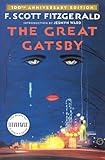
#8 — The Great Gatsby by F. Scott Fitzgerald
Gatsby reaches for the green light across the water — the past that can be recovered, the dream that can be repeated — and Fitzgerald’s narrator watches him do it with the same clear-eyed admiration and pity that the reader brings to Stevens. Both novels are about men who have built their identities around a service to something — Gatsby to the idea of Daisy, Stevens to the idea of Darlington — that turns out to be unworthy of the devotion. And both are narrated retrospectively, from the knowledge of loss. The green light and the West Country road trip are the same journey.
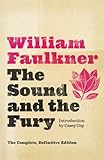
#9 — The Sound and the Fury by William Faulkner
The Compson family’s collapse is narrated in four sections, one of which belongs to Quentin — a Harvard student whose obsession with his sister Caddy’s lost honor has made the past more real to him than the present. Faulkner’s technique here — the past erupting into the present, the narrator unable to leave the moment that destroyed him — is the pathological version of Stevens’s road trip. Where Stevens moves through England while moving through memory, Quentin is paralyzed by memory entirely. The comparison shows what control Stevens has even in his self-deception, and what lies beneath that control.
#10 — Brideshead Revisited by Evelyn Waugh
Charles Ryder’s love for Sebastian Flyte and for Brideshead itself — the Catholic aristocratic house and family that he entered as an outsider and never quite left — is the English elegy most directly related to The Remains of the Day. Waugh’s narrator is also looking back, also serving a class above his own, also in love with something he cannot name clearly and cannot keep. The Catholic guilt, the English house as moral landscape, the service that is also a form of devotion — all of it echoes Stevens’s world, with the addition of a faith that Stevens notably lacks. Brideshead Revisited is the emotional and social context that The Remains of the Day quietly assumes.
How to Choose Your Next Read
If you want more Ishiguro immediately: Never Let Me Go — the same repressed voice, the same accepted tragedy, equal in achievement.
If you want the warmest option: A Gentleman in Moscow — constraint and dignity with more warmth and comedy.
If you want the most psychologically intense: The Portrait of a Lady — the unlived life examined with James’s surgical precision.
If you want the English social context fully rendered: Howards End — the class system Stevens serves, in novelistic form.
If you want the nostalgic dimension amplified: Brideshead Revisited — the elegy for an England that was never quite real.
For the Best Fiction Books
For the definitive guide to fiction — the greatest novels across literary fiction, classics, and contemporary writing — see our Best Fiction Books of All Time list.
More Kazuo Ishiguro and Literary Fiction Guides
- Books Like Never Let Me Go: Quiet Dystopia and Loss
- Books Like The Overstory: Trees, Ecology, and Human Failure
More World Literary Fiction Guides
Affiliate disclosure: Links to Amazon on this page are affiliate links. We earn a small commission at no extra cost to you. This does not influence our editorial recommendations.
Frequently Asked Questions
Why is The Remains of the Day considered a masterpiece?
The Remains of the Day won the Booker Prize in 1989 and is regularly cited as one of the finest English novels of the twentieth century because of what Ishiguro does with narrative voice. Stevens, the butler, is an unreliable narrator in the most precise sense: he believes what he tells himself, and the reader can see the gap between his account and the truth he is avoiding. The novel's power comes from that gap — the love for Miss Kenton that Stevens will not name, the political judgment he declined to exercise, the life he chose not to live. Ishiguro makes repression itself the novel's subject by making the repressed narrator the storyteller.
Is The Remains of the Day a sad book?
It is one of the saddest books in the English language, but not in an obvious way. There is no melodrama, no death scene, no obvious catastrophe. The sadness accumulates through omission: the things Stevens does not say, the moments he does not take, the afternoon with Miss Kenton that he describes in terms of professional conduct when the reader understands it as the afternoon his life could have changed. The novel's single most devastating scene — Stevens by the pier at the end, watching the lights come on across the bay, finally admitting something to himself — is devastating precisely because nothing happens. The grief is entirely interior.
What order should I read Kazuo Ishiguro's novels?
Most readers who come to Ishiguro through The Remains of the Day should read Never Let Me Go next — it is his other universally acclaimed masterpiece and it shares the repressed narrator and the quietly accepted tragedy. Klara and the Sun (2021) is his most recent major novel and covers similar territory through a science fiction lens. The Buried Giant (2015) is his most underrated and most unusual work — an Arthurian England where collective forgetting stands in for individual repression. His earlier novels, A Pale View of Hills (1982) and An Artist of the Floating World (1986), show the Japanese-English sensibility developing toward the achievement of The Remains of the Day.