Books Like The Overstory: Ecology & Nature Novels
Richard Powers's Pulitzer Prize-winning novel follows nine characters whose lives are changed by trees — and the trees themselves, older and slower and more real than any of them. These books share its ecological vision, its multi-protagonist structure, and its moral urgency about the natural world.
By Natalie Osei
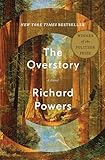
Richard Powers has spent his career writing novels that dare to care about things that novels are not supposed to care about: cellular biology in The Gold Bug Variations, neuroscience in The Echo Maker, computer science in Galatea 2.2. The Overstory, published in 2018 and awarded the Pulitzer Prize, is the culmination of that project — a novel about trees that takes its subject as seriously as any novel has taken anything. Powers spent years researching forest science before writing it, and the result is a book that fundamentally changes how many of its readers see the natural world.
The novel’s structure mirrors its subject. It begins with nine separate stories — the Hoel family chestnut tree photographed across generations, a Vietnamese-American woman who falls from a tree and is dead for several minutes before being revived, an air force pilot who parachutes into a banyan and cannot get down — and those stories gradually converge, the way separate trees form a canopy. The form is the argument: what appears to be separate is actually connected underground, and the connections are where the real life happens.
The books below were chosen for readers who responded to The Overstory’s ecological vision, its formal ambition, or both. They range from the nonfiction science Powers drew from directly, to novels that share its multi-protagonist structure, to books that share its sense of deep time — the understanding that human history is a brief interruption in a much longer story.
Ecology and the Human Relationship to Nature
#1 — The Hidden Life of Trees by Peter Wohlleben
Wohlleben is a German forester who spent decades in a managed commercial forest before noticing that the trees around him were doing things he had not been trained to see: communicating through scent, sharing nutrients with sick neighbors through root networks, apparently grieving when companions were cut down. His 2015 book is the nonfiction account of those observations, written for a popular audience with the warmth of a man who has genuinely fallen in love with his subject. Powers drew directly from Wohlleben’s research for The Overstory — the character Patricia Westerford is partly based on him as well as Suzanne Simard — and readers who want to understand what the novel is built on will find this essential. It is also simply a wonderful book: accessible, surprising, and quietly revolutionary.
#2 — Braiding Sweetgrass by Robin Wall Kimmerer
Kimmerer is a botanist and member of the Citizen Potawatomi Nation whose 2013 book braids Western plant science with Indigenous knowledge of the natural world — specifically the Potawatomi understanding that plants are not objects but beings with their own purposes, and that the relationship between humans and the natural world is one of reciprocal obligation rather than extraction. Braiding Sweetgrass is the philosophical companion to The Overstory: where Powers dramatizes the failure of the extractive relationship, Kimmerer describes the alternative that has existed in Indigenous knowledge systems and been systematically destroyed. It is one of the most beautiful and morally serious works of nonfiction published in the last decade.
#3 — The Sixth Extinction by Elizabeth Kolbert
Kolbert’s 2014 Pulitzer-winning work of science journalism is The Overstory’s anger in scientific form: the documentation of what we are doing to life on earth, told through thirteen species that are already extinct or nearly so, each chapter a visit to a different ecosystem under pressure. Where Powers asks readers to feel the loss through fiction, Kolbert presents the evidence directly — the acidifying oceans, the disappearing amphibians, the coral bleaching — with a precision that makes denial difficult. It won the Pulitzer Prize in the same decade as The Overstory because both books are responding to the same emergency, and reading them together gives the fiction a factual grounding and the journalism an emotional resonance.
#4 — A Sand County Almanac by Aldo Leopold
Leopold’s 1949 collection is the founding text of American environmental ethics — the book that articulated the land ethic, the argument that humans have a moral obligation to the land community (soil, water, plants, animals) that conventional ethics has failed to recognize. Written as a series of monthly observations from his Wisconsin farm, it is also a work of literary prose: Leopold was a scientist who could write like a poet, and the famous account of watching the light in a dying wolf’s eyes is one of the passages most cited in American environmental writing. The Overstory is the dramatization of Leopold’s land ethic — Powers puts his characters through what Leopold articulates — and reading the original gives the novel’s moral arguments their full genealogy.
Multi-Protagonist Structures
#5 — Cloud Atlas by David Mitchell
Mitchell’s 2004 novel is the most formally ambitious multi-protagonist structure in recent British fiction: six nested narratives across five centuries, each story interrupted at its midpoint and resumed in reverse order in the second half, with each story’s protagonist discovering the text of the previous story. Like The Overstory, Cloud Atlas uses structural experiment to make an argument about connection across time — the sense that individual lives are chapters in a much longer story, and that the choices made now will determine what is possible in the future. Mitchell’s scope is galactic where Powers’s is ecological, but both novelists share the conviction that the conventional single-protagonist novel is too small a container for the truths they need to tell.
#6 — The Hours by Michael Cunningham
Cunningham’s 1998 Pulitzer winner follows three women in three time periods — Virginia Woolf in 1923, a housewife in 1950s Los Angeles, a New York editor in 1999 — connected by Mrs Dalloway and by the question of what it means to choose the life you are living. The parallel lives illuminate each other in the way that Powers’s nine characters illuminate each other: the structure is the meaning, and what appears to be three separate stories is actually one argument about the cost of consciousness and the desire for something more real than the life available. For readers drawn to the formal elegance of The Overstory’s structure, The Hours offers one of the most precise examples of the braided multi-protagonist form.
#7 — A Visit from the Goon Squad by Jennifer Egan
Egan’s 2011 Pulitzer winner is structured as a series of interconnected stories following characters in the music industry across several decades, told from radically shifting perspectives and in radically different forms — including an entire chapter in PowerPoint slides. Like The Overstory, it uses its structural fragmentation to argue something that could not be argued in a conventional linear novel: that the connections between lives are real even when the people living them cannot perceive them, and that the past presses on the present with a force that does not diminish with time. For readers who loved the structural ambition of Powers’s braided form, Egan offers the most inventive version of it in contemporary American fiction.
Long Time, Deep History
#8 — The Buried Giant by Kazuo Ishiguro
Ishiguro’s 2015 novel is set in post-Arthurian Britain, where an elderly couple sets out on a journey and gradually discovers that the mist covering the land is a kind of enforced forgetting — the land itself holds the memory of a massacre that the survivors cannot afford to remember. The Buried Giant belongs on this list because of its sense of landscape as a bearer of history: the land in Ishiguro’s novel, like the trees in Powers’s, holds what the human characters cannot see and would prefer not to know. The long memory of landscape — the understanding that what happened in a place is not gone but is held in the ground — is the ecological vision that The Overstory shares.
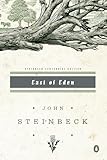
#9 — East of Eden by John Steinbeck
Steinbeck’s 1952 novel opens with one of the great landscape descriptions in American fiction: the Salinas Valley in California, its eastern and western ranges with their different characters and climates, the valley floor as the stage on which human drama is played out. The land in East of Eden is not a backdrop but a character — older than the Trask and Hamilton families who farm it, indifferent to their struggles, beautiful in a way that human beauty is not. Powers shares this understanding: the trees in The Overstory predate the nation whose history unfolds around them, and they will outlast it. For readers who want the ecological vision embedded in a more conventional narrative, East of Eden is the natural choice.
#10 — The Goldfinch by Donna Tartt
Tartt’s 2014 Pulitzer winner follows a painting — Fabritius’s small Dutch masterpiece from 1654 — through decades and across continents as it is held by different hands and survives different catastrophes. The painting in The Goldfinch operates the way the trees operate in The Overstory: it is the long-lived thing that outlasts all the human dramas surrounding it, a carrier of value on a timescale that human lives cannot match. Both novels use an object’s or organism’s longevity to establish perspective on human urgency — to suggest that what we treat as permanent is brief, and what we treat as backdrop is the real story. The comparison is instructive precisely because the two novels reach the same argument through such different material.
How to Choose Your Next Read
If you want the nonfiction science Powers drew from: The Hidden Life of Trees — the real forest communication that the novel dramatizes.
If you want the philosophical alternative to extractive thinking: Braiding Sweetgrass — Kimmerer’s account of Indigenous plant knowledge.
If you want the most formally adventurous multi-protagonist structure: Cloud Atlas — Mitchell’s nested narratives across five centuries.
If you want deep landscape in a more conventional novel: East of Eden — Steinbeck’s Salinas Valley as a character older than anyone who farms it.
If you want the urgency in scientific form: The Sixth Extinction — Kolbert’s Pulitzer-winning account of what we are doing.
For the Best Fiction Books
For the definitive guide to fiction — the greatest novels across literary fiction, classics, and contemporary writing — see our Best Fiction Books of All Time list.
More Contemporary Fiction Reading Guides
- Books Like Station Eleven: Pandemic, Memory, and Art
- Books Like The Poisonwood Bible: Africa and Colonialism
Affiliate disclosure: Links to Amazon on this page are affiliate links. We earn a small commission at no extra cost to you. This does not influence our editorial recommendations.
Frequently Asked Questions
What is The Overstory about?
The Overstory follows nine Americans whose lives are changed by trees, in stories that begin independently and gradually converge around a series of events in the Pacific Northwest forests where old-growth trees are being clear-cut. The novel is structured like a tree itself: the first section, 'Roots,' follows each character separately; 'Trunk' brings them together; 'Crown' and 'Seeds' trace what happens after. Powers drew on actual research into forest communication — particularly the work of Suzanne Simard on mycorrhizal networks, the underground fungal connections through which trees share nutrients and signals — and his fictional ecologist Patricia Westerford is a version of Simard. The novel argues that trees are not a backdrop to human drama but characters in their own right, operating on a timescale that dwarfs our own.
Is The Overstory fiction or nonfiction?
The Overstory is a work of fiction, but it is heavily researched nonfiction in its ecological content. Powers spent years studying forest science, and the scientific claims made by his character Patricia Westerford are largely accurate — trees do communicate through mycorrhizal networks, forests do have memory, trees do recognize kin and send resources to struggling neighbors. The nonfiction books that Powers drew from — particularly Peter Wohlleben's The Hidden Life of Trees and Robin Wall Kimmerer's Braiding Sweetgrass — are genuine works of science and are valuable companions to the novel. Powers's achievement was to take this science and render it emotionally available through narrative.
Why did The Overstory win the Pulitzer Prize?
The Overstory won the 2019 Pulitzer Prize for Fiction because it achieved something that the judges found both formally ambitious and morally urgent: it made readers genuinely grieve for trees. Powers's structural experiment — the braided multi-protagonist form — and his decision to give the trees themselves a kind of consciousness and agency transformed what could have been a polemic into a novel that readers experienced as both intellectually challenging and emotionally overwhelming. The timing mattered too: the novel appeared at a moment of acute anxiety about climate change and species extinction, and its argument that humans have failed to perceive the intelligence and value of the natural world carried a specific charge.