Memoir & Personal NarrativeTravel WritingNarrative Non-FictionLong-Form Journalism
Natalie Osei
47 books reviewed12 articles written
Narrative Non-Fiction Editor, Editors Reads
Natalie Osei specialises in books that go somewhere — literally and figuratively. As Narrative Non-Fiction Editor at Editors Reads, she reviews travel writing, memoir, and long-form narrative journalism, with a particular interest in writers who use the personal story as a way into something larger. She is drawn to books that are honest about the traveller or memoirist's subjectivity, and suspicious of those that aren't. Natalie reads for voice above all else — she believes that how a writer observes is as revealing as what they observe.
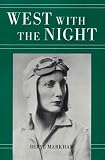
Beryl Markham's memoir of growing up in Kenya in the early twentieth century, training horses, becoming the first person to fly solo non-stop from England to North America west to east, and living a life that defied every category available to women of her era.
Bill Bryson travels across Australia — a country he cheerfully admits he knows almost nothing about — and discovers that it is simultaneously one of the most beautiful, most deadly, most overlooked, and most underrated countries on earth.
Young Gerald Durrell's account of five years living on Corfu with his eccentric family in the 1930s — a childhood paradise of wildlife, sunshine, and complete freedom to roam.
Peter Matthiessen and zoologist George Schaller trek 250 miles into the Himalayas to study the bharal (Himalayan blue sheep) and their predator, the nearly mythical snow leopard — a physical journey that becomes a meditation on grief, Zen Buddhism, and the nature of consciousness.
Bill Bryson returns to America after twenty years in England and decides to hike the Appalachian Trail — 2,200 miles from Georgia to Maine — with his out-of-shape friend Stephen Katz. They complete a memorable portion of it.
Soyinka's memoir of his childhood in the Yoruba town of Aké in colonial Nigeria—the parsonage compound where he grew up, his early encounter with spirits and schooling, his mother's role in a women's tax revolt, his father's dignity as a colonial schoolteacher. The most beautifully written African memoir.
In 1988, Modiano found a newspaper notice from 1941: a missing girl, Dora Bruder, fifteen years old, gone from her parents' home in Paris. He spent eight years tracing her—through the bureaucratic records of occupied Paris, the transit camp at Drancy, and eventually to Auschwitz. His investigation of her life becomes a meditation on memory, disappearance, and what the city keeps.
Bruce Chatwin's account of travelling through Patagonia — the vast, wind-scoured southern cone of South America — in search of a piece of skin he remembered from his grandmother's cabinet, which turned out to belong to a mylodon.
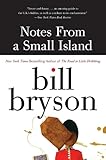
Before moving back to America after twenty years in Britain, Bill Bryson makes a farewell tour of the country that adopted him — by bus, train, and foot, from Dover to the Highlands — in search of what makes Britain lovably, infuriatingly, irreducibly itself.
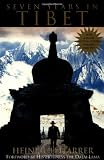
Austrian mountaineer Heinrich Harrer escapes a British prisoner-of-war camp in India during World War II and, after a twenty-one-month crossing of the Himalayas, reaches Lhasa — where he becomes a tutor and friend to the young Dalai Lama as the Chinese invasion closes in.
Anne Lamott's spiritual memoir traces her journey from alcoholism and despair to faith, motherhood, and community — a funny, honest, and fiercely unsentimental account of finding grace in the most ordinary places.
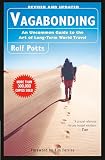
A practical and philosophical guide to long-term travel — arguing that extended independent travel is not a luxury but a choice, and that most people can afford it if they are willing to rethink their relationship to money, time, and consumer culture.
Hemingway's memoir of his years in 1920s Paris: the cafés where he wrote, the poverty and pleasure of expatriate life, F. Scott Fitzgerald's insecurities, Gertrude Stein's salon, Ezra Pound's generosity, and the first wife he would lose by leaving her. Published posthumously, it remains one of the most beautiful books about writing and Paris ever written.
Peter Handke's mother killed herself in 1971 at the age of 51. He wrote this account six weeks later: an attempt to write a biography of someone who has been erased from history by her ordinariness, and a meditation on whether literary language can represent a real person without falsifying her. One of the great grief memoirs.
Peter Mayle and his wife abandon advertising careers in England to restore a farmhouse in the Luberon region of Provence — and spend a year navigating unpredictable tradesmen, extraordinary markets, and a way of life entirely organised around food.
The second volume of Gerald Durrell's Corfu trilogy continues the story of the Durrell family's years on the Greek island. With the same warmth and comic genius as the first, it introduces more extraordinary animals and eccentric characters.
Paul Theroux, one of the great travel writers in the English language, travels overland from Cairo to Cape Town — by bus, truck, ferry, and train — through some of the most troubled and beautiful countries in Africa, forty years after teaching there as a Peace Corps volunteer.
Actor Ewan McGregor and his friend Charley Boorman ride motorcycles east from London through Europe, Ukraine, Russia, Kazakhstan, Mongolia, Siberia, and Alaska to New York — 31,000 miles through some of the most extreme terrain on earth.
Kazantzakis's spiritual autobiography — addressed to his Cretan ancestor El Greco — tracing his intellectual and spiritual journey from Crete through Athens, Paris, Mount Athos, Russia, and across the battlefields of ideas of the 20th century.
The third and final volume of Gerald Durrell's Corfu trilogy, completing the story of the family's years on the Greek island before the outbreak of World War II drove them back to England.
In 1952, twenty-three-year-old medical student Ernesto Guevara and his friend Alberto Granado set off on a motorcycle to travel the length of South America — a nine-month, 8,000-mile journey that transformed the future revolutionary's understanding of his continent.
After her father's death, Ernaux wrote the book about him she had always been afraid to write: an account of a working-class Norman man who crossed from peasant to petit-bourgeois in one generation, and whose daughter crossed further still, into the educated bourgeoisie—and away from him forever.
Gerald Durrell's account of his third Cameroon expedition, during which he collected animals specifically to found his own zoo on the island of Jersey — the origin of what became the Jersey Zoo and Wildlife Preservation Trust.
George Orwell's first book: a memoir of destitution — months spent penniless in Paris, working as a plongeur in restaurant kitchens, and then weeks tramping between workhouses in England — written with the observational precision that would define everything that followed.