Haruki Murakami Books in Order: Complete Reading Guide
All Haruki Murakami novels in order — from A Wild Sheep Chase to The City and Its Uncertain Walls. Where to start, which books are best, and how to navigate his dreamlike fiction.

There is a particular loneliness that runs through Haruki Murakami’s fiction — not the sharp, circumstantial loneliness of a person who has lost something, but the deeper variety that seems to be a permanent condition of consciousness itself. His protagonists are almost always solitary men in their thirties, living in Tokyo, who cook simple meals, listen to jazz and classical music, run long distances, and find themselves drawn into events that are not fully explicable by the terms of ordinary life. A woman disappears. A cat goes missing. A door opens onto a world that does not obey the rules of the world on the other side.
Murakami’s fiction is shaped by a specific tension: the surface texture of contemporary Japanese urban life — its convenience stores, its bars, its expressways — rendered in prose of almost clinical ordinariness, against which the impossible arrives without announcement. The supernatural, in his novels, does not announce itself as supernatural. It simply enters, and his characters respond to it with the same quiet attention they bring to everything else. This combination of the mundane and the uncanny, rooted in Japanese literary tradition but filtered through an aesthetic strongly influenced by American fiction and music, is what makes Murakami’s work unlike anything produced by any other writer working today.
He is also, it is worth stating plainly, one of the most widely read literary novelists alive. His books have sold tens of millions of copies across dozens of languages. He is, in the standard sense of the phrase, a phenomenon — a writer who emerged from Japanese-language literature to become a genuinely global figure without losing the specificity of the world he writes about.
Quick answer: Start with Norwegian Wood if you want his most emotionally direct and accessible novel. Start with Kafka on the Shore if you want the signature Murakami blend of the surreal and the deeply felt. Start with The Wind-Up Bird Chronicle if you want his most fully realised and ambitious work. All three are excellent entry points; none requires prior knowledge of his other books.
Key Novels at a Glance
| Title | Year | Character |
|---|---|---|
| Wind/Pinball | 1979–80 | Early novellas; literary origins |
| A Wild Sheep Chase | 1982 | Accessible; first major English translation |
| Hard-Boiled Wonderland and the End of the World | 1985 | Surreal; dual-narrative structure |
| Norwegian Wood | 1987 | Realist; emotionally direct; biggest seller |
| Dance Dance Dance | 1988 | Sequel to A Wild Sheep Chase |
| South of the Border, West of the Sun | 1992 | Short; intimate; quietly devastating |
| The Wind-Up Bird Chronicle | 1994 | Major work; expansive; most acclaimed |
| Sputnik Sweetheart | 1999 | Brief; melancholic; underrated |
| Kafka on the Shore | 2002 | Classic entry point; richly surreal |
| After Dark | 2004 | Short; nocturnal; formally unusual |
| 1Q84 | 2009–10 | Most ambitious; 3 volumes; not for beginners |
| Colorless Tsukuru Tazaki | 2013 | Accessible; compressed; emotionally precise |
| Killing Commendatore | 2017 | Long; painterly; late-career major work |
| The City and Its Uncertain Walls | 2023 | Most recent; returns to early imagery |
Where to Start
Path One: Norwegian Wood
Norwegian Wood (1987) is the novel that made Murakami famous in Japan and, eventually, internationally. It is also his most atypical: a realist novel, largely free of the supernatural, set in late-1960s Tokyo among university students. Its narrator, Toru Watanabe, is recalling a period of his youth dominated by grief, romantic intensity, and a painful coming-of-age. The prose is straightforward, the emotional register is clear, and the sadness — which is considerable — lands without ambiguity.
For readers who are unsure about Murakami, or who prefer emotional directness over dreamlike complexity, Norwegian Wood is the ideal way in. It establishes the key elements of his sensibility — the deep solitude of his protagonists, the music that punctuates emotional states, the women whose absence or loss drives the male characters forward — in the simplest possible form. Once you have finished it, you will understand the emotional architecture of his other novels even when the form is stranger.
Path Two: Kafka on the Shore
Kafka on the Shore (2002) is where most new readers in the English-speaking world now begin, and it is easy to see why. The novel has two parallel narratives: a fifteen-year-old boy who runs away from home, renames himself Kafka Tamura, and takes refuge in a private library in Takamatsu; and an elderly man named Nakata who cannot read but can speak to cats, and who becomes involved in a sequence of events that will eventually intersect with Kafka’s. Fish fall from the sky. A library may or may not be a gateway between worlds. The logic of the novel is the logic of a dream — internally consistent, impossible to reduce to a single meaning.
Kafka on the Shore is the best introduction to what Murakami does that no one else does. The surrealism is rich but not arbitrary; the emotional stakes are clear even when the plot is not; and the two narratives provide two very different ways of moving through the same strange landscape. It is demanding without being alienating, and it rewards re-reading in a way that very few novels do.
Path Three: The Wind-Up Bird Chronicle
The Wind-Up Bird Chronicle (1994) is the third path, and arguably the right destination for all Murakami readers eventually. It is longer and more expansive than either of the other options, and it requires more patience — but the patience is repaid. For readers who want to encounter Murakami at full stretch before committing to the more accessible books, it is the place to begin.
The Early Novels
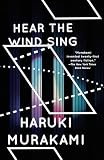
Murakami published his first two novels — Hear the Wind Sing (1979) and Pinball, 1973 (1980) — while still working in a Tokyo jazz bar he co-owned with his wife. Both are brief, loosely structured, and heavily influenced by American fiction, particularly Fitzgerald and Carver. For many years they were unavailable in authorised English translations, and Murakami himself was ambivalent about them; he considered them apprentice work. They were eventually published in English in 2015 as a single volume, Wind/Pinball. Readers who have already engaged with his major work will find them interesting as documents of emergence, but they are not starting points.
A Wild Sheep Chase (1982) is where his career properly begins, both in terms of its quality and its accessibility to English-language readers, who have been able to read it since the mid-1980s. The novel follows an unnamed narrator — a Tokyo advertising copywriter whose wife has left him — who is blackmailed by a sinister figure in a black suit into finding a specific sheep: a sheep with a star on its back whose photograph appeared in a campaign he produced for a shadowy political organisation. The plot is part Raymond Chandler pastiche and part Japanese folk tale, and the combination, which should not work, does. The novel establishes the template that his later fiction would develop: the solitary protagonist, the missing woman, the quest that leads somewhere the ordinary world cannot follow. Dance Dance Dance (1988) is a direct sequel, following the same narrator into a stranger and darker version of the same landscape.
Hard-Boiled Wonderland and the End of the World (1985) is the early novel most admired by readers who prize structural ambition. The book alternates between two narratives — one set in a near-future Tokyo in which information is processed biologically by operatives called Calcutecs; the other set in a walled Town outside of time, where the narrator works reading dreams encoded in old skulls. The two storylines do not initially appear to be related. By the end of the novel, the relationship between them becomes clear, and the emotional weight the structure has been quietly accumulating resolves in one of the most unusual conclusions in contemporary fiction. It is the book to read if you want to understand how formally inventive Murakami can be at his most controlled.
The Major Works
Norwegian Wood (1987)
Norwegian Wood exists slightly apart from the rest of Murakami’s fiction, and this is part of its power. There are no talking cats, no characters who slip between worlds, no mysterious organisations. There is only Tokyo in 1969, Toru Watanabe at university, and the competing claims on him of two women: Naoko, who is struggling with mental illness following the suicide of their mutual friend, and Midori, vivid and anarchic and fully present in the world in ways Naoko cannot be.
The novel is saturated with grief — for Naoko, for the friend who died before it begins, for a version of youth that is already ending — and Murakami renders this grief without sentimentality. The Beatles song of the title hovers over the book not as nostalgia but as an example of how music carries emotion that cannot otherwise be expressed. The prose, in Jay Rubin’s translation, is clean and spare. It is the only Murakami novel you could give to a reader who distrusts literary fiction’s tendency towards the oblique, and it would convert them.
It is also, arguably, the Murakami novel that best rewards a second reading, because the emotional restraint that can initially feel like coolness reveals itself, on return, as the precise notation of something very close to unbearable.
The Wind-Up Bird Chronicle (1994)
The Wind-Up Bird Chronicle is where Murakami’s ambitions reached their fullest early expression. Toru Okada, a thirty-year-old Tokyo man who has recently quit his legal job, loses his cat. While searching for it, he encounters a series of increasingly strange figures: a sixteen-year-old girl with a dark gift for reading people; two enigmatic women whose stories intersect with his in ways he cannot immediately understand; an old soldier who survived atrocities in Manchuria; a psychic entrepreneur who appears to be connected to the disappearance of Toru’s wife.
The novel moves between Toru’s domestic life in Tokyo — its mundane routines rendered with Murakami’s characteristic precision — and extended historical sequences set during the Second World War in the Mongolian–Manchurian border region, where Japanese soldiers experienced violence of a kind that has not been fully assimilated into the official record. These historical passages are among the most powerful things Murakami has written: brutal, specific, and utterly unlike the dreamlike texture of the contemporary Tokyo sections. The contrast is deliberate. The violence of history intrudes on ordinary Japanese life in exactly the same way the supernatural does — without permission, without explanation, through cracks in the surface of the everyday.
The Wind-Up Bird Chronicle is the novel to which Murakami’s readers most often return, and the one most frequently cited by critics as his masterpiece. It is long and demanding and occasionally frustrating, but its ambition is fully realised.
Kafka on the Shore (2002)
Kafka on the Shore is the novel that most fully demonstrates Murakami’s capacity to hold the emotional and the inexplicable in balance without resolving either into the other. Kafka Tamura’s story is one of flight and self-invention: running from a father who made a disturbing prophecy about him, seeking the mother who abandoned him as a child, taking refuge in a library whose middle-aged female librarian may be the answer to a question he cannot quite articulate. Nakata’s story is one of gentle, purposeful movement: an old man who suffered a mysterious trauma in childhood, lost his ability to read, and gained instead the ability to speak to cats. He follows an instruction he cannot explain across Japan until his path and Kafka’s begin to converge.
The two narratives illuminate each other without fully explaining each other, which is the point. Murakami is not interested in hermetic puzzles with correct solutions. He is interested in the way meaning operates: indirectly, through resonance and accumulation, never quite specifiable. Kafka on the Shore is his most fully realised expression of this method, and also his most generous — the novel is difficult in the way that a rich piece of music is difficult, not in the way that an academic exercise is difficult.
1Q84 (2009–2010)
Published in Japan across three volumes and translated into English as a single substantial novel, 1Q84 is Murakami’s most ambitious project. The title plays on the Japanese pronunciation of the number nine (ku, homophonous with Q) and the year 1984 — a deliberate nod to Orwell, whose concern with alternative reality and totalitarian control of narrative is one of the book’s preoccupations.
The dual narrative follows Aomame, a fitness instructor and occasional assassin, and Tengo, a mathematics teacher and aspiring writer, whose lives were briefly intertwined twenty years earlier. Both find themselves in a version of 1984 Tokyo that is subtly, then increasingly, different from the one they remember — a world with two moons, dominated by a religious commune with a dangerous political reach, and populated by mysterious entities called the Little People who construct something called the Air Chrysalis. The two protagonists move toward each other across a narrative space that is both a love story and a thriller about the nature of fiction and belief.
1Q84 is too long — the third volume in particular asks more patience of the reader than it fully earns — but at its best it is Murakami on the grandest possible scale. It is not the place to begin, but it is a necessary destination for readers who want to understand the full reach of his imagination.
Later Novels
Colorless Tsukuru Tazaki and His Years of Pilgrimage (2013) is Murakami’s most compressed major novel since Norwegian Wood and one of his most emotionally precise. Tsukuru Tazaki, a thirty-six-year-old railway station designer in Tokyo, was expelled without explanation from his closest friendship group at university and spent years afterward trying not to confront what happened. The novel follows his belated attempt to understand it. It is quieter and more contained than his large-scale work, and the mystery at its centre is human rather than supernatural — though the border between the two is, as always, permeable. It is a fine later entry point for readers who found the sprawl of 1Q84 off-putting.
Killing Commendatore (2017) is a return to long-form ambition. A portrait painter retreats to a house in the mountains following the breakdown of his marriage and finds, hidden in the attic, a painting by the house’s previous occupant — the celebrated Japanese-style painter Tomohiko Amada — whose subject is a scene from Mozart’s Don Giovanni but rendered in traditional Japanese style. The painting seems to have been deliberately concealed. When the narrator uncovers it, he sets in motion a sequence of events involving a mysterious man who commissions his portrait, a hole dug in the woods, and a figure — the Commendatore of the title — who speaks to him from the painting. The novel is self-consciously in conversation with Murakami’s earlier work while also representing a serious engagement with Japanese art history and the particular silences around Japan’s wartime actions in China. At its best, it is among his most beautiful books.
The City and Its Uncertain Walls (2023) is his most recent novel and, in some respects, the most explicitly retrospective. The material — a walled Town, a Shadow, a protagonist who moves between the Town and the ordinary world — recurs from an early short story that Murakami has never permitted to be reprinted and from elements in Hard-Boiled Wonderland and the End of the World. Long-term readers of his work will find it operating as a kind of late meditation on his career’s recurring imagery.
Short Stories and Non-Fiction
Murakami is also a significant short story writer, and readers who want to understand his range should explore his story collections alongside the novels. The Elephant Vanishes (1993) collects his early stories and is among the best introductions to his short fiction: the title story, in which a municipal elephant and its keeper literally disappear, is as good a single entry into his sensibility as any chapter of his novels. After the Quake (2000) is a thematically unified collection written in response to the 1995 Great Hanshin earthquake; Blind Willow, Sleeping Woman (2006) is a broader selection from across his career; Men Without Women (2014) gathers six stories around the shared theme of male solitude and female absence, and is among his finest sustained achievements in the shorter form.
What I Talk About When I Talk About Running (2007) is his best-known non-fiction work, a memoir built around his practice as a long-distance runner and the relationship he perceives between running and writing. It is gentle, self-deprecating, and surprisingly illuminating about his creative life. For readers uncertain about whether to commit to his fiction, it is an excellent way of encountering his sensibility in a form that makes no formal demands. Many readers have arrived at his novels through this book.
What to Read After Murakami
Murakami’s particular blend of the intimate and the inexplicable has no precise equivalent, but readers who have finished with him and want something that occupies adjacent territory might consider the following.
For the quality of unease that accumulates through quiet domestic observation, and for fiction in which the emotionally real and the literally impossible coexist without either dismissing the other, Matt Haig’s The Midnight Library offers a more accessible but genuinely moving exploration of parallel lives — our complete guide to books like The Midnight Library collects the best companions to that novel.
For the broader context of literary fiction that shares Murakami’s interest in alienation, consciousness, and the texture of modern life, our guide to the best fiction books of all time situates him within the wider canon and offers reading paths outward from his work.
Other writers worth exploring: Kazuo Ishiguro, whose restrained prose and haunted narrators share something of Murakami’s emotional temperature (The Remains of the Day, Never Let Me Go); Gabriel García Márquez, whose magic realism is the South American equivalent of the tradition Murakami draws on; and David Mitchell, whose structural ambition in Cloud Atlas and The Bone Clocks represents the closest English-language approach to what Murakami achieves in The Wind-Up Bird Chronicle and 1Q84.
Frequently Asked Questions
What is the best Haruki Murakami book to start with?
The best starting points are Norwegian Wood (his most accessible and emotionally direct novel), Kafka on the Shore (his most celebrated blend of the surreal and emotional), or The Wind-Up Bird Chronicle (his most ambitious and widely admired). What I Talk About When I Talk About Running is also an excellent, gentle introduction for readers uncertain about his fiction.
Do Haruki Murakami novels need to be read in order?
No. Murakami’s novels are standalone works with no shared continuity. You can begin anywhere. That said, starting with Norwegian Wood or Kafka on the Shore is recommended because they are the best introductions to his two primary modes: the intimate and the surreal.
What is Haruki Murakami’s most famous novel?
Norwegian Wood (1987) is Murakami’s bestselling novel worldwide, having sold millions of copies and established his international reputation. The Wind-Up Bird Chronicle (1994) is more widely considered his masterpiece by critics and dedicated readers. Kafka on the Shore (2002) is the most popular entry point for new readers in the English-speaking world.
Is 1Q84 a good starting point for new Murakami readers?
1Q84 is not recommended as a starting point. At nearly 1,000 pages, and demanding familiarity with Murakami’s characteristic methods — the way he introduces the supernatural without explanation, his particular rhythm of domestic detail and dreamlike incident — it rewards readers who already understand what he is doing. Start with Norwegian Wood or Kafka on the Shore first.
What is Haruki Murakami’s most recent novel?
The City and Its Uncertain Walls, published in Japan in 2023, is Murakami’s most recent novel. It revisits material and imagery from an early short story and, in some respects, provides a culminating return to themes he has explored across his career.
More Literary and World Fiction Guides
- Books Like Pachinko: Multigenerational Sagas and Immigration
- Books Like Never Let Me Go: Quiet Dystopia and Loss
Also Recommended
For the full Haruki Murakami bibliography, reviews, and biography, visit the Haruki Murakami author page on Editors Reads.
Affiliate disclosure: Links to Amazon on this page are affiliate links. We earn a small commission at no extra cost to you. This does not influence our editorial recommendations.
Frequently Asked Questions
What is the best Haruki Murakami book to start with?
The best starting points are Norwegian Wood (his most accessible and emotionally direct novel), Kafka on the Shore (his most celebrated blend of the surreal and emotional), or The Wind-Up Bird Chronicle (his most ambitious and widely admired). What I Talk About When I Talk About Running is also an excellent, gentle introduction for readers uncertain about his fiction.
Do Haruki Murakami novels need to be read in order?
No. Murakami's novels are standalone works with no shared continuity. You can begin anywhere. That said, starting with Norwegian Wood or Kafka on the Shore is recommended because they are the best introductions to his two primary modes: the intimate and the surreal.
What is Haruki Murakami's most famous novel?
Norwegian Wood (1987) is Murakami's bestselling novel worldwide, having sold millions of copies and established his international reputation. The Wind-Up Bird Chronicle (1994) is more widely considered his masterpiece by critics and dedicated readers. Kafka on the Shore (2002) is the most popular entry point for new readers in the English-speaking world.
Is 1Q84 a good starting point for new Murakami readers?
1Q84 is not recommended as a starting point. At nearly 1,000 pages and demanding familiarity with Murakami's characteristic methods — the way he introduces the supernatural without explanation, his particular rhythm of domestic detail and dreamlike incident — it rewards readers who already understand what he is doing. Start with Norwegian Wood or Kafka on the Shore first.
What is Haruki Murakami's most recent novel?
The City and Its Uncertain Walls, published in Japan in 2023, is Murakami's most recent novel. It revisits material and images from an early short story, 'The Town and Its Uncertain Walls,' and in some respects provides a culminating return to themes he has explored across his career.