Books Like The Vegetarian: Transgressive Fiction
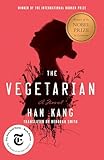
Han Kang's triptych about a woman who stops eating meat — and what this decision does to the people around her — is unlike almost anything else in contemporary fiction. These books share its unsettling precision, its focus on the body as battleground, and its willingness to follow transgression to its end.

Han Kang’s The Vegetarian is narrated almost entirely by the people around its protagonist. Yeong-hye — a Seoul housewife who stops eating meat after a dream of blood and mud and accumulated violence — speaks only rarely and in fragments. The novel belongs to her husband, who is disgusted by her refusal; to her brother-in-law, an artist who becomes obsessed with painting flowers on her body; and to her sister, who watches her deteriorate. Each narrator has reasons to want Yeong-hye to return to normal. None of them succeed. What Yeong-hye herself wants — to become a plant, to be something that neither hurts nor is hurt — the novel takes entirely seriously.
The form is inseparable from the argument. By letting others speak for Yeong-hye, Han Kang makes visible the machinery of a certain kind of social violence: the way a woman’s refusal is immediately reframed as illness, as obstinacy, as a problem for the people around her to solve. Yeong-hye barely exists as a subject in her own story — and this near-absence is the most radical thing about the novel. Published in Korean in 2007 and translated into English by Deborah Smith in 2015, The Vegetarian won the International Booker Prize and established Han Kang as one of the defining literary voices of her generation. The Nobel Prize followed in 2024.
The books below were chosen because they occupy the same territory: the body as the site of resistance and violation; the individual who refuses the social script; the violence that passes for love or normalcy; the prose that is precise, controlled, and deeply unnerving. They are grouped by what they share most closely with The Vegetarian, and they range from Han Kang’s own work to the writers — Camus, Ishiguro, Coetzee, Tokarczuk — who most closely inhabit her concerns.
More Han Kang
#1 — Human Acts by Han Kang
Han Kang’s second internationally translated novel circles the 1980 Gwangju massacre through multiple perspectives across decades — the boy whose body lies in a civic hall gymnasium, the friend cataloguing the dead, the editor imprisoned for publishing banned accounts, the mother who never stopped grieving. The same unflinching gaze at violence that makes The Vegetarian so disquieting here turns toward history and politics: how bodies are treated when they are no longer considered fully human, how survivors carry what was done to them, what it means to bear witness to atrocity. It is a harder book than The Vegetarian in some ways and a more consoling one in others — grief here is shared rather than solitary, and solidarity is possible even in the wreckage.
#2 — The White Book by Han Kang
Written while Han Kang was living in Warsaw on a literary residency, The White Book is her most formally experimental work — a meditation on whiteness (swaddling bands, snow, paper, salt, linen, white birds) and on the sister who died an hour after birth, the life that never happened. It reads less like a novel than like a grief-work in prose fragments, each entry spare and precise and lit from within. For readers who responded to the restrained surface of The Vegetarian — the sense that the most important things are happening in the silences — The White Book extends that aesthetic into a more purely lyrical register. Slender, haunting, unlike anything else she has written.
Transgression and the Body
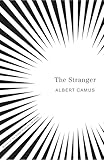
#3 — The Stranger by Albert Camus
Meursault commits a killing under the Algerian sun without premeditation or remorse, and is prosecuted less for the act itself than for his failure to perform grief at his mother’s funeral, to pretend to emotions he does not feel. Camus’s 1942 novel is the philosophical ancestor of Yeong-hye’s refusal — the figure who will not produce the social script the world demands, who meets its most urgent requests with silence or a shrug, and who is condemned for exactly that non-performance. Read alongside The Vegetarian, The Stranger clarifies that Yeong-hye’s transgression is not vegetarianism but emotional non-compliance — the same crime Meursault commits, punished with the same institutional violence by people who insist they are acting out of concern.
#4 — Never Let Me Go by Kazuo Ishiguro
Ishiguro’s clones at Hailsham school are raised to accept that their lives will end in the harvesting of their organs. Their compliance — gentle, baffled, never quite breaking into revolt — defines the other pole from Yeong-hye’s withdrawal: where she refuses the social contract by needing less and less, they accept systematic violation with a patience so complete it becomes its own kind of tragedy. Reading the two novels together defines the full range of responses available to those whose bodies the world has decided it owns. Ishiguro’s prose, like Han Kang’s, is controlled to the point of detachment — and in both cases, that detachment is where the horror lives.
#5 — Life and Times of Michael K by J. M. Coetzee
During a civil war in South Africa, Michael K — a man of diminished intellect and enormous stubbornness — escapes the camps and the classification systems by growing smaller and smaller in his needs: a handful of pumpkin seeds, a hole in the ground, the open veld. Coetzee’s 1983 Booker Prize winner is the most Yeong-hye-like figure outside Han Kang’s own work: a person who withdraws from the social contract not through dramatic refusal but through a patient, persistent reduction of need, until the state and its violence simply cannot find him to claim him. The prose is spare to the point of austerity, the moral argument conducted entirely through image and action.
#6 — Drive Your Plow Over the Bones of the Dead by Olga Tokarczuk
Janina Duszejko, an elderly woman living alone in rural Poland near the Czech border, is convinced that the local hunters are being killed by the animals they have hunted — and that the animals are right to do so. Tokarczuk’s dark comedy gives us a woman whose fierce, passionate relationship with animals and nature leads everyone around her to dismiss her as eccentric or mad, while the novel itself treats her cosmology with complete seriousness. Where The Vegetarian is tragedy — Yeong-hye’s refusal of meat-eating destroys her — Drive Your Plow is something stranger and fiercer: a book in which the woman who sees what others refuse to see survives, and may even be vindicated.
Quiet Surrealism and Female Interiority
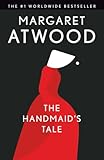
#7 — The Handmaid’s Tale by Margaret Atwood
In the Republic of Gilead, women’s bodies are state property — assigned, regulated, and harvested for reproduction. Offred, a Handmaid, resists in the only ways still available to her: through memory, through language kept alive in secret, through a sardonic inner commentary that preserves a self the regime has tried to erase. Atwood makes explicit and political what Han Kang renders intimate and domestic, but the territory is the same: the woman whose body has been appropriated by others and who finds the terms of her resistance narrowing to almost nothing. The framing is more architecturally visible in The Handmaid’s Tale, the horror more legible — which makes it the ideal companion for readers who want the argument of The Vegetarian in broader daylight.
#8 — Beauty and Sadness by Yasunari Kawabata
A famous Tokyo novelist travels to Kyoto on New Year’s Eve to visit Otoko, the young woman he had an affair with twenty years earlier — the affair that destroyed her and produced the novel that made his reputation. Otoko’s young student and lover, Keiko, has other plans. Kawabata’s most disturbing novel turns on an obsession with the female body as both subject and instrument, and on a revenge whose weapon is beauty itself — a desire that consumes its object. The erotic violence in Beauty and Sadness resonates directly with the brother-in-law’s section of The Vegetarian, and both novels share a quality of watching something terrible happen through glass so clear it seems there is nothing between you and it.
#9 — The Fall by Albert Camus
Jean-Baptiste Clamence, a former Parisian lawyer, holds court in an Amsterdam bar and delivers an extended confession: his life of professional virtue and social charm concealed cowardice, indifference, and a colossal vanity. The Fall is Camus’s most morally uncomfortable novel because it implicates the reader in Clamence’s self-indictment — his pleasure in his own confession is so evident that you cannot quite separate the honesty from the performance. It belongs on this list because of the technique it shares with The Vegetarian: both novels make the reader complicit in what is being described, force them into an intimacy with perspectives they might prefer to distance themselves from, and refuse the comfort of a stable moral position from which to observe.
#10 — Elizabeth Costello by J. M. Coetzee
An aging Australian novelist delivers a series of lectures — on realism, on evil, on the lives of animals — and finds herself increasingly unable to separate her professional positions from her personal anguish. The lecture on animal rights, “The Lives of Animals,” is the intellectual skeleton key to The Vegetarian: Costello argues, with a rigour that her academic audience cannot quite dismiss and cannot quite accept, that our treatment of factory animals is morally equivalent to the great atrocities of the twentieth century. Yeong-hye’s dream of blood and mud is the visceral, pre-articulate version of exactly this argument — the thing Costello makes the philosophical case for, Yeong-hye simply cannot unfeel.
How to Choose Your Next Read
If you want more Han Kang: Human Acts — the same unflinching attention, turned toward collective historical violence rather than individual domestic violation.
If you want the philosophical ancestor: The Stranger — Meursault as the first Yeong-hye, prosecuted for refusing to perform the emotions the world requires.
If you want the most politically legible version: The Handmaid’s Tale — the appropriation of the female body made into explicit dystopian architecture.
If you want the most lyrical option: The White Book — Han Kang in a purely meditative register, grief as white space.
If you want the darkest comedy: Drive Your Plow Over the Bones of the Dead — transgression that might actually win.
If you want the intellectual argument behind the visceral one: Elizabeth Costello — Coetzee making the philosophical case that Yeong-hye can only dream.
For the Best Fiction Books
For the definitive guide to fiction — the greatest novels across literary fiction, classics, and contemporary writing — see our Best Fiction Books of All Time list.
Affiliate disclosure: Links to Amazon on this page are affiliate links. We earn a small commission at no extra cost to you. This does not influence our editorial recommendations.
Frequently Asked Questions
What is The Vegetarian really about?
The Vegetarian is not primarily about vegetarianism — it uses Yeong-hye's refusal to eat meat as a symptom of something deeper: her withdrawal from compliance, from the violence she has been absorbing all her life (her father's discipline, her husband's contempt), and ultimately from her own humanity. The novel traces the ripple effect of her decision through three perspectives — her husband, her brother-in-law (who becomes obsessed with painting her body), and her sister — each of whom has their own stake in forcing Yeong-hye to be normal. It is a novel about what happens when a woman refuses to perform the roles assigned to her, and about the violence of those who cannot accept that refusal.
Is The Vegetarian disturbing?
Yes — deliberately. Han Kang has said she wanted to write about violence as it is actually experienced: not dramatic and external but quiet and intimate, inflicted by family, normalized by routine. The novel contains a forced feeding scene, sexualized obsession, and a depiction of mental deterioration that is clinical and distressing. Readers sensitive to eating disorders, sexual coercion, or mental illness should approach it carefully. But the disturbance is the point — Han Kang is interested in what we have agreed not to look at, and the discomfort the novel produces is the discomfort of being made to see clearly.
What should I read after The Vegetarian?
Han Kang's own Human Acts is the most direct next step — equally unflinching, more explicitly historical (the 1980 Gwangju massacre), and the book that confirmed her as one of the most important writers working. The White Book is shorter and more lyrical. Beyond Han Kang, the nearest equivalents in contemporary fiction are Ottessa Moshfegh's My Year of Rest and Relaxation (a woman's deliberate destruction of her own social existence), Sayaka Murata's *Convenience Store Woman* (a woman who refuses to conform to social expectations about gender and productivity), and Yoko Ogawa's *The Memory Police* (quiet surrealism, the erasure of ordinary things).