Books Like The Midnight Library: 11 Second-Chance Reads
If The Midnight Library moved you with its hopeful take on regret and second chances, these novels explore the same tender, searching questions.
Matt Haig’s The Midnight Library begins with one of the most quietly devastating premises in recent literary fiction: Nora Seed, having decided her life has no worth, finds herself in a library between life and death. Every book on the shelves contains a different version of the life she could have lived — the Olympic swimmer, the glaciologist, the rock star, the woman who never left her hometown — and she can step into any of them. The question the novel poses is not which life is best, but whether any life, including her own, is worth returning to.
What distinguishes the novel from other magical-realism conceits is the precision with which Haig handles Nora’s depression and regret. The library is a metaphor, but Nora’s specific griefs — the brother she lost connection with, the band she quit, the marriage she walked away from — are rendered with the kind of detail that makes them feel real. The fantasy premise gives the novel its structure; the emotional honesty gives it its weight. The ending is deeply hopeful, but it is hope that has been tested and earned rather than simply asserted.
The books below share something with The Midnight Library: a fantasy or literary framework that holds serious questions about what makes a life worth living, gentle enough to be accessible, honest enough to mean something.
What If Things Had Gone Differently
#1 — Before I Fall by Lauren Oliver
Samantha Kingston is popular, pretty, and dies in a car crash on what seemed like an ordinary February day. Then she wakes up and lives that day again. And again. Oliver’s young-adult novel is the most structurally similar book on this list to The Midnight Library: a protagonist given repeated chances to re-examine a life, discovering along the way what she actually values and what she has treated carelessly. The looping structure allows Oliver to excavate the same day from different angles until its meaning is completely transformed. It is more emotionally demanding than its premise suggests.
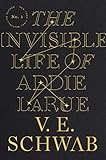
#2 — The Invisible Life of Addie LaRue by V.E. Schwab
In 1714 France, a young woman makes a desperate bargain with a god who answers prayers in the dark: she will live forever, but everyone who meets her will forget her the moment she leaves. Three centuries later, Addie LaRue is still alive, still forgotten — until she meets a man in a bookshop who remembers her name. Schwab’s novel shares The Midnight Library’s fascination with unlived lives and the weight of time, but renders it through accumulation rather than parallel possibilities. Addie’s centuries of invisibility are also a meditation on what it means to leave a mark on the world, and whether that matters.
#3 — How to Stop Time by Matt Haig
Haig’s own How to Stop Time is the most natural companion to The Midnight Library and the clearest demonstration of his central preoccupations. Tom Hazard has a rare condition: he ages approximately one year for every fifteen that pass. He has lived for four hundred years, watching everyone he loves die, accumulating losses that have made him afraid to connect with anyone new. The novel moves between historical periods — Elizabethan London, jazz-era Paris, present-day London — as Tom slowly learns the same lesson Nora Seed learns: that the only response to the passage of time is to inhabit the present. Readers who loved The Midnight Library will find this equally moving and similarly constructed.
Gentle Literary Fiction About Finding Reasons to Live
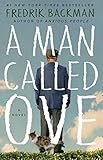
#4 — A Man Called Ove by Fredrik Backman
Ove is fifty-nine, recently retired against his will, and has decided his life is finished. His wife is dead, his purpose is gone, and his neighbors are idiots. His attempts to end his life are interrupted, repeatedly, by those same idiots — a pregnant woman who needs help parking, a stray cat, a teenager in need of somewhere to be. Backman’s novel is funny and warm where The Midnight Library is more lyrical and melancholic, but the underlying movement is the same: a person who has decided life holds nothing for them being shown, incrementally, that it does. Ove is one of the most beloved characters in contemporary fiction.
#5 — Eleanor Oliphant is Completely Fine by Gail Honeyman
Eleanor Oliphant has lived the same controlled, solitary routine for years, protecting herself from something she cannot quite look at directly. She is odd, precise, and often unintentionally funny. A small act of kindness — helping an old man who has fallen in the street — begins a chain of connections that gradually dismantles the walls she has built. Honeyman’s novel is warmer and more novelistic than its premise suggests, and it handles a traumatic backstory with the same restraint and care that Haig brings to Nora’s depression. It is, in the end, a novel about survival and the slow, difficult process of allowing other people in.
#6 — Anxious People by Fredrik Backman
A failed bank robber takes a group of strangers hostage in an apartment viewing. The strangers are, it turns out, all carrying more than they appear to be. Backman’s second novel on this list is structurally playful — a police procedural wrapped around a story about desperation and connection — and it shares The Midnight Library’s quality of finding deep feeling inside a slightly absurdist premise. The novel is both funnier and more affecting than the hostage-situation setup implies. Backman is consistently the writer most willing to construct entertainment that sneaks genuine sadness and genuine warmth into the same pages.
Novels With Fantasy Premises and Emotional Depth
#7 — The House in the Cerulean Sea by TJ Klune
Linus Baker is a caseworker for magical children — orphans with unusual abilities housed in care facilities. He is sent to evaluate a particularly unusual orphanage, run by a master named Arthur Parnassus, where the children include the Antichrist. Klune’s novel is a cozy fantasy, lighter in tone than The Midnight Library, but it shares the same warmth and the same concern with belonging, purpose, and the courage required to open yourself to a life you did not expect. It is a novel about choosing to be present rather than safe, told with enormous gentleness.
#8 — A Gentleman in Moscow by Amor Towles
Count Alexander Rostov is sentenced in 1922 to spend the rest of his life under house arrest in Moscow’s Metropol Hotel. He will never leave. What Towles builds inside those walls is one of the most quietly extraordinary novels of the past decade: an entire life, rich and connected and full of purpose, constructed within a seemingly impossible constraint. The novel shares The Midnight Library’s central argument — that the particular life you are living, with its limitations and its losses, contains more than you may have recognized — and it makes that argument with tremendous elegance and wit.
For Readers Who Want More Depth and Challenge
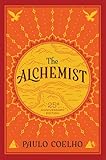
#9 — The Alchemist by Paulo Coelho
Santiago is an Andalusian shepherd boy who dreams of finding treasure in the Egyptian pyramids. His journey across the desert becomes a fable about listening to the world and following what Coelho calls a Personal Legend — the life you were meant to live. The Alchemist is more allegorical and less realistic than The Midnight Library, but it shares the same conviction that meaning and purpose are available to those who choose to pursue them, and that the universe conspires to help people who know what they want. It is the most-read novel on this list for a reason.
#10 — Normal People by Sally Rooney
Connell and Marianne meet in secondary school in the west of Ireland and are bound together across years and cities in a relationship that neither of them fully knows how to sustain. Rooney’s novel is the most realistic and the least fantastical on this list, and it is also among the most searching in its examination of whether two people can truly know each other — and whether that knowledge, incomplete as it always is, is enough. Readers drawn to The Midnight Library’s emotional honesty and its attention to depression and self-worth will find Rooney equally unflinching. The ending is quietly devastating in the opposite direction from Haig’s.
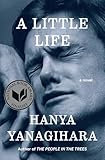
#11 — A Little Life by Hanya Yanagihara
A Little Life belongs on this list with a significant caveat: it is one of the most emotionally demanding novels in contemporary fiction, and it does not arrive at the same hopeful resolution as The Midnight Library. Jude St. Francis carries damage from a childhood that the novel reveals incrementally and without mercy, and the question the novel asks — whether a person can survive what Jude has survived and build a life worth living — is answered with terrible complexity. It is here because readers who found The Midnight Library too gentle, who want to follow the same questions about survival and meaning into much darker territory, will find no more serious treatment of them.
How to Choose Your Next Read
If you want the most similar premise: Before I Fall or How to Stop Time.
If you want warm and funny: A Man Called Ove or Anxious People.
If you want fantasy with the same cozy hopefulness: The House in the Cerulean Sea.
If you want literary depth and a longer scope: The Invisible Life of Addie LaRue or A Gentleman in Moscow.
If you want something more challenging and darker: A Little Life.
For the Best Fiction Books
For the definitive guide to fiction — the greatest novels across literary fiction, classics, and contemporary writing — see our Best Fiction Books of All Time list.
Affiliate disclosure: Links to Amazon on this page are affiliate links. We earn a small commission at no extra cost to you. This does not influence our editorial recommendations.
Frequently Asked Questions
Is The Midnight Library appropriate for someone struggling with depression or suicidal thoughts?
Yes, with care. The Midnight Library deals directly with depression and a suicide attempt, but its entire arc is about rediscovering reasons to live. Matt Haig has spoken openly about his own mental health struggles, and the novel is written with genuine understanding rather than sensationalism. Many readers who have experienced depression report finding it helpful rather than distressing. That said, if you are in a vulnerable place, it is worth knowing the subject matter in advance.
What other books has Matt Haig written that are similar to The Midnight Library?
Matt Haig's most similar works are How to Stop Time, which follows a man with a condition that causes him to age very slowly across centuries, and The Humans, a novel about an alien who takes over a mathematician's body and gradually comes to understand why human life is worth living. Both share The Midnight Library's preoccupation with mortality, meaning, and the strangeness of being alive. His nonfiction book Reasons to Stay Alive draws directly on his own experience of depression and panic disorder.
Are there other novels with a similar what-if or parallel-lives premise?
Several novels explore parallel lives or alternate selves. Before I Fall by Lauren Oliver follows a teenager reliving her last day repeatedly until she understands what it means. The Invisible Life of Addie LaRue by V.E. Schwab follows a woman who makes a Faustian bargain for immortality and lives invisibly through centuries of history. A Gentleman in Moscow by Amor Towles, while not a parallel-lives story, shares the same quality of finding an entire world within a constrained existence. All three reward readers who responded to The Midnight Library's exploration of time, choice, and what makes a life matter.
What makes The Midnight Library different from other feel-good fiction?
The Midnight Library takes its darkness seriously. Nora Seed's depression and her reasons for giving up on life are rendered with specificity, not softened for palatability. The optimism the novel arrives at is earned through genuine reckoning with regret and failure, which is why it resonates differently from lighter fare. Readers who are skeptical of feel-good fiction often find The Midnight Library more honest than they expected.