Books Like Pachinko: Multigenerational Sagas
Min Jin Lee's four-generation saga of a Korean family in Japan — from a teenage girl's shame to her grandson's life in Tokyo — is the great immigration novel of the twenty-first century. These books share its multigenerational sweep, its focus on survival, and its account of what it costs to live as an outsider.
By Aisha Patel

Min Jin Lee published Pachinko in 2017 after nearly three decades of research and multiple abandoned drafts. The novel follows four generations of the Baek family from a fishing village in southern Korea to the Osaka slums to the Tokyo of the late 1980s — a trajectory set in motion by a teenage girl’s pregnancy and the decision of a minister named Isak to marry her and take her to Japan. The novel’s subject is what the title suggests: the Zainichi Korean community, ethnic Koreans who have lived in Japan for generations and remain legally and socially permanent outsiders, denied citizenship, restricted in employment, and regarded with contempt by a society that exploits them while refusing to acknowledge them.
What Lee does with this history is not sociological — it is intimate and specific. Each generation has a face: Sunja, whose original shame becomes the family’s founding story; her sons Noa and Mozasu, who take opposite paths through the same discrimination; Mozasu’s son Solomon, who returns from an American education to a Japan that still does not want him. The novel does not resolve their situation, because it has not resolved in reality. It simply insists on the full humanity of people that history has treated as marginal, and in doing so it makes a political argument through the oldest available literary means: attention.
The books below were chosen for readers who responded to the multigenerational scope that makes each generation’s choices feel both inevitable and freely made, the immigration experience rendered from inside the immigrant community rather than from outside it, and the way history — colonial, national, economic — shapes private life without determining it entirely.
Multigenerational Family Sagas
#1 — Homegoing by Yaa Gyasi
Two half-sisters in eighteenth-century Ghana — one who marries a British slave trader, one who is sold into slavery — become the ancestors of eight parallel lineages followed across eight chapters, one per generation, down to the contemporary United States. Gyasi’s structural solution to the multigenerational saga is identical to Lee’s: compress each generation into a focused narrative, let the weight accumulate, trust the reader to carry the connections forward. Homegoing is the most direct structural parallel to Pachinko on this list, and the historical arc — from colonization to contemporary America — is the Atlantic version of the Pacific story Lee tells. Both novels insist that history is not abstract but lives in specific bodies across specific generations.
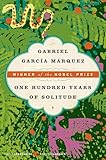
#2 — One Hundred Years of Solitude by Gabriel García Márquez
The Buendía family, founders of the town of Macondo, repeat their ancestors’ names and mistakes across seven generations in García Márquez’s mythic novel of Colombian history. The family saga as myth — where patterns recur with the force of fate, where names and obsessions are inherited like diseases — is the most ambitious version of the form Pachinko works in. Where Lee is rigorously historical and realist, García Márquez is magical and prophetic, but both are using the family as the unit through which to understand how a society forms, repeats, and eventually exhausts itself. The final prophecy that has been visible from the first page is the most devastating ending in the canon.
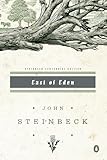
#3 — East of Eden by John Steinbeck
Two families — the Trasks and the Hamiltons — play out variations on the Cain and Abel story across generations in California’s Salinas Valley. Steinbeck’s novel is the American family saga in its fullest form: the landscape as moral environment, the family as the place where history becomes personal, the question of whether character is inherited or chosen. The Hebrew word timshel — thou mayest — is the novel’s philosophical center, the argument that human beings are not determined by their inheritance. Lee’s Noa and Mozasu embody exactly this tension: two brothers given the same starting point who make entirely different choices and live entirely different lives. Steinbeck is the direct ancestor of what Lee is doing.
#4 — The Joy Luck Club by Amy Tan
Four Chinese immigrant women and their American-born daughters meet weekly to play mahjong and tell stories. Tan’s novel is organized around the gap between what the mothers carry from China and what their daughters can receive growing up in California — the failure of transmission that is also the immigrant family’s defining wound. The Joy Luck Club shares with Pachinko the specific dynamics of the intergenerational immigrant story: the shame the first generation carries and cannot fully speak, the children who inherit the consequences without the context, the granddaughters who must piece together a history they were not given. Tan’s novel is warmer and more comic than Lee’s, but the wound it describes is the same.
Immigration, Displacement, and Outsider Status
#5 — The Kite Runner by Khaled Hosseini
Amir flees Afghanistan for America after a childhood act of cowardice that haunts him for twenty years, and builds a life in California that is also a form of hiding. Hosseini’s novel shares with Pachinko the immigrant who carries both worlds — the country they came from and the country they live in — and the way that double consciousness becomes the defining condition of a life. Where Lee’s Sunja and her descendants have no original country to return to (Korea under occupation, then partition), Hosseini’s Amir has a country he left and can, eventually, return to. The comparison illuminates what different forms of displacement produce in different kinds of people.
#6 — Americanah by Chimamanda Ngozi Adichie
Ifemelu, a young Nigerian woman, moves to America for university and discovers that she has become Black — a category that did not exist for her in Nigeria, where she was simply a person. Adichie’s novel is the most analytically precise treatment of the outsider’s view on this list: Ifemelu’s blog posts about race in America, written from the vantage of someone who learned its rules rather than growing up inside them, are the novel’s most original device. She eventually returns to Nigeria and must relearn that country too. Americanah shares with Pachinko the outsider’s doubled vision — always seeing the country they live in and the country they came from simultaneously — but applies it to race in a way Lee applies it to ethnicity and nationality.
#7 — Interpreter of Maladies by Jhumpa Lahiri
Lahiri’s Pulitzer Prize-winning story collection maps the gap between first-generation Indian immigrants and their American-born children — the gap in language, expectation, emotional vocabulary, and understanding of what a life should look like. Where Pachinko traces this gap across four generations in a single narrative, Lahiri shows it in nine separate stories, each a different family, each a different version of the same failure of transmission. The stories are more compressed and elliptical than Lee’s novel, but the emotion — the specific loneliness of the person who belongs to two worlds and is fully at home in neither — is identical.
History and Identity
#8 — Beloved by Toni Morrison
Sethe, a formerly enslaved woman in Cincinnati, is haunted by the ghost of the daughter she killed to prevent her recapture. Morrison’s novel is the definitive account of how historical trauma inhabits the body and the present — how the violence of the past does not stay in the past but moves through generations in ways the living cannot always name or explain. Pachinko is doing something related: the shame of Sunja’s original pregnancy, the discrimination of the colonial period, the survival strategies of the Osaka slums, all of it accumulating in Solomon’s life in 1989 Tokyo as a weight he feels without fully understanding its source. Both novels argue that identity is historical, that who you are is shaped by what happened to people you never met.
#9 — A Thousand Splendid Suns by Khaled Hosseini
Mariam, born in shame as an illegitimate child, and Laila, a girl of the next generation with different expectations, are brought together in a Kabul marriage by the force of Afghan history — Soviet invasion, civil war, Taliban rule. Hosseini’s novel shares with Pachinko the central situation of women whose private lives are shaped and constrained by historical forces they did not choose and cannot escape, and who find in each other a bond that outlasts the history. Both novels are about survival as a form of resistance, and about what women preserve and pass forward when every official structure is trying to erase them.
#10 — The Shadow of the Wind by Carlos Ruiz Zafón
In post-Civil War Barcelona, a boy finds a forgotten novel in the Cemetery of Forgotten Books and sets out to find its author. Zafón’s novel is less obviously connected to Pachinko than the others on this list, but it shares the central theme of how history shapes identity and how what is buried returns. The Spain of the novel is a country that officially erased the Republican dead and the cultural production of the losing side; the protagonist’s search for the lost author is a recovery of suppressed history. It belongs on this list as the European version of Pachinko’s central insight: that the official record is always a suppression, and that the novelist’s job is to restore what was taken.
How to Choose Your Next Read
If you want the closest structural parallel: Homegoing — eight generations, same compression, Atlantic history.
If you want the mythic version of the family saga: One Hundred Years of Solitude — the form at its most ambitious.
If you want the American immigration story: The Joy Luck Club — the mother-daughter wound in California.
If you want the most analytically precise outsider perspective: Americanah — race and the doubled immigrant consciousness.
If you want historical trauma in the body across generations: Beloved — the definitive account of how history inhabits the present.
For the Best Fiction Books
For the definitive guide to fiction — the greatest novels across literary fiction, classics, and contemporary writing — see our Best Fiction Books of All Time list.
More Multigenerational Fiction Reading Guides
- Books Like Homegoing: African Diaspora and the Shadow of Slavery
- Books Like The Underground Railroad: Slavery and Freedom
Also Recommended
Affiliate disclosure: Links to Amazon on this page are affiliate links. We earn a small commission at no extra cost to you. This does not influence our editorial recommendations.
Frequently Asked Questions
What is Pachinko about?
Pachinko follows four generations of a Korean family from a small fishing village to Japan, beginning in 1910 with the Japanese annexation of Korea and ending in 1989. The novel opens with a teenage girl named Sunja who becomes pregnant by a man she does not know is married, and whose subsequent marriage to a Japanese-bound minister sets the family's course. Her descendants — two sons, a grandson — live out the consequences of that original shame and displacement in a Japan that legally and socially refuses to accept them as Japanese regardless of how many generations they have lived there. The title refers to the pachinko parlor business that sustains the family and that Japan's polite society considers beneath them: a perfect metaphor for the immigrant's position.
Is Pachinko based on a true story?
Pachinko is a work of fiction, but Min Jin Lee spent nearly thirty years researching it. She first became interested in the Zainichi Korean community — Koreans born and raised in Japan who hold Korean citizenship and face systematic discrimination — while living in Tokyo in the 1990s. The novel emerged from interviews with Zainichi Koreans, historical research into the Japanese colonial period in Korea, and a sustained engagement with the question of what it means to live as a permanent outsider in a country your family has inhabited for generations. The characters are invented; the history and the sociology are meticulously accurate.
What are the best books like Pachinko for readers who want more family sagas?
Readers who want the multigenerational sweep of Pachinko should start with Homegoing by Yaa Gyasi, which follows eight generations of a Ghanaian family with a similarly compressed chapter structure — each generation a new character, each building on the weight of the previous ones. One Hundred Years of Solitude by Gabriel García Márquez is the mythic version of the same form. East of Eden by John Steinbeck gives it the American inflection. For readers drawn to the immigration dimension specifically, The Joy Luck Club by Amy Tan covers the mother-daughter intergenerational wound with particular precision, and Americanah by Chimamanda Ngozi Adichie gives the immigrant's outsider perspective its most fully contemporary treatment.