Books Like The Underground Railroad: Slavery & Freedom
Colson Whitehead's Pulitzer-winning novel takes the metaphor of the Underground Railroad and makes it literal — actual trains, actual tracks — while following Cora's flight through an America of alternate horrors. These books share its moral urgency about slavery and its use of genre to illuminate history.
By Aisha Patel

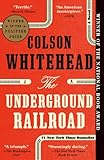
Colson Whitehead conceived The Underground Railroad from a deceptively simple premise: what if the underground railroad — the metaphorical network of routes and safe houses that freedom-seekers used to escape slavery — were real? What if there were actual trains running through actual tunnels under American soil? The answer he found was not a piece of fantasy escapism but a moral X-ray of American history: by literalizing the metaphor, Whitehead forces us to see slavery’s logic as a system, each state Cora passes through representing a different version of the same horror — paternalism, eugenics, spectacle violence, liberal complicity.
Published in 2016, the novel won both the Pulitzer Prize and the National Book Award, and its reception confirmed something that serious readers had suspected for years: Whitehead was not merely a talented literary novelist but one of the essential American writers. The book is also extremely good to read — tense, propulsive, morally serious without being preachy, and inhabited by characters who feel fully realized rather than allegorical. Cora, the protagonist who was born on a Georgia cotton plantation and never knew her mother, is one of the great protagonists in recent American fiction.
The books below were chosen for readers who responded to The Underground Railroad’s specific combination of qualities: the moral urgency about slavery and its legacy, the use of genre elements to illuminate historical reality, and the position of the novel within the African American literary tradition. They are grouped by the dimension of Whitehead’s achievement they most closely parallel.
Beloved and the Morrison Tradition
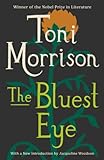
#1 — Beloved by Toni Morrison
Morrison’s 1987 novel is the tradition Whitehead writes within, and the most important predecessor for The Underground Railroad. Sethe, a formerly enslaved woman living in Cincinnati after the Civil War, is haunted by the ghost of the daughter she killed to save her from being returned to slavery — and then the ghost returns in the flesh. Where Whitehead uses genre to defamiliarize slavery’s horrors, Morrison uses the supernatural to render what realistic fiction cannot: the psychological damage of the institution, the impossibility of motherhood under it, and the grief that has no shape in conventional narrative. Beloved won the Pulitzer Prize in 1988 and is generally considered the most important American novel of the late twentieth century. It is not easy, but nothing of comparable importance is.
#2 — Song of Solomon by Toni Morrison
Morrison’s 1977 novel follows Milkman Dead on a journey south to discover his family’s origins — the exact reverse of Cora’s journey north, and equally haunted by what was lost in the crossing. The Dead family name, given to Milkman’s grandfather by a drunken Freedmen’s Bureau official, carries the novel’s central argument: slavery renamed and erased, and the task of Black Americans is to recover what was taken. Morrison fills the novel with folklore, flight, and a sense of ancestral presence that connects to Whitehead’s use of the literal underground as a space where history moves. For readers who want to understand the tradition Whitehead is writing in, Song of Solomon is the most accessible entry point into Morrison’s work.
#3 — Kindred by Octavia Butler
Butler’s 1979 novel sends Dana, a contemporary Black woman living in 1970s Los Angeles, back in time to antebellum Maryland each time a white man’s life is in danger — and that white man turns out to be her ancestor, a slaveholder whose survival is necessary for Dana’s own existence. Kindred is the most visceral account of slavery’s daily reality in American fiction: Butler researched obsessively and renders the experience of enslaved life with a specificity that no other novel approaches. Like The Underground Railroad, it uses genre — here time travel — to force readers into direct encounter with what historical distance tends to soften. It is also Butler’s most accessible novel, and the right starting point for readers who have not yet encountered her.
Slavery, Freedom, and American History
#4 — The Known World by Edward P. Jones
Jones’s 2003 Pulitzer winner takes the most unexpected angle on American slavery: Henry Townsend, a formerly enslaved Black man, becomes a slaveholder in antebellum Virginia, and the novel traces what happens to his plantation after his death. The moral complexity Jones pursues is the kind that makes readers uncomfortable — not the comfortable story of Black Americans as solely victims of white violence, but the harder story of what a slave society does to every person inside it, regardless of race. Whitehead’s novel shares this moral ambition: the alternate history he constructs is not a fantasy of simple heroes and villains but an investigation into how systems of oppression perpetuate themselves and who serves them.
#5 — 12 Years a Slave by Solomon Northup
The nonfiction source document: Solomon Northup was a free Black man living in Saratoga Springs, New York, who was kidnapped in 1841, sold into slavery in Louisiana, and spent twelve years enslaved before being rescued. His 1853 memoir is written with a precision and emotional restraint that makes it more devastating than any dramatization — Northup was an educated man with a gift for observation, and his account of the daily reality of plantation life has the quality of testimony rather than narrative. Readers of The Underground Railroad who want to understand what Whitehead’s fiction is built on should read 12 Years a Slave alongside it. The distance between what Northup describes and what Whitehead invents is instructive.
#6 — The Color Purple by Alice Walker
Walker’s 1982 Pulitzer winner follows Celie, a Black woman in rural Georgia in the early twentieth century, through abuse, subjugation, and gradual emergence into voice — told in letters to God and to her sister Nettie. The journey from silence to speech that the novel charts is a different version of Cora’s journey from bondage to freedom: both are about what it costs a Black woman in America to become the author of her own story, and both insist on the particularity of Black women’s experience within broader narratives of racial oppression. The Color Purple is the most emotionally direct book on this list, and Walker’s epistolary form gives it an intimacy that amplifies rather than distances the violence Celie survives.
#7 — Homegoing by Yaa Gyasi
Gyasi’s 2016 debut follows two half-sisters born in 18th-century Ghana — one who marries a British slave trader, one who is enslaved and shipped to America — and traces their descendants across eight generations to present-day America. Where Whitehead compresses the whole geography of American slavery into one woman’s journey, Gyasi expands it across centuries and continents to show the deep roots of what Cora is fleeing. Both novels use structural experiment — Whitehead’s alternate geography, Gyasi’s generational chapters — to make history feel present rather than past. Homegoing is the deeper historical account; The Underground Railroad is the more urgent novel. Both are essential.
Genre as History
#8 — The Handmaid’s Tale by Margaret Atwood
Atwood’s 1985 novel uses the conventions of dystopian fiction to illuminate real oppression: the Republic of Gilead, a theocratic state that has reduced fertile women to reproductive slavery, is assembled from practices that have existed or currently exist somewhere on earth. This is precisely Whitehead’s strategy in The Underground Railroad: the literal railroad and the alternate-history states Cora passes through are assembled from real American ideologies — scientific racism, eugenics, paternalism, public spectacle violence — rendered visible through distortion. Both novels argue that the genre frame does not diminish the reality of the horror but rather makes it legible in ways that straightforward realism cannot. The Handmaid’s Tale is the most direct predecessor for Whitehead’s method.
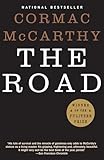
#9 — The Road by Cormac McCarthy
McCarthy’s 2006 Pulitzer winner follows a father and son crossing a post-apocalyptic American landscape toward the coast, carrying the fire of basic human decency through a world that has mostly abandoned it. The parallel to The Underground Railroad is not thematic but structural and moral: Cora and the man and the boy are making the same journey through a hostile America, and both novels use the flight narrative to ask what humanity is capable of under conditions of total threat. McCarthy’s America and Whitehead’s America are different disasters, but the question each novel poses — what does it cost a person to keep moving toward something like freedom, and what are they willing to do to survive — is the same question.
#10 — Never Let Me Go by Kazuo Ishiguro
Ishiguro’s 2005 novel follows three students at an English boarding school who slowly come to understand that they have been created as organ donors and will not survive into middle age. The acceptance that Kathy, Tommy, and Ruth eventually reach — the way they accommodate themselves to what the system has decided — is the polar opposite of Cora’s refusal. Ishiguro’s novel belongs here as a contrast: where Cora runs, Kathy stays; where The Underground Railroad is about the possibility and cost of resistance, Never Let Me Go is about the possibility and cost of compliance. Reading them together illuminates what both are saying about what people do when a system decides their lives do not belong to them.
How to Choose Your Next Read
If you want the essential predecessor in the Morrison tradition: Beloved — the novel that made The Underground Railroad possible.
If you want the most visceral account of slavery’s daily reality: Kindred by Octavia Butler — the genre approach taken to its limit.
If you want the deepest historical scope: Homegoing by Yaa Gyasi — eight generations, two continents.
If you want the nonfiction source document: 12 Years a Slave — what happened before the fiction, in the words of the man it happened to.
If you want the same genre strategy applied to a different oppression: The Handmaid’s Tale — Atwood’s blueprint for what Whitehead does.
For the Best Fiction Books
For the definitive guide to fiction — the greatest novels across literary fiction, classics, and contemporary writing — see our Best Fiction Books of All Time list.
More Historical Fiction and Slavery Narratives
- Books Like Homegoing: Multigenerational African Diaspora Fiction
- Books Like Beloved: Historical Fiction About Trauma and Memory
More Classic American Literature Guides
Affiliate disclosure: Links to Amazon on this page are affiliate links. We earn a small commission at no extra cost to you. This does not influence our editorial recommendations.
Frequently Asked Questions
Is The Underground Railroad based on real events?
The Underground Railroad is historical fiction rooted in the reality of American slavery, but with a central fantastical premise: Whitehead takes the 'underground railroad' — which was a real network of safe houses and routes used by enslaved people fleeing to freedom, called a 'railroad' metaphorically — and makes it literal. In the novel, there are actual trains running through underground tunnels. The horrors Cora encounters in each state she passes through — sterilization programs in North Carolina, public torture in South Carolina — are inventions, but they are drawn from real practices and ideologies of American racism, both historical and contemporary. The novel's alternate history is a way of making slavery's logic visible rather than distant.
Why did The Underground Railroad win the Pulitzer Prize?
The Underground Railroad won the 2017 Pulitzer Prize for Fiction because Whitehead achieved something the judges found essential: he made the horrors of American slavery legible to contemporary readers by defamiliarizing them through genre. The literal underground railroad — a piece of steampunk alternate history embedded in a brutally realistic account of enslaved life — forces readers to encounter slavery fresh, without the numbing effect of historical distance. The novel was also recognized for its prose, its control of pace, and its moral seriousness. It was the rare Pulitzer winner that was also a bestseller, selected for Oprah's Book Club and awarded the National Book Award in the same year.
What is the best order to read Colson Whitehead's novels?
Whitehead's novels are standalone works that do not need to be read in order, but readers coming to him through The Underground Railroad might consider The Nickel Boys next — it won the 2020 Pulitzer Prize and is in some ways a companion piece, telling the story of two Black boys at a reformatory in 1960s Florida, equally concerned with institutional violence against Black Americans but more restrained in its realism. Zone One, his zombie novel, shows his range. The Intuitionist, his debut, is the most formally experimental of his early work. Each novel is its own complete argument.