Books Like Homegoing: Multigenerational Saga Novels
Yaa Gyasi's debut follows two half-sisters in 18th-century Ghana — one who marries a British slave trader, one who is enslaved — and traces their descendants across eight generations to present-day America. These books share its structural ambition and its account of how history inhabits the body.

Yaa Gyasi wrote the first draft of Homegoing as her undergraduate thesis at Stanford, inspired partly by a visit to Cape Coast Castle in Ghana — the slave fort where, in the novel’s opening chapters, a British governor keeps a Fante woman as his mistress while enslaved Africans are held in the dungeons below. The collision of those two realities in a single building is the moral engine of the entire novel: Effia upstairs in relative comfort, her half-sister Esi downstairs in the dark, and the two lines of descent that radiate from that moment across two hundred and fifty years and two continents.
Published in 2016, the novel was an immediate phenomenon — it sold for a reported million dollars before publication, received nearly universal acclaim, and confirmed that Gyasi was one of the most significant new voices in American fiction. Its structural ambition is real: fourteen chapters, each a complete story, each following a different member of the two family lines, each requiring Gyasi to inhabit a new historical moment with full documentary and emotional conviction. That she largely succeeds at this across eight generations is an achievement that very few debut novelists have approached.
The books below were chosen for readers who responded to Homegoing’s specific combination of structural ambition, historical scope, and intimate emotional rendering. They range from the African literary tradition that Gyasi writes within to the multigenerational saga form she perfected, and they share the novel’s central conviction: that history does not stay in the past but lives in the body of every generation that inherits it.
The African Diaspora and Its Literature
#1 — Beloved by Toni Morrison
Sethe, a formerly enslaved woman in post-Civil War Cincinnati, is haunted by the ghost of the daughter she killed to save her from being returned to slavery. Morrison’s 1987 novel is the end of the chain that Homegoing traces: Sethe is what Maame’s descendants become after two hundred and fifty years of slavery, war, and the Great Migration. Beloved is the novel that proved African American literature could carry the full weight of slavery’s history without flinching — the novel that made it possible for Gyasi and Whitehead and others to write what they write. It is harder and stranger than Homegoing, less interested in accessibility, but it reaches depths of historical grief that no other novel in this tradition matches.
#2 — Things Fall Apart by Chinua Achebe
Achebe’s 1958 novel is the other end: Okonkwo, a proud Igbo wrestler and farmer in a pre-colonial Nigerian village, watches the arrival of British missionaries and administrators begin the dissolution of everything he has known. Where Homegoing traces what colonial contact produces across generations, Things Fall Apart shows the moment of contact itself — the world before the breaking. Achebe wrote the novel explicitly as a response to Conrad’s Heart of Darkness, insisting on the full humanity and complexity of African societies before European colonialism, and his Igbo village is rendered with the same density and specificity that Gyasi brings to her Fante characters. It is short, powerful, and belongs on any list that Homegoing appears on.
#3 — Half of a Yellow Sun by Chimamanda Ngozi Adichie
Adichie’s 2006 novel follows three characters through the Biafran War — Nigeria’s catastrophic civil war of 1967–1970, in which the Igbo-majority southeast attempted to secede and was blockaded into mass starvation — and is, alongside Things Fall Apart, the most important novel written about modern Nigerian history. Adichie is doing something similar to Gyasi: she is writing a history that her own people have not been permitted to narrate on their own terms, using the novel as the instrument of that reclamation. Both writers are Nigerian women who grew up partly in the United States and bring a diaspora perspective to African history; the comparison between their methods is instructive and rewarding.
#4 — Americanah by Chimamanda Ngozi Adichie
Adichie’s 2013 novel is the contemporary end of the diaspora that Homegoing traces: Ifemelu, a young Nigerian woman, comes to the United States for college and spends years navigating American race — the discovery that in America she is Black in a way she was never Black in Nigeria. When she eventually returns to Lagos, Nigeria has changed, and she has changed, and the novel’s final act is about whether return is possible after the diaspora has reshaped you. Americanah is the most accessible of Adichie’s novels and arguably the most directly relevant to American readers encountering the African diaspora for the first time in Homegoing. Its blog posts on race in America are some of the sharpest prose on that subject written in the last decade.
Multigenerational Sagas
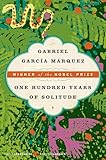
#5 — One Hundred Years of Solitude by Gabriel García Márquez
García Márquez’s 1967 masterpiece traces seven generations of the Buendía family in the fictional Colombian town of Macondo, from its founding through its apocalyptic destruction, mixing the miraculous and the mundane in the mode that would become known as magical realism. One Hundred Years of Solitude is the template for the multigenerational family saga as a form for historical sweep — Gyasi’s eight-chapter structure, like García Márquez’s, uses the family as a lens for the entire history of a society. The Buendías repeat their mistakes across generations as surely as Gyasi’s characters carry their ancestors’ trauma; the novel’s most famous observation — that families are condemned to repeat their history until they understand it — is also Homegoing’s argument.
#6 — Pachinko by Min Jin Lee
Lee’s 2017 novel follows four generations of a Korean family displaced to Japan, beginning with a teenage girl’s pregnancy in a fishing village in 1910 and ending in 1980s Tokyo. Koreans in Japan are a permanently marginalized minority — denied citizenship regardless of how many generations have lived there — and Lee’s novel is about what it costs to maintain dignity inside a system designed to deny it across a century. The structural parallel to Homegoing is direct: both novels use generational chapters to show how a single historical catastrophe — Japanese colonialism of Korea, British slavery of Africans — echoes forward through bodies and choices that seem individual but are shaped by forces the characters cannot see.
#7 — The Joy Luck Club by Amy Tan
Tan’s 1989 debut novel follows four Chinese immigrant mothers and their American-born daughters in San Francisco, structured as a series of interconnected stories told from eight perspectives — four mothers, four daughters — as each tries to understand what the other has inherited and lost. Like Homegoing, it is formally a series of linked stories rather than a conventional novel, and its central subject is the gap between generations created by historical displacement: what the mothers carry from China, what the daughters were never told, and whether the inheritance of trauma can also be an inheritance of strength. It is the most emotionally direct book on this list and the one that readers new to multigenerational fiction will find most immediately accessible.
History Inhabiting the Present
#8 — Roots by Alex Haley
Haley’s 1976 multigenerational narrative — researched across twelve years and dozens of archives — traces his family line from Kunta Kinte, captured in the Gambia and enslaved in Virginia in 1767, through six generations to the author himself. Roots is the foundational multigenerational diaspora narrative in American culture: before Homegoing, before Beloved, there was Haley’s account of how he traced his own family back across the Atlantic. It is a hybrid work — part history, part memoir, part historical reconstruction — and its account of Kunta Kinte’s capture and the Middle Passage remains one of the most powerful passages in American nonfiction. Gyasi’s novel is, among other things, a novelist’s response to what Haley accomplished as a researcher.
#9 — Song of Solomon by Toni Morrison
Morrison’s 1977 novel follows Milkman Dead south from Michigan to Virginia and ultimately to Pennsylvania, searching backward through Black American history for the origins of his family name and his family’s strange capacity for flight. Where Homegoing traces the history forward from Ghana to America, Song of Solomon moves backward, recovering what was lost in the crossing. Both novels are about the same absence: the severing of African Americans from African history by the slave trade, and the way that absence shapes the present. Morrison’s novel is denser and more mythic than Gyasi’s, but it reaches toward the same healing — the restoration of a severed connection to origin.
#10 — The Underground Railroad by Colson Whitehead
Whitehead’s 2016 Pulitzer winner follows Cora, enslaved on a Georgia cotton plantation, as she escapes north through a literal underground railroad, encountering alternate versions of America’s racial horrors in each state she passes through. If Homegoing is the deep historical account — the roots of the chain that produced American slavery — The Underground Railroad is the middle of the chain: the moment of flight, the effort to reach what Gyasi’s American characters have already inherited. Both novels won the Pulitzer and the National Book Award in the same two-year period, and together they constitute the most significant achievement in recent African American fiction. Readers who have read one and not the other should remedy that immediately.
How to Choose Your Next Read
If you want the essential Morrison novel: Beloved — the end of the chain Homegoing traces, the most important American novel of the last fifty years.
If you want the African literary tradition at its foundation: Things Fall Apart — the world before colonial contact, in the words of the writer who insisted on its full humanity.
If you want the most direct structural parallel: Pachinko by Min Jin Lee — four generations, a different diaspora, the same argument about inherited history.
If you want the foundational American version of this story: Roots by Alex Haley — the research that made Homegoing possible, told in the author’s own family.
If you want the companion novel of the same moment: The Underground Railroad by Colson Whitehead — the same historical reckoning, a different formal strategy.
For the Best Fiction Books
For the definitive guide to fiction — the greatest novels across literary fiction, classics, and contemporary writing — see our Best Fiction Books of All Time list.
More Multigenerational Fiction Reading Guides
- Books Like Pachinko: Immigration and the Weight of History
- Books Like The Underground Railroad: Slavery and Freedom
- Books Like Beloved: Historical Fiction About Trauma and Memory
More Essential Non-Fiction Guides
Affiliate disclosure: Links to Amazon on this page are affiliate links. We earn a small commission at no extra cost to you. This does not influence our editorial recommendations.
Frequently Asked Questions
How is Homegoing structured?
Homegoing consists of fourteen chapters, each following a different character: the novel begins with two half-sisters, Effia and Ama Serwah (later Esi), in 18th-century Ghana, and then moves to one of Effia's descendants and one of Esi's descendants in alternate chapters, tracking both family lines across eight generations from colonial Ghana to contemporary America. Each chapter is essentially a self-contained story, and many readers find the structure both the novel's greatest strength and its most demanding quality — the characters you come to care about are left behind at each chapter's end. Gyasi uses this structure to argue that history is not a background but an active force that shapes each generation's body and choices.
Is Homegoing Yaa Gyasi's first novel?
Yes, Homegoing was Gyasi's debut novel, published in 2016 when she was twenty-six years old. She began writing it as her undergraduate thesis at Stanford and revised it during a Michener Center fellowship in Austin. The novel received an unusual amount of prepublication attention — it sold for a reported one million dollars — and its reception confirmed that attention as warranted. Gyasi's second novel, Transcendent Kingdom, published in 2020, is a contemporary novel about a Ghanaian-American neuroscience graduate student whose brother dies of an opioid overdose. It shares Homegoing's concern with how inherited trauma shapes individual lives, but is more intimate in scope.
What African novels should I read alongside Homegoing?
The essential companion is Chinua Achebe's Things Fall Apart, which shows the Igbo world as colonial contact begins — the beginning of the historical process Homegoing traces. Chimamanda Ngozi Adichie's work is the other natural pairing: Half of a Yellow Sun for the Biafran War, Americanah for the contemporary diaspora experience. For West African history specifically, readers might also consider Ama Ata Aidoo's Our Sister Killjoy, which examines the experience of an educated Ghanaian woman in Europe and is one of the foundational texts of Ghanaian literature in English. Gyasi herself has cited Toni Morrison and Edward P. Jones among her American influences.