Books Like Beloved: Historical Fiction on Trauma
Toni Morrison's ghost story about slavery's legacy is one of the most powerful novels ever written. These books share its confrontation with historical violence and its demand that the unthinkable be faced.

Toni Morrison’s Beloved begins with a dedication — “Sixty Million and more” — that tells the reader immediately what kind of novel this will be. Not a novel about individual characters, though the characters are among the most fully realized in American fiction. Not a historical novel in the conventional sense, though it is set with precision in 1873 Cincinnati and reaches back into the era of American slavery. Beloved is an act of witness, an insistence that the dead be counted and that the living not be permitted to forget what was done to them. The ghost at its center is both a literal presence and the embodied form of what Morrison called “rememory” — the past that does not stay past, that returns in the body as sensation and dread.
Published in 1987, the novel won Morrison the Pulitzer Prize in 1988 and is cited as a primary reason for her Nobel Prize in Literature in 1993. It is also, regularly, one of the most challenged books in American schools — which is its own kind of testimony to what it requires of a reader. Beloved does not offer distance from the horrors it describes. Morrison’s formal decision to fragment the narrative, to approach the central act obliquely, to give Beloved’s own voice an interior monologue that is stream-of-consciousness memory dissolving into itself — all of this puts the reader inside the experience rather than observing it from outside. It is not an easy novel. It is not meant to be.
The books below were chosen for readers who were affected by something specific in Beloved: the ghost story form, the confrontation with historical violence, the account of how trauma operates in the body and across generations, or the demand that unthinkable events be faced rather than suppressed. They range from Morrison’s own novels to works from other literary traditions that ask the same fundamental question — what do we owe to what has been done, and what does it cost to remember?
More Toni Morrison
#1 — Song of Solomon by Toni Morrison
Morrison’s third novel, and the one she most often described as her favorite, follows Macon “Milkman” Dead III on a search through his family’s past that begins as a hunt for gold and becomes an excavation of myth, violence, and inheritance. More expansive than Beloved and, in places, genuinely joyful — the novel opens with a man attempting to fly from a hospital rooftop — Song of Solomon is the book that established Morrison as a major American novelist before Beloved confirmed it. The mythological resonances are drawn from African American folk tradition and from the Bible simultaneously, and the character of Pilate Dead, Milkman’s aunt, is one of the great presences in twentieth-century fiction.
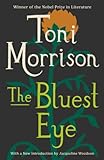
#2 — The Bluest Eye by Toni Morrison
Morrison’s 1970 debut is the most formally controlled of her novels and, in some ways, the most devastating. Pecola Breedlove, a Black girl in 1940s Lorain, Ohio, prays all year for blue eyes — the conviction being that blue eyes would make her beautiful, and beauty would make her loved. The novel is the clearest statement in all of Morrison’s work of what systemic racism does to a child’s interiority: not just what it takes away but what it replaces the taken things with. The structure — the Dick and Jane primer repeated in progressively degraded form as an epigraph — is one of the most pointed formal decisions in American literature. Readers who come to it from Beloved will recognize the same moral seriousness and the same refusal of sentimentality.
#3 — Sula by Toni Morrison
Two Black women grow up together in a fictional Ohio town called the Bottom and diverge completely: Nel Wright chooses the conventional life — marriage, community, respectability — and Sula Peace chooses absolute freedom, which her community reads as evil. The novel asks what each choice costs and what it means to call a woman evil rather than simply refuse her the right to exist on her own terms. Sula is Morrison’s most compressed novel and her most overtly feminist — the friendship at its center is as fully realized as any relationship in her work, and its dissolution is as quietly painful as anything in Beloved. The final pages reframe everything that has preceded them.
Historical Trauma and the Unthinkable
#4 — One Day in the Life of Ivan Denisovich by Aleksandr Solzhenitsyn
Solzhenitsyn’s 1962 novella accounts for a single winter day in a Soviet labor camp — breakfast, work detail, evening count, lights out — in a prose so precise and unornamented that the accumulation of ordinary details becomes unbearable. The method is identical to Morrison’s: the compression of the unthinkable into the texture of daily life, the insistence that survival requires a kind of accounting so minute it can seem, from outside, like indifference. Ivan Denisovich is not a victim in the usual narrative sense; he is a man who has mastered the art of not dying, and watching him practice that art for one representative day is one of the most morally clarifying experiences available in short fiction.
#5 — The First Circle by Aleksandr Solzhenitsyn
Solzhenitsyn’s longer novel follows a group of scientists and mathematicians imprisoned in a special institute — a sharashka — where Stalin’s government uses their skills while keeping them captive. The central moral crisis arrives when one prisoner must choose between betraying a diplomat who has warned a friend about a Soviet spy operation and maintaining the silence that keeps him alive. The novel forces the same question Beloved forces from a different angle: what do you do when your survival requires participation in a system that is destroying others? Solzhenitsyn wrote it in secret and it was not published in the Soviet Union until 1990; the manuscript was confiscated by the KGB and reconstructed from memory.
#6 — Human Acts by Han Kang
Han Kang’s 2014 novel — published in Korean, translated by Deborah Smith — accounts for the 1980 Gwangju Uprising in South Korea, when hundreds of civilians were massacred by military forces after a student-led democracy movement. The novel moves through multiple perspectives and multiple time periods, giving voice to the dead, the survivors, the perpetrators’ victims, and the people who come decades later trying to understand what happened. It is the most direct contemporary equivalent to Beloved in terms of its formal ambition — the refusal to tell a single story, the insistence that the full weight of historical violence requires multiple registers — and its demand that the reader refuse to look away from what is shown.
#7 — Doctor Zhivago by Boris Pasternak
Pasternak’s Nobel Prize-winning epic about surviving the Russian Revolution and its aftermath belongs here because of what it understands about history as a force that breaks the people it passes through. Yuri Zhivago is not a victim in the political sense — he is never a dissident, never a revolutionary — but history happens to him anyway, stripping away everything he loves in the name of transformations that benefit no one he can see. The love between Zhivago and Lara Antipova exists in the same register as Sethe’s love in Beloved: something so private and so intense that the public world can only destroy it, never reach it. The novel was banned in the USSR; Pasternak was forced to refuse the Nobel Prize under official pressure.
The Ghost Story as History
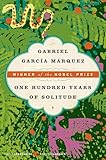
#8 — One Hundred Years of Solitude by Gabriel García Márquez
García Márquez treats ghosts as facts in Macondo — the patriarch José Arcadio Buendía has a recurring visitor from the dead, the murdered return without ceremony, the supernatural is simply part of the weather of everyday life. The form Morrison uses in Beloved — magical realism as a mode for writing about historical violence, the ghost as the embodied demand of the past — has this novel as its closest fictional ancestor. One Hundred Years of Solitude was one of the books Morrison cited when explaining the tradition she was working within, and reading the two together makes clear how much the American novel of slavery and the Latin American novel of colonialism share in method and in moral purpose.
#9 — The Buried Giant by Kazuo Ishiguro
Ishiguro’s 2015 novel is set in post-Arthurian Britain, where a mysterious mist drifts across the land and causes everyone — Britons and Saxons alike — to forget the recent past. An elderly couple sets out on a journey and gradually discovers what the forgetting has been covering. The novel is Ishiguro’s most direct engagement with the question Beloved insists upon: whether a community can survive the recovery of what it has suppressed, and what it costs to remember. The answer the novel arrives at is more ambivalent than Morrison’s, more cautious about the value of unearthed truth — which makes the two novels excellent to read together, as a genuine argument about memory and its demands.
#10 — The Remains of the Day by Kazuo Ishiguro
Also Ishiguro — and a very different kind of haunting. Stevens, the repressed English butler driving through the West Country in 1956, is haunted not by the dead but by the life he chose not to live: the woman he did not love openly, the employer whose Nazism he refused to acknowledge, the dignity he maintained in place of everything else. The Remains of the Day is the ghost story of the life unlived, the past that was present but remained unacted upon. Morrison’s Sethe is destroyed by what she cannot forget; Ishiguro’s Stevens is diminished by what he chose not to see. The two novels are mirror images of the same argument about what we owe to the truth of our own experience.
How to Choose Your Next Read
If you want the closest continuation of Morrison’s voice: Song of Solomon — mythologically expansive, more joyful, equally luminous.
If you want Morrison at her most compressed and formally precise: The Bluest Eye — the debut that announced everything that followed.
If you want the most direct contemporary parallel: Human Acts — the same method applied to Korean history, equally unsparing.
If you want the ghost story dimension developed in a different register: The Buried Giant — Ishiguro asking whether communities can survive their own memories.
If you want the historical sweep without the supernatural: Doctor Zhivago — history as the force that breaks what it passes through.
If you want the magical realist ancestor: One Hundred Years of Solitude — the formal tradition Morrison was explicitly working within.
For the Best Fiction Books
For the definitive guide to fiction — the greatest novels across literary fiction, classics, and contemporary writing — see our Best Fiction Books of All Time list.
More Historical Fiction and American Literature
- Books Like Homegoing: Multigenerational African Diaspora Fiction
- Books Like The Underground Railroad
- Books Like The Grapes of Wrath: Social Fiction and Survival
Affiliate disclosure: Links to Amazon on this page are affiliate links. We earn a small commission at no extra cost to you. This does not influence our editorial recommendations.
Frequently Asked Questions
What is Beloved actually about?
*Beloved* is about Sethe, a formerly enslaved woman living in Cincinnati in 1873, who killed her infant daughter rather than let her be taken back into slavery. The ghost of that daughter — named Beloved — haunts her house for years, then returns in apparent human form and gradually consumes Sethe's life, her energy, her past. At one level it is a ghost story; at another it is the most precise account in fiction of how traumatic memory operates — not as a narrative you can process and set aside, but as a presence that returns uninvited and demands to be known. The novel is based on the historical case of Margaret Garner, an escaped slave who did exactly what Sethe does, and Morrison spent years deciding what the novel's form should be before she began writing it.
Is Beloved based on a true story?
The novel is rooted in the case of Margaret Garner, an enslaved woman who escaped from Kentucky to Ohio in January 1856 and, when federal marshals came to return her family to slavery under the Fugitive Slave Act, killed her two-year-old daughter with a meat cleaver rather than see her returned to the life from which they had escaped. Morrison encountered Garner's story in a newspaper archive while editing *The Black Book* in 1974 and spent over a decade deciding what to do with it. The novel does not retell the historical facts — it uses them as the seed of an exploration that goes deeper than journalism can reach. Garner herself said that she had no regrets; Morrison's Sethe says the same.
What should I read after Beloved?
Morrison's own novels are the natural next step — *Song of Solomon* is her most mythologically rich and probably her most joyful, *The Bluest Eye* is her most heartbreaking debut, and *Sula* is her most compressed and feminist. Beyond Morrison, the writers most directly in conversation with *Beloved* include Octavia Butler, whose *Kindred* approaches slavery through time travel with a visceral immediacy that rivals Morrison's; Edward P. Jones, whose *The Known World* complicates the moral landscape of slavery by examining Black slaveholders in Virginia; and Colson Whitehead, whose *The Underground Railroad* literalizes the historical metaphor and won the Pulitzer Prize. For the ghost story dimension specifically, Shirley Jackson's *The Haunting of Hill House* and Angela Carter's *The Bloody Chamber* both explore the female uncanny with comparable formal intensity.