Books Like The Grapes of Wrath: Social Epic Novels
Steinbeck's Pulitzer Prize-winning novel about the Joads' journey from Oklahoma to California is American social fiction at its most vast and its most angry. These books share its scope, its fury at injustice, and its commitment to the dispossessed.
John Steinbeck’s The Grapes of Wrath is the great American social novel — not because it is the most polished or the most subtle, but because it is the most committed. Published in 1939 after Steinbeck spent two years reporting on migrant workers in California’s Central Valley, the novel follows the Joad family from their Dust Bowl farm in Oklahoma to the labor camps and grower fields of California, where the promised land turns out to be a system designed to exploit the people desperate enough to arrive at it. Steinbeck won the Pulitzer Prize in 1940 and the Nobel Prize in 1962, and the committee specifically cited this novel’s combination of sympathetic imagination and social realism.
The structure is unusual and deliberate. Steinbeck alternates chapters of Joad family narrative with “interchapters” — short, documentary passages written in a collective voice that zoom out from the Joads to describe the larger forces (economic, historical, agricultural) that produced their situation. The effect is to make the Joads both particular people you care about and representatives of hundreds of thousands. The anger that drives the novel is controlled by this formal intelligence: Steinbeck wants you to feel the injustice, but he also wants you to understand it as a system, not just a series of individual cruelties. The turtle in the opening chapter, pushing forward against every obstacle, is the novel’s animating image.
The books below were chosen for readers who responded to that combination of epic scale and political fury — the sense that fiction can be a form of witness, that a novelist’s job includes accounting for the conditions that produce suffering, not just the suffering itself. They range from Steinbeck’s own more intimate work to novels from other traditions that found their own way to the same commitment.
More John Steinbeck
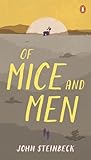
#1 — Of Mice and Men by John Steinbeck
George Milton and Lennie Small are itinerant ranch workers in Depression-era California — George small and sharp, Lennie huge and intellectually disabled, both of them sustained by the same dream: a little farm of their own, a place where they belong, where Lennie can tend the rabbits. Of Mice and Men is the most concentrated Steinbeck, the version of his themes compressed to the point of tragedy: the dream of land and security held by people the economy has made permanently landless, and the violence that ends it. Published two years before The Grapes of Wrath, it covers the same world from the inside, in the form of a novella so tightly constructed that it has been adapted for the stage almost without alteration. The ending remains one of the most discussed in American literature.
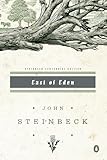
#2 — East of Eden by John Steinbeck
Steinbeck’s most ambitious novel follows two California families — the Trasks and the Hamiltons — across three generations in the Salinas Valley, retelling the story of Cain and Abel in American soil. If The Grapes of Wrath is Steinbeck at his angriest, East of Eden is Steinbeck at his most philosophical: the central argument is about whether human beings can choose their own nature, and the Hebrew word timshel — “thou mayest” — becomes the novel’s moral pivot. It is longer and more sprawling than anything else on this list, more in the tradition of Tolstoy than of social realism, but the California landscape is the same landscape as the Joads’, and the question of what this country does to the people who come to it in hope runs through every page.
#3 — Cannery Row by John Steinbeck
The Monterey waterfront in the 1930s: the marine biologist Doc, the bums and prostitutes who love him, the men who live in a converted boiler and plan an elaborate party in his honor. Cannery Row is Steinbeck’s most affectionate novel, and the affection is specifically for people the economy has thrown away — men who have decided that the respectable life is not available to them and have built something else in its place. Where The Grapes of Wrath is furious about poverty, Cannery Row is tender about it. Both novels insist that the dispossessed have their own dignity and their own community; they simply hold that insistence in different registers. Read this one when you need the same world rendered in joy rather than anger.
American Social Fiction
#4 — To Kill a Mockingbird by Harper Lee
Scout Finch grows up in Maycomb, Alabama during the 1930s, watching her father Atticus defend Tom Robinson — a Black man falsely accused of rape — in a court that has no intention of acquitting him. Lee’s novel covers almost exactly the same historical moment as The Grapes of Wrath and the same social conditions: Depression-era poverty, the gap between American ideals and American practice, the violence done to those the system has designated as expendable. But where Steinbeck attacks from outside — as a journalist documenting a scandal — Lee works from inside a childhood, through a child’s slowly developing understanding of the world she lives in. The two novels together give you the era’s injustice from two complementary angles.
#5 — Beloved by Toni Morrison
Sethe, a formerly enslaved woman living in Reconstruction-era Cincinnati, is haunted by the ghost of the daughter she killed to prevent her from being taken back into slavery. Morrison’s 1987 novel — which won the Pulitzer Prize in 1988 — is the most demanding book on this list and the one that puts the strongest pressure on the word “survival.” Where the Joads survive by moving, by keeping the family together, by insisting on their own humanity in the face of a system that denies it, Sethe has survived something that has taken that humanity to its absolute limit. Beloved sits in conversation with The Grapes of Wrath as an account of what American economic history actually cost — not just the Dust Bowl, but the centuries of forced labor that preceded it and whose legacy shaped the California the Joads arrived in.
#6 — Doctor Zhivago by Boris Pasternak
Yuri Zhivago, a physician and poet, survives the Russian Revolution, the civil war, and the early Soviet years — buffeted by historical forces that destroy everything he builds and everyone he loves. Pasternak’s Nobel Prize-winning novel (1958) was banned in the Soviet Union until 1988; the Prize itself became an international incident. It belongs on this list because it is the Russian equivalent of Steinbeck’s social ambition: a novel that uses the story of one man and his loves to account for what happens to ordinary people when history decides to transform itself by violence. The scope is vast, the losses are enormous, and Pasternak, like Steinbeck, insists that the individual life has value even when the state — or the economy — has decided otherwise.
#7 — Independent People by Halldór Laxness
Bjartur of Summerhouses is an Icelandic crofter who has worked eighteen years to own his own land and will spend the next fifty defending that ownership against nature, debt, and the needs of his family. Laxness won the Nobel Prize in 1955 and Independent People is his masterpiece — the most uncompromising version of the novel about the rural poor in world literature. Where the Joads are displaced by forces beyond their control and respond with communal solidarity, Bjartur is driven by a ferocious individualism that is simultaneously admirable and catastrophic. Both novels ask the same question: what does a poor man owe the world and what does the world owe him? They give opposite answers, and both are right.
Migration, Survival, and the Road
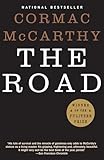
#8 — The Road by Cormac McCarthy
A father and his young son walk south through an America destroyed by an unspecified catastrophe, carrying a few supplies and the commitment to remain, as the father puts it, among the good guys. McCarthy’s 2006 novel is the most extreme update of the Joads’ journey: the same movement through a devastated landscape, the same question of what you are willing to do to keep the people you love alive, the same tension between the individual family and the larger community of the desperate. But McCarthy strips away every comfort Steinbeck allowed himself — there is no California to arrive at, no system to be angry at, no possibility of collective action. The Road is what The Grapes of Wrath becomes when you remove the hope.
#9 — One Hundred Years of Solitude by Gabriel García Márquez
The Buendía family founds the town of Macondo in the Colombian jungle after fleeing violence — migrants building a new world in empty territory — and the next hundred years will bring them through civil war, American imperialism, a banana plantation massacre, and the slow dissolution of everything they built. García Márquez won the Nobel Prize in 1982 and One Hundred Years of Solitude is his supreme achievement: an epic of migration and foundation that covers the same ground as Steinbeck’s novel from the perspective of Latin America rather than the American Midwest. The magical realism is a different mode than Steinbeck’s naturalism, but the underlying commitment — to the people history uses and discards, to the family as the unit that survives when everything else fails — is the same.
#10 — The Pearl by John Steinbeck
Kino, a poor pearl diver in a Mexican coastal village, finds a pearl so large it promises to change everything: a doctor for his sick son, an education, an escape from the poverty that has defined his family for generations. The growers and dealers of The Grapes of Wrath are here compressed into the merchants and trackers who pursue him; the Joads’ journey across a hostile landscape becomes Kino’s flight through the Sierra. At ninety pages, The Pearl is the most economical statement of the themes The Grapes of Wrath develops at length: the poor man’s dream, the system designed to prevent him from keeping it, and the violence that results when he refuses to give it back. Read it after The Grapes of Wrath and you will see Steinbeck testing how little he needs to produce the same effect.
How to Choose Your Next Read
If you want the most concentrated version of the same themes: Of Mice and Men — same world, same anger, one-tenth the length.
If you want Steinbeck at his most ambitious: East of Eden — the California epic that tries to hold everything.
If you want the same era from a different angle: To Kill a Mockingbird — 1930s injustice through a child’s eyes, race rather than class.
If you want the most demanding literary companion: Beloved — Morrison’s account of what American economic history actually cost.
If you want the contemporary heir: The Road — the Joads’ journey with California removed and the stakes made absolute.
For the Best Fiction Books
For the definitive guide to fiction — the greatest novels across literary fiction, classics, and contemporary writing — see our Best Fiction Books of All Time list.
More Classic American Literature Guides
- Books Like Beloved: Historical Fiction About Trauma and Survival
- Books Like The Old Man and the Sea: Dignity and Struggle
Affiliate disclosure: Links to Amazon on this page are affiliate links. We earn a small commission at no extra cost to you. This does not influence our editorial recommendations.
Frequently Asked Questions
Is The Grapes of Wrath still relevant today?
Yes — the novel's subjects (economic displacement, corporate agriculture's treatment of migrant workers, the gap between American promise and American reality) have not gone away. The specific historical moment (the Dust Bowl and the Depression) recurs in different forms: climate migration, agricultural labor conditions, the exploitation of those who have nowhere else to go. Steinbeck was writing journalism in fictional form, and the journalism is not dated. The Joads' situation — displaced by forces beyond their control, exploited on arrival — describes the experience of migrant workers in California fields today.
Why is The Grapes of Wrath controversial?
The novel was banned in several California counties on publication in 1939 — agricultural interests objected to the portrayal of grower exploitation, and some critics found the depiction of poverty manipulative. It was also criticized from the left for being insufficiently radical and from the right for being socialist propaganda. The most enduring controversy is over the famous final scene (Rose of Sharon nursing the starving stranger), which some readers find transcendent and others find heavy-handed. The book's anger has always made people uncomfortable; that is part of what it is for.
What should I read after The Grapes of Wrath?
Steinbeck's other novels are the natural next step — Of Mice and Men is the most compressed statement of the same themes, East of Eden his most ambitious. Beyond Steinbeck, the most direct companions are James Agee's Let Us Now Praise Famous Men (documentary of actual Alabama sharecroppers in the same era), Zora Neale Hurston's Their Eyes Were Watching God (a Black woman's survival in the same period), and more recently Colson Whitehead's The Underground Railroad and Barbara Kingsolver's Unsheltered for the continuing American tradition of social realism.