Books Like The Old Man and the Sea: 11 Stoic Reads
Hemingway's Nobel Prize-winning novella about an old fisherman's battle with a great marlin is the supreme statement on perseverance and grace under pressure. These books share its intensity, compression, and the question of what we fight for when victory is uncertain.
Ernest Hemingway’s The Old Man and the Sea is one of the shortest novels to win the Nobel Prize and one of the most argued-over. Published in 1952, the story of Santiago — an old Cuban fisherman who has gone eighty-four days without a catch — is either the supreme statement on human dignity or an overrated parable dressed up in plain prose, depending on who you ask. Both positions are defensible. What is harder to dispute is that the novella does something few books of its length manage: it creates a complete world, a complete man, and a complete moral philosophy in under 130 pages, and the compression is the point.
The story is almost entirely interior. Santiago goes out alone, hooks a marlin larger than his skiff, and spends three days and nights in a contest he cannot win cleanly — he will land the fish or die trying, and the fish, once landed, will be taken from him anyway. The sharks are not a twist ending; they are built into the structure. Hemingway’s subject is the effort itself: what it means to do your work as well as you can do it, to extend yourself past the limit of your endurance, and to return with only the skeleton as proof. The code he spent his career articulating — grace under pressure, the dignity available to those who do not yield — finds its purest form here.
The books below were chosen for readers who responded to that subject: the lone figure against an indifferent force, the question of what a man has left when everything is stripped away, and the prose style that trusts the reader to feel what is not said. They are grouped by what they share most closely with The Old Man and the Sea, and they range from Hemingway’s own longer novels to writers who found their own answers to the same question.
More Ernest Hemingway
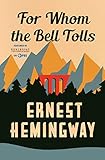
#1 — For Whom the Bell Tolls by Ernest Hemingway
Robert Jordan, an American volunteer with the Spanish Republic, is given three days to blow a bridge behind enemy lines — three days in which he falls in love, earns the trust of a guerrilla band, and faces the near-certainty of his own death. This is Hemingway’s most emotionally ambitious novel, the one that most fully earns the large claims his work makes about sacrifice and commitment. Where The Old Man and the Sea is stripped to a single man and a single fish, For Whom the Bell Tolls is crowded with people, with history, with political argument — and yet the same code governs everything: you do what the work requires, you do it without complaint, and you do not ask whether it was worth it. The ending is among the most controlled and devastating in American fiction.
#2 — The Sun Also Rises by Ernest Hemingway
Jake Barnes, an American journalist in Paris rendered impotent by a war wound, watches the woman he loves cycle through a series of men he cannot compete with. Each summer, the Lost Generation convenes in Pamplona for the bullfights, and the bulls in the ring behave better than the people watching them. The Sun Also Rises established the Hemingway style that The Old Man and the Sea would later refine to its essence: declarative sentences, meaning carried in what is omitted, the emotion deducible only from the behavior it produces. The prose is so precise and so flat that readers keep arguing about whether Jake and Brett actually love each other, which is the intended effect. Start here if you want to understand where the style came from.
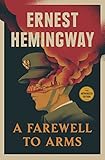
#3 — A Farewell to Arms by Ernest Hemingway
Frederic Henry, an American lieutenant in the Italian army during World War I, falls in love with a British nurse named Catherine Barkley, deserts during the catastrophic retreat from Caporetto, and flees with her to Switzerland. A Farewell to Arms is Hemingway’s most romantic novel and his most openly tragic: the rain that falls through the book signals disaster, and the disaster, when it comes, is not in doubt. Against the backdrop of a war that collapses into chaos, the love story has the intensity of something both participants know cannot last. Where The Old Man and the Sea is about a man alone, this novel is about two people trying to make a world for themselves inside a larger one that is ending. The same stoicism, the same compression, more grief.
Man Against the World
#4 — The Pearl by John Steinbeck
Kino, a poor pearl diver in a Mexican coastal village, finds the Pearl of the World — a stone so large and so perfect it seems to promise an escape from poverty, a doctor for his sick son, a future. Then it destroys him. Steinbeck’s 1947 novella is the closest structural equivalent to The Old Man and the Sea: a single extraordinary prize, a man who cannot hold it, a story that operates simultaneously as adventure and moral fable. Both books are parables told in plain prose; both trust the reader to supply the allegorical weight without having it explained. The Pearl is slightly more schematic — the villains are clearer, the lesson more announced — but the emotional hit is the same, and at ninety pages it respects your time the way Hemingway always did.
#5 — Voss by Patrick White
Johann Voss, a German explorer financed by Sydney merchants, leads a small expedition across the unexplored Australian interior on a route that will kill most of them. He knows this and goes anyway. White’s 1957 novel — which won him the Nobel Prize in 1973 — is the most extreme statement on this list of the Hemingway proposition that a man can define himself through what he endures. Voss is not sympathetic in the way Santiago is sympathetic: he is arrogant, cold, and driven by a pride that reads as a form of madness. But the desert has the same indifferent authority as Hemingway’s ocean, and White’s prose — dense, difficult, completely unlike Hemingway’s — produces a comparable sense of a man pushed past the edge of what a person can bear.
#6 — Independent People by Halldór Laxness
Bjartur of Summerhouses is an Icelandic crofter who has spent eighteen years in indentured labor to buy his own plot of land, and he will spend the next fifty defending his independence against poverty, debt, nature, and the emotional needs of everyone around him. Laxness won the Nobel Prize in 1955, one year after Hemingway, and Independent People is the most direct thematic equivalent to The Old Man and the Sea in world literature: a man who refuses to yield, for whom yielding would be a form of death, and who pays an enormous price for that refusal. Where Hemingway’s Santiago is ultimately admirable, Laxness’s Bjartur is also devastating — a portrait of what the code of self-sufficiency costs the people who love you.
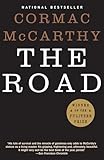
#7 — The Road by Cormac McCarthy
A father and his young son walk south through a devastated America, carrying a few supplies and what McCarthy calls “the fire” — the will to survive, to remain among the good guys, to protect the boy at any cost. The Road is the most extreme update of The Old Man and the Sea’s central situation: a man stripped of everything except his labor and his purpose, in a landscape more hostile than any ocean. McCarthy’s prose — like Hemingway’s, declarative and stripped — achieves a comparable bleakness. The difference is that the father carries a child rather than a line, and the stakes are accordingly different: not dignity in isolation but dignity as something passed from one person to another.
The Dignity of Craft
#8 — A Moveable Feast by Ernest Hemingway
Hemingway’s posthumous memoir of Paris in the 1920s — the cafés where he wrote, the hunger that sharpened his attention, the other writers (Fitzgerald, Stein, Pound) who surrounded him in those early years — is the most personal account of what it feels like to work at craft the way Santiago works at fishing: with complete attention, accepting nothing less than the best you can do, knowing that the work is its own justification. A Moveable Feast was assembled from notes after Hemingway’s death and has a melancholy the original Paris years didn’t carry; he is writing about a time when everything was still possible, from a time when most of it was gone. Read it alongside The Old Man and the Sea for a complete picture of what the code cost the man who lived it.
#9 — Cannery Row by John Steinbeck
The marine biologist Doc — based on Steinbeck’s friend Ed Ricketts — presides over the waterfront community of Monterey in the 1930s: the bums, the prostitutes, the fishermen, the men who live in a converted boiler. Cannery Row is Steinbeck at his most affectionate, and what he is affectionate about is exactly what Hemingway valued in The Old Man and the Sea: the dignity of physical work done with care, the bonds formed among people who live close to the sea and its rhythms, the way a life can be honorable without being successful. The novel has no plot in the conventional sense; it accumulates its meaning the way Hemingway’s novella does, through the weight of specific detail.
#10 — The Master of Go by Yasunari Kawabata
Kawabata’s 1954 novel — published the same year as Hemingway’s Nobel Prize — is an account of the aging Master’s last official Go match, played over several months in 1938 and ending in the old man’s defeat and death. Kawabata covers it as a journalist covering a sporting event, and the result is one of the strangest elegies in world literature: a book about a dying man and a dying tradition in which the game of Go becomes a contest between an old world and a new one. The parallels with The Old Man and the Sea are exact: a craftsman at the outer limit of his powers, a final contest that will define him, and a defeat that is also a form of victory. The tone is Buddhist where Hemingway’s is stoic, but the subject is the same.
How to Choose Your Next Read
If you want the closest stylistic parallel: For Whom the Bell Tolls — the same code, more people, more history.
If you want the most compressed structural equivalent: The Pearl — same length, same fable structure, same lost prize.
If you want the most extreme version of man against landscape: Voss or Independent People — both push the Hemingway proposition to its breaking point.
If you want more Hemingway before anything else: A Moveable Feast — the autobiography of the style that produced Santiago.
If you want the contemporary heir: The Road — McCarthy’s America as a more devastated version of Hemingway’s ocean.
For the Best Fiction Books
For the definitive guide to fiction — the greatest novels across literary fiction, classics, and contemporary writing — see our Best Fiction Books of All Time list.
More Classic Literature Reading Guides
- Books Like Moby Dick: Epic Obsession and the Sea
- Books Like Catch-22: Hard Truths Through Dark Comedy
Affiliate disclosure: Links to Amazon on this page are affiliate links. We earn a small commission at no extra cost to you. This does not influence our editorial recommendations.
Frequently Asked Questions
Is The Old Man and the Sea about more than just fishing?
Yes. Santiago's fight with the marlin is simultaneously a literal fishing story and an allegory for the human condition — the struggle against forces greater than oneself, undertaken with full knowledge that victory is temporary. Hemingway explicitly connected it to the pattern of Ecclesiastes: a man does his work as well as he can, loses what he worked for, and returns to try again. The marlin is not just a fish; it is everything worth fighting for. But Hemingway is subtle enough to keep the allegory from overwhelming the specificity — the fishing details are real, the physical suffering is real, and the story works on both levels simultaneously.
Why did The Old Man and the Sea win the Nobel Prize?
The Nobel Committee cited the novella specifically when awarding Hemingway the 1954 Prize, calling it a work that renewed 'his powerful, style-forming mastery of the art of narration.' But the Prize was also for his career as a whole — For Whom the Bell Tolls, The Sun Also Rises, A Farewell to Arms. The Old Man and the Sea was the book that made the committee willing to give it to a writer some found too American and too masculine. It was also a critical comeback after the poor reception of Across the River and Into the Trees.
What should I read after The Old Man and the Sea?
Hemingway's novels are the natural next step. For Whom the Bell Tolls is his most emotionally ambitious; The Sun Also Rises his most stylistically influential; A Farewell to Arms his most romantic. Beyond Hemingway, the books most directly in conversation with The Old Man and the Sea are Melville's Moby-Dick (the great fish as metaphysical opponent), Steinbeck's The Pearl (a poor man's prize that destroys him), and Patrick White's Voss (another lonely man against an indifferent landscape).