Books Like Catch-22: 11 Dark Comic War Novels
If Catch-22's absurdist logic and anti-war fury gripped you, these novels share its dark humor, moral seriousness, and refusal to look away.

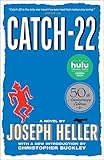
Joseph Heller’s Catch-22 was published in 1961 and has never gone out of print. Set on the fictional island of Pianosa during the final years of the Second World War, it follows bombardier John Yossarian, who has concluded — correctly — that the military is trying to kill him. What makes the novel so enduring is not its plot, which is deliberately non-linear and circular, but its central insight: that the machinery of war is not a means to any rational end but a self-perpetuating system, indifferent to the people it consumes. The enemy is not the Germans. The enemy is the bureaucracy.
The title gave the language one of its most useful phrases. Catch-22 is the rule that prevents Yossarian from being grounded for insanity: a pilot can be declared unfit to fly if he is crazy, but asking to be grounded proves he is sane, because only a sane person would want to avoid danger. The trap is perfect and inescapable. Heller uses this logic as the structural principle of the entire novel — every attempt to escape the system reveals another layer of the same trap — and the effect shifts, as the novel progresses, from comedy into something much darker.
The books below share Catch-22’s essential qualities: the use of dark humor to expose serious things, a deep skepticism toward authority and institutions, and a refusal to let war or bureaucracy be mistaken for anything rational. They are grouped by how they approach these themes, with notes on where each one sits relative to Heller’s novel.
The Closest Companion: Anti-War Black Comedy
#1 — Slaughterhouse-Five by Kurt Vonnegut
If Catch-22 has a natural twin, it is this. Published in 1969, eight years after Heller’s novel, Slaughterhouse-Five follows Billy Pilgrim, a passive American soldier who becomes unstuck in time — cycling through his wartime experience, his suburban postwar life, and his captivity on an alien planet where time is experienced all at once. The centerpiece is the Allied firebombing of Dresden, which Vonnegut survived as a prisoner of war. The novel’s famous refrain — “So it goes,” repeated each time death is mentioned — is the direct descendant of Heller’s circular logic: a verbal tic that becomes a way of processing the unprocessable. Both novels use narrative fragmentation as a formal enactment of trauma, and both insist, through comedy, that war is obscene.
#2 — MASH by Richard Hooker
Richard Hooker’s 1968 novel follows the surgeons of a Mobile Army Surgical Hospital unit during the Korean War, and it is the most direct expression of Catch-22’s core premise in a different setting: that the only sane response to insane circumstances is absurdist humor, and that the humor is itself a form of protest. Hawkeye Pierce and Trapper John perform miracles of surgery while systematically dismantling military decorum, because treating the wounded with respect and treating the institution with contempt are, for them, the same act. The novel preceded both the Robert Altman film and the long-running television series and is considerably darker than either.
Absurdist Fiction That Means Business
#3 — Brave New World by Aldous Huxley
Huxley’s 1932 dystopia does for consumer society what Catch-22 does for the military: it shows a system so well-designed to sustain itself that the people inside it cannot perceive their own captivity. The World State has eliminated suffering, conflict, and meaning. Citizens are conditioned from birth, chemically pacified with soma, and sexually liberated in ways that prevent genuine attachment. The comedy in Brave New World is colder than Heller’s — Huxley is less interested in warmth — but the underlying argument is the same: a perfect system of control is indistinguishable from a perfect trap. Bernard Marx’s attempts to resist are as futile as Yossarian’s, and for the same reason.
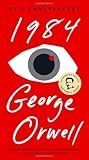
#4 — 1984 by George Orwell
Orwell’s vision of totalitarianism is grimmer and less comic than Catch-22, but it operates on the same circular logic. The Party’s power is self-sustaining: questioning the Party is proof of insanity, and insanity is grounds for re-education. Winston Smith’s attempts to hold onto objective reality in a world where the Party controls history itself is the purest literary expression of the Catch-22 dynamic — the trap that tightens when you pull. 1984 is the version of this idea without Heller’s comic relief, and it is consequently more suffocating. The two novels are best read together.
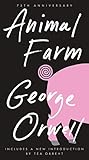
#5 — Animal Farm by George Orwell
Orwell’s shorter fable takes the same satirical approach to political institutions that Heller takes to military ones. The animals’ revolution against the farmer produces a new hierarchy indistinguishable from the old one, enforced by the same combination of violence and ideological manipulation. The novel’s comic-dark tone — the animals are both funny and pitiable — and its precision about how institutions corrupt their stated purposes make it one of the closest structural relatives to Catch-22 in the literary canon. “All animals are equal, but some animals are more equal than others” is the Animal Farm equivalent of the Catch-22 paradox.
WWII from a Satirical Angle
#6 — Good as Gold by Joseph Heller
Heller’s own 1979 novel is his most underrated. Bruce Gold is a Jewish-American professor being courted for a vague and undefined position in the Washington administration — a position that will be offered as long as he never actually asks for it, and that will remain his as long as he behaves as though he already has it. The Washington satire is Catch-22 applied to civilian bureaucracy, with the same comic rhythm and the same revelation that the machinery of power is designed primarily to maintain itself. Heller’s command of the Jewish-American family sections is as good as his political satire.
#7 — Something Happened by Joseph Heller
Heller’s second novel is the one that most surprised readers expecting more of Catch-22. Bob Slocum is a successful corporate executive with a family, a salary, and a persistent sense of dread. The novel is a monologue — dense, circular, exhausting in the best sense — in which Slocum catalogues his fears, his workplace humiliations, and his domestic life with a frankness that is both darkly funny and deeply unsettling. The comedy here is quieter and the horror closer to the surface. The institutional critique is the same: the corporation, like the military, is a system that exists to perpetuate itself, and the people inside it are its fuel.
The Weight of the Same War, Without the Comedy
#8 — All Quiet on the Western Front by Erich Maria Remarque
Remarque’s 1929 novel is everything Catch-22 would become, without the irony. Paul Bäumer enlists in the German army during the First World War, full of patriotic rhetoric instilled by his teachers, and discovers that war is only suffering and waste. Where Heller uses absurdism to process the horror, Remarque uses unsparing directness — the physical facts of combat, injury, and death described with a clarity that the humor in Catch-22 sometimes defers. The two novels complement each other precisely because they use opposite methods to arrive at the same conclusion: the people who send young men to die are safely distant from the dying.
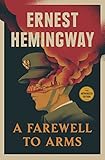
#9 — A Farewell to Arms by Ernest Hemingway
Hemingway’s 1929 novel follows Lieutenant Henry, an American ambulance driver on the Italian front of the First World War, and his love affair with Catherine Barkley. The famous prose style — stripped, declarative, nothing that cannot be said plainly — is the opposite of Heller’s baroque comic excess, but the underlying view of war is the same: institutions are indifferent, the individual is powerless, and the only authentic response is to desert. Henry’s retreat from Caporetto is one of literature’s great acts of refusal, a sane response to an insane situation that anticipates Yossarian’s own attempts at escape by three decades.
#10 — The Things They Carried by Tim O’Brien
O’Brien’s 1990 novel about American soldiers in Vietnam is formally experimental in a different way from Catch-22 — it is a linked story collection that deliberately blurs the line between fiction and memoir, returning obsessively to questions of what is true and what is constructed — but it shares Heller’s conviction that the real subject of war literature is what the experience does to the people who survive it. The black humor in O’Brien is grimmer and less sustained, but it is present: the soldiers name their fears, carry absurd talismans, tell jokes that are also screams. The most emotionally direct book on this list.
#11 — Birdsong by Sebastian Faulks
Faulks’s 1993 novel spans the First World War and its aftermath, following Stephen Wraysford from a love affair in prewar France through the tunneling operations beneath the Western Front. It is the most conventionally literary novel on this list — no structural games, no comedy — but it earns its place here through the depth of its attention to what institutional violence costs at the level of the individual. The underground sections, in which sappers dig toward enemy lines in absolute darkness, are among the most harrowing war passages in English fiction. For readers who responded to the horror beneath Catch-22’s comedy and want that horror examined without the protective layer of irony.
How to Choose Your Next Read
If you want the most direct companion: Slaughterhouse-Five — same era, same anti-war stance, same structural restlessness, same dark comedy that is also grief.
If you want more Joseph Heller: Good as Gold for the political satire, Something Happened for something more disturbing and domestic.
If you want the absurdist tradition more broadly: Brave New World and 1984 for the dystopian version, Animal Farm for the fable.
If you want WWII without the irony: All Quiet on the Western Front or A Farewell to Arms for the cost rendered directly.
If you want the emotional weight without the comedy: Birdsong or The Things They Carried.
For the Best Fiction Books
For the definitive guide to fiction — the greatest novels across literary fiction, classics, and contemporary writing — see our Best Fiction Books of All Time list.
More Classic Literature Reading Guides
- Books Like Lord of the Flies: Civilization and Savagery
- Books Like Animal Farm: Political Allegory and Power
Also Recommended
Affiliate disclosure: Links to Amazon on this page are affiliate links. We earn a small commission at no extra cost to you. This does not influence our editorial recommendations.
Frequently Asked Questions
Is Catch-22 hard to read?
Catch-22 has an unusual structure that can feel disorienting at first. Heller deliberately scrambles chronology so that the same events recur from different angles, each time revealing something new. The best approach is to stop trying to reconstruct a timeline and let the repetitions build on each other. Most readers find that once they surrender to the logic of the novel — its circular, trap-like quality — it becomes one of the most readable and gripping books they have ever encountered.
What other books did Joseph Heller write?
Joseph Heller's other major novels include Something Happened (1974), a claustrophobic portrait of a successful man in a state of quiet despair — darker and more domestic than Catch-22 but equally unnerving; Good as Gold (1979), a satirical novel about Washington politics and Jewish-American identity that shares Catch-22's comic rhythm; and Closing Time (1994), a direct sequel to Catch-22 set fifty years later, following Yossarian and other survivors in a decaying New York.
What are the best anti-war novels?
The most widely admired anti-war novels are Catch-22 by Joseph Heller and Slaughterhouse-Five by Kurt Vonnegut for dark satirical comedy; All Quiet on the Western Front by Erich Maria Remarque and A Farewell to Arms by Ernest Hemingway for devastating realism; The Things They Carried by Tim O'Brien for a Vietnam-era reckoning with truth and memory; and Birdsong by Sebastian Faulks for emotional depth and the long shadow of the First World War. Each approaches war from a different angle, but all share the conviction that the human cost cannot be abstracted away.
What is the Catch-22 paradox and where does it come from?
In Heller's novel, Catch-22 is the regulation that traps the airmen: a pilot can be grounded for being insane, but requesting to be grounded proves he is sane, because only a rational person would want to avoid danger. The phrase entered everyday language to describe any situation in which the rules themselves prevent escape from the rules. Heller coined the specific term, but the underlying logic — the perfect bureaucratic trap — is what gave it such lasting currency.