Books Like Lord of the Flies: Civilization & Savagery
William Golding's British schoolboys — Piggy, Ralph, Jack, and Simon — descend into tribalism and murder on a tropical island. These books share its diagnosis of human nature, its horror at what innocence can become, and its refusal to comfort.
William Golding published Lord of the Flies in 1954, after it had been rejected by twenty-one publishers. The twenty-second, Faber & Faber — where T.S. Eliot was on the editorial board — accepted it on the recommendation of a young editor named Charles Monteith, who recognized it as something that would last. He was right. The novel has been continuously in print for seventy years, taught in schools on every continent, and translated into more than thirty languages. It is one of those rare books that has become part of the culture’s vocabulary: when people say a situation has “gone Lord of the Flies,” everyone knows what they mean.
Golding had served in the Royal Navy during the Second World War, participating in the D-Day landings and the sinking of the Bismarck. He came out of the war convinced that the optimistic view of human nature — the view that savagery was something civilization could cure — was false. The boys on his island are not corrupted from outside; they bring the corruption with them. Jack’s hunters do not become savage because the island makes them so; they become savage because the island removes the restraints that their society had placed on an impulse already present. Simon, the saintly figure who grasps this truth, is killed before he can speak it clearly.
The books below were chosen for readers who responded to Lord of the Flies either as a political argument or as a vision of what children — and people — are capable of when the structures fall away. They are grouped by what they share most closely: the political allegory of human nature, the stripped world that tests its characters, and the literature of what children know about violence.
The Political Allegory of Human Nature
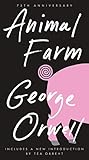
#1 — Animal Farm by George Orwell
The argument of Animal Farm and the argument of Lord of the Flies are, at their core, the same: power corrupts the people who exercise it regardless of the ideology they use to justify themselves, and the structures that were supposed to prevent abuse become the instruments of abuse. Orwell’s pigs and Golding’s boys follow the same trajectory — the initial egalitarian impulse, the gradual differentiation, the violence that stabilizes the new hierarchy, the revision of the founding principles to accommodate what has already happened. Reading the two together is one of the more efficient exercises in political pessimism available in short fiction. Between them, they leave very little of the progressive faith in human nature intact.
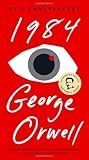
#2 — 1984 by George Orwell
1984 is what the boys on the island become if they have enough time and enough resources. The Party’s system — doublethink, the memory hole, the Two Minutes Hate, Room 101 — is Jack’s tribe formalized, bureaucratized, and made self-perpetuating. O’Brien’s explanation of the Party’s purpose (“Power is not a means; it is an end”) is the philosophical statement of what Jack’s hunters are already enacting on the island without being able to articulate it. Golding shows you the impulse in its primitive form; Orwell shows you the same impulse with two centuries of institutional development behind it. The progression from one book to the other is logical and horrifying.
#3 — Heart of Darkness by Joseph Conrad
Golding read Conrad carefully and acknowledged Heart of Darkness as the direct model for Lord of the Flies: both are stories about the descent into violence beneath a civilized surface, both use a remote, isolated location as the laboratory, and both conclude that what Kurtz finds in the Congo — the horror — was already present in the civilization that sent him there. Marlow’s journey up the river to find Kurtz is the structural template for Ralph’s experience watching Jack’s tribe consolidate. Conrad’s novella is denser, darker, and more ambiguous than Golding’s — its politics of colonialism are more complicated — but the diagnosis of human nature is the same, and the island Golding creates is, in a real sense, Conrad’s forest.
The Island and the Wilderness
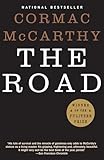
#4 — The Road by Cormac McCarthy
McCarthy’s 2006 novel strips the world even further than Golding does — no island, no rules, no tribe, just a man and his son moving through a post-apocalyptic America where civilization has been destroyed entirely — and asks the same question Lord of the Flies asks: what human decency survives when the structures are gone? The answer McCarthy gives is different from Golding’s. The father maintains something, at enormous cost, and the novel’s argument is that the transmission of that something from parent to child is the only form of civilization that was ever real. Where Golding sees the violence as primary, McCarthy sees the love as primary, with the violence as what you have to live inside.
#5 — The Beach by Alex Garland
Alex Garland’s 1996 debut novel follows Richard, a young British backpacker who finds a secret beach in Thailand — a paradise community established by earlier travelers — and gradually discovers that paradise has its own rules, its own exclusions, and its own capacity for violence. The community on the beach follows the same arc as the boys on Golding’s island: the initial idealism, the establishment of hierarchies, the suppression of dissent, the violence that is finally directed inward. Garland had read Lord of the Flies carefully, and the parallel is deliberate. The Beach is faster, more commercial, and less bleak than Golding, but it is asking the same question about what utopian communities do to the people inside them.
#6 — Coral Island by R.M. Ballantyne
Ballantyne’s 1858 boys’ adventure novel is the book Golding wrote Lord of the Flies against. Three British boys — Ralph, Jack, and Peterkin — are stranded on a Pacific island after a shipwreck and proceed to behave with perfect pluck, decency, and Christian virtue, defeating pirates and cannibals through superior moral character. The names Ralph and Jack are Golding’s direct quotation of Ballantyne, and the entire premise of Lord of the Flies is a refutation of Coral Island’s assumptions. Reading Ballantyne after Golding — or before — clarifies exactly what Golding was arguing against: the Victorian and Edwardian confidence that British boys, properly raised, were proof against savagery. Golding thought this was sentimental nonsense, and the century had given him reasons to think so.
#7 — The Most Dangerous Game by Richard Connell
Connell’s 1924 short story — one of the most widely anthologized in American literature — takes the island premise and makes the predation explicit: General Zaroff, a bored hunter who has exhausted every animal prey, has taken to hunting shipwrecked sailors on his remote island. Rainsford, a big-game hunter who falls overboard and swims to the island, becomes the quarry. The story is shorter and more purely mechanical than Golding — it is a thriller without a thesis — but it articulates the premise that Lord of the Flies will develop: the island as a space where the usual prohibitions do not apply, where the hunter-hunted logic that civilization suppresses is allowed to operate. Golding extends Connell’s premise by asking what happens when the hunters are children.
What Children Know About Violence
#8 — Ender’s Game by Orson Scott Card
Card’s 1985 science fiction novel takes the central insight of Lord of the Flies — that children are capable of violence that adults prefer not to see — and makes it the operational premise of an interstellar war. Ender Wiggin is recruited into a military program that uses children as commanders precisely because children are more flexible, more ruthless, and less encumbered by moral hesitation than adults. The novel is structured as a series of games that are revealed, progressively, to be something other than games. Golding shows children becoming violent without adult supervision; Card shows adults using children’s capacity for violence deliberately, which is a darker argument and a different one.
#9 — The Tin Drum by Günter Grass
Oskar Matzerath watches adults commit exactly the violence that the boys on Golding’s island act out among themselves — the Nazi project in Danzig, the atrocities of the war, the complicity of ordinary people — from the perspective of a man who has refused to enter adulthood, who has remained, in some sense, a child observing a world of adults. The horror in The Tin Drum is not that children are capable of adult violence; it is that adults perform the same tribal violence that Golding attributes to children stripped of civilization. Oskar’s tin drum is his instrument of protest against a world that has made savagery official policy.
#10 — The Chocolate War by Robert Cormier
Cormier’s 1974 young adult novel is Lord of the Flies inside an institution — a Catholic boys’ school in New England where the student body is governed by a secret society called the Vigils, whose leader Archie engineers a campaign of psychological and physical harassment against a freshman who refuses to sell chocolates for the school fundraiser. The school’s adults are complicit or absent; the institutional violence is self-sustaining. Cormier understood that Golding’s island was not a special case — that the dynamics of tribalism, hierarchy, and the punishment of non-conformity operate just as well inside existing institutions as on a desert island. Jerry Renault’s fate is as bleak as Piggy’s, and for the same reasons.
How to Choose Your Next Read
If you want the political parallel: Animal Farm — the same argument about power, with pigs instead of boys.
If you want the literary ancestor: Heart of Darkness — the descent into violence that Golding was explicitly rewriting.
If you want the contemporary survivor story: The Road — the same stripped world, a very different answer.
If you want the institutional version: The Chocolate War — Lord of the Flies inside a school, the tribe with a uniform.
If you want the book Golding was arguing against: Coral Island — the optimistic original that made the refutation necessary.
For the Best Fiction Books
For the definitive guide to fiction — the greatest novels across literary fiction, classics, and contemporary writing — see our Best Fiction Books of All Time list.
More Classic Literature Reading Guides
- Books Like Catch-22: Dark Comedy and Hard Truths
- Books Like Animal Farm: Political Allegory and Revolution
Affiliate disclosure: Links to Amazon on this page are affiliate links. We earn a small commission at no extra cost to you. This does not influence our editorial recommendations.
Frequently Asked Questions
What is Lord of the Flies actually about?
On the surface, Lord of the Flies follows a group of British schoolboys stranded on an uninhabited tropical island after their plane is shot down. They attempt to organize a society, fail, and descend into tribal violence that ends in murder. But the novel is an argument about human nature: Golding believed that civilization is a thin and recent imposition on an older violence, and that given the right conditions — isolation, fear, the absence of external authority — that violence will reassert itself. The title refers to Beelzebub, one of the names of the devil, and the 'beast' the boys fear is, as Simon understands before he is killed for saying so, within them.
Is Lord of the Flies based on a true story?
The novel is fictional, but Golding wrote it in direct response to a real book: R.M. Ballantyne's Coral Island (1858), in which British boys stranded on a tropical island behave with perfect decorum and Christian virtue. Golding considered this a lie and wanted to write the honest version. There is a real historical parallel worth noting: in 1965, six Tongan boys were actually stranded on an uninhabited island for fifteen months after their boat was wrecked in a storm. They survived, cooperated, and were found in good health — a fact that some readers cite against Golding's thesis, though others argue it supports the importance of the boys' prior community bonds.
What are the best books like Lord of the Flies for readers who want the same political argument?
Animal Farm is the most direct companion — Golding and Orwell are making the same argument about power's tendency to corrupt regardless of the ideology invoked to justify it, and reading the two together is clarifying. Heart of Darkness by Joseph Conrad is the literary ancestor Golding acknowledged directly: Kurtz's descent in the Congo is the template for Jack's on the island. For readers who want the same stripped-world scenario but in contemporary literary fiction, The Road by Cormac McCarthy asks the identical question — what human decency survives when civilization is gone — and answers it very differently from Golding.