Books Like Animal Farm: Political Allegory Classics
Orwell's barnyard coup — All animals are equal, but some are more equal than others — is the most devastating political fable ever written, 112 pages that explain the entire history of authoritarian revolution. These books share its dark clarity.
George Orwell wrote Animal Farm in three months in 1943 and 1944 on a manual typewriter while working nights as a BBC producer and managing a small farm in Hertfordshire. The novel is 112 pages — barely a novella — and it does more political work per page than almost anything else in the canon. The animals of Manor Farm drive out the drunken farmer Jones, rename it Animal Farm, and establish the Seven Commandments of Animalism, the most important being: All animals are equal. What happens next is the whole history of revolutionary betrayal compressed into a barnyard: the commandments are rewritten one by one, the pigs take the farmhouse, Napoleon the boar becomes indistinguishable from the humans he replaced, and the final commandment reads: All animals are equal, but some animals are more equal than others.
Orwell was not writing a fable for children. He was writing about the Soviet Union specifically, about what he had watched happen to the left in Spain, and about the capacity of ideological language to neutralize the perception of its own corruption. The novel’s allegory is precise: every major figure maps to a historical counterpart, every policy shift to a specific Stalinist maneuver. But its power extends beyond the Soviet case because the mechanism it describes — the revolutionary vanguard that gradually replaces the old hierarchy with itself — is not limited to any one revolution.
The books below were chosen for readers who responded to that combination: the allegorical compression, the political argument, the refusal to console. They are grouped by their relationship to Orwell’s work, to the tradition of political fable, and to the specific history of revolution and its aftermath.
Orwell and the Dystopian Canon
#1 — 1984 by George Orwell
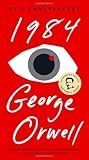
Animal Farm shows you how the revolution fails. 1984 shows you what comes after failure, when the system has had decades to perfect itself. Airstrip One — formerly Britain — is governed by the Party under Big Brother, and Winston Smith’s attempt to think his way out of it is the novel’s subject: not a rebellion but a slow, doomed effort to hold onto the idea that an objective reality exists independent of what the Party says. Where Animal Farm is a fable — the allegory creates distance that lets the reader observe — 1984 is an immersive nightmare that creates no distance at all. The two novels together are Orwell’s complete political argument, and reading them in sequence — the farm, then the telescreens — is the most efficient political education available in fiction.
#2 — Brave New World by Aldous Huxley
Huxley’s 1932 dystopia imagines the opposite of 1984’s boot-on-the-face — a society controlled not by terror but by pleasure, comfort, and the pharmacological management of discontent. Citizens are engineered in bottles, conditioned in their sleep, and maintained on a drug called soma that provides happiness on demand. There is no need for violence because there is no resistance. Orwell famously disagreed with Huxley about which future was more likely, and their disagreement maps onto Animal Farm and Brave New World as two versions of the same warning: the world where the animals are beaten, and the world where the animals are content. Both men worried about the wrong century, and both were right.
#3 — Homage to Catalonia by George Orwell
The nonfiction source for everything in Animal Farm is Orwell’s account of his six months fighting in the Spanish Civil War on the POUM militia’s side. He arrived in Barcelona in December 1936, was shot through the throat by a fascist sniper in May 1937, and returned to Barcelona to find that the Soviet-aligned Communist Party had declared the POUM — the independent Marxist faction he had fought with — a fascist organization and was hunting its members. He escaped to France by the skin of his teeth. Homage to Catalonia is the book where Orwell watches revolution eat itself in real time; it is the experience that made him write Animal Farm and later 1984. It is also his best prose.
Political Fables and Allegories of Power
#4 — The Handmaid’s Tale by Margaret Atwood
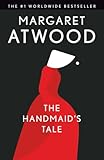
Where Animal Farm shows the revolution betrayed, Atwood’s 1985 novel shows the counter-revolution: the theocratic state of Gilead, which has replaced the United States by mobilizing religious fundamentalism against feminist gains. The hierarchy that Gilead installs is patriarchal rather than communist, but the mechanism is identical to Animal Farm’s — a ruling class that claims its power in the name of the group it now dominates, a language carefully managed to make resistance conceptually unavailable, a past that is being actively rewritten. Atwood built Gilead from documented history: every element of the regime, she has said, is taken from something that actually happened somewhere. That is Orwell’s method too.
#5 — Lord of the Flies by William Golding
The argument is the same as Animal Farm’s — civilization is a thin veneer, power corrupts regardless of ideology, the structure of dominance reproduces itself even in the absence of the original dominators — but Golding’s laboratory is a tropical island and his subjects are British schoolboys rather than farm animals. Ralph’s democratic instincts and Jack’s authoritarian ones are Animal Farm’s Snowball and Napoleon in miniature, and the conch that represents rational governance is smashed before the novel ends. Golding published his novel in 1954, nine years after Animal Farm. The two books are in direct conversation about human nature, and between them they leave very little room for optimism.
#6 — The Jungle by Upton Sinclair
Sinclair’s 1906 novel about Lithuanian immigrants in Chicago’s meatpacking industry is the political allegory without the allegory: the exploitation is real, documented, literal. Jurgis Rudkus and his family are processed by the industrial capitalism of early-twentieth-century America — the factories, the tenements, the corrupt political machine, the company stores — in exactly the way that Animal Farm’s animals are processed by their pigs. The difference is that Sinclair names it as capitalism and gives it a socialist response. Orwell was more skeptical of all responses. But The Jungle is important for readers of Animal Farm because it shows the same corruption operating without the allegorical distance: the system in its native form.
#7 — We by Yevgeny Zamyatin
Zamyatin wrote We in 1920 and 1921, inside the Soviet Union, as the Bolshevik revolution was consolidating into the system it would become. It is set in a distant future where citizens live in glass buildings under the surveillance of the Benefactor, identified only by numbers, conditioned from birth to see freedom as the enemy of happiness. D-503, a mathematician helping to build a spaceship that will spread the One State’s order to other planets, falls in love with a woman involved in a resistance movement. Orwell read We in 1946, a year after Animal Farm was published, and acknowledged it as the source for 1984. It precedes both novels and is the original of the tradition they belong to.
Revolution, Betrayal, and Power
#8 — The Tin Drum by Günter Grass
Grass’s Oskar Matzerath — who witnesses the rise of National Socialism, the war, and the occupation of Danzig from the perspective of a man who decided at three years old to stop growing — is Animal Farm’s witness without the allegory. Where Orwell’s fable requires distance — the barnyard, the animals, the condensed historical time — Grass gives you the same machinery of fascist consolidation seen from inside, from below, from the point of view of a figure the system has classified as irrelevant. Oskar’s tin drum is his instrument of disruption; his voice can shatter glass. The Nazi bureaucracy cannot process him because it cannot see him. The Tin Drum is the Animal Farm story told without the protective distance of allegory.
#9 — The Autumn of the Patriarch by Gabriel García Márquez
García Márquez’s 1975 novel is the other great political novel to set beside Animal Farm: not the story of revolution’s betrayal but the story of what a revolution produces after decades — a dictatorship so old that no one alive can remember a time before it. The patriarch has ruled for so long that he has sold the sea, awarded himself the Nobel Peace Prize, and been proclaimed a saint by the Vatican. He is two hundred years old. The novel is written in a prose of almost unmanageable density — sentences that run for pages, time that folds on itself — because García Márquez is trying to capture the temporal experience of tyranny: the endless present tense of a regime that has made history inaccessible.
#10 — Darkness at Noon by Arthur Koestler
Koestler’s 1940 novel follows Rubashov, an Old Bolshevik who helped make the revolution and is now being interrogated by the revolution he helped create — accused of crimes against the Party that he did not commit in the way they are described but for which he has, in some deeper sense, a kind of responsibility. The novel is a philosophical examination of the logic that produces the Stalinist show trials: Rubashov’s interrogator, Ivanov, is a man who believes in the same things Rubashov believes in and uses those beliefs to extract the confession the Party needs. It is Animal Farm’s story told from inside the pig class — from the point of view of the revolutionary who helped write the commandments and is now being undone by them.
How to Choose Your Next Read
If you want Orwell’s full expansion: 1984 — the totalitarian state developed to its logical conclusion.
If you want the pleasurable dystopia: Brave New World — control through comfort rather than terror.
If you want the nonfiction source: Homage to Catalonia — revolution failing in real time, seen from inside.
If you want the Soviet original: We — the novel that preceded and influenced both Orwell and Huxley.
If you want the dictator’s perspective: The Autumn of the Patriarch — tyranny so old it has become the fabric of reality.
For the Best Fiction Books
For the definitive guide to fiction — the greatest novels across literary fiction, classics, and contemporary writing — see our Best Fiction Books of All Time list.
More Classic Literature Reading Guides
- Books Like Lord of the Flies: Civilization and Savagery
- Books Like Catch-22: Dark Comedy and Hard Truths
More Dystopian and Political Fiction Guides
Affiliate disclosure: Links to Amazon on this page are affiliate links. We earn a small commission at no extra cost to you. This does not influence our editorial recommendations.
Frequently Asked Questions
What is Animal Farm an allegory for?
Animal Farm is an allegory for the Russian Revolution of 1917 and its aftermath under Stalin. Old Major, the prize boar who inspires the revolution, represents Marx and Lenin. Napoleon, the pig who seizes control after the revolution, represents Stalin. Snowball, who is driven out, represents Trotsky. The farmhouse represents the Kremlin, the neighboring farms represent the capitalist powers, and the gradual corruption of the Seven Commandments represents the rewriting of Soviet ideology to justify each new consolidation of power. Orwell was writing from experience: he had fought in the Spanish Civil War and watched Soviet-aligned parties betray the revolution from inside.
Why did publishers initially reject Animal Farm?
Orwell wrote Animal Farm in 1943 and 1944, while the Soviet Union was a British ally against Nazi Germany. Four publishers rejected it — including Victor Gollancz and T.S. Eliot at Faber — because publishing a satire of Stalin while the Soviets were dying on the Eastern Front seemed politically indelicate. One publisher accepted it and then withdrew after the Ministry of Information suggested it might damage Anglo-Soviet relations. It was finally published by Secker & Warburg in August 1945, just after the war ended, and became an immediate bestseller.
What are the best books like Animal Farm for readers who want more political allegory?
Orwell's own 1984 is the natural first choice — the totalitarian state in full detail, without the allegorical distance. For a different tradition of political allegory, We by Yevgeny Zamyatin is the direct precursor to both Animal Farm and 1984: a Soviet-era dystopia written before Stalin's rise that Orwell read and acknowledged as an influence. For the dictator novel — the view from inside a decades-long tyranny — The Autumn of the Patriarch by García Márquez is the masterpiece. For the political fable in the Lord of the Flies mode, the comparison is almost automatic: both books make the same argument about power and human nature.