Books Like The Stranger: Existentialist Fiction
Camus's novel of a man who feels nothing and murders for no reason remains the defining statement of existentialist fiction. These books live in the same territory of meaninglessness, alienation, and the philosophical murder.

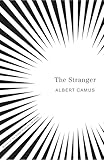
Albert Camus published The Stranger in 1942, the same year as his philosophical essay The Myth of Sisyphus, and the two works were always meant to be read together: the essay names the absurd condition, the novel dramatizes it. Meursault, the novel’s narrator, does not grieve his mother’s death, does not love his girlfriend in any way she can name, and kills an Arab on a beach for reasons that boil down to the light and the heat. He is then tried and condemned not for the murder but for his emotional indifference — for failing to perform the feelings society requires. The novel is ninety pages long and remains, eighty years later, the most precise literary instrument ever aimed at the question of what we owe each other and whether we owe it at all.
What makes The Stranger so rereadable and so teachable is the efficiency of Camus’s trap. The prose is flat, almost affectless, registering events and sensations without hierarchy — a mother’s death and a swim at the beach appear in the same register. This stylistic choice is not carelessness but philosophy: Meursault experiences the world as a sequence of physical facts, and the novel refuses the conventional novel’s implication that some facts are more meaningful than others. Readers either find this liberating or horrifying, and both responses are valid, which is part of why the book generates argument wherever it is assigned.
The books below were chosen for readers who responded to The Stranger’s central qualities — the alienated outsider, the philosophical underpinning of an apparently simple narrative, the sense of a man tried by a society whose values he cannot share — or to its specific tradition of existentialist and absurdist fiction. They are grouped by what they share most closely with Camus, and they range from his own later work to the twentieth-century novels that most directly inherit his questions.
More Albert Camus
#1 — The Plague by Albert Camus
Camus’s most comprehensive novel transplants the absurdist framework from a single man to an entire city. Oran is sealed by a plague outbreak and the novel tracks how its inhabitants respond to collective death — with heroism, cowardice, indifference, religious consolation, and the quiet daily commitment of Dr. Rieux, who treats the sick without any metaphysical reward on offer. The Plague is more novelistic and more hopeful than The Stranger, moving from the cold first-person singularity of Meursault to a third-person narrator who finally reveals himself as a man who chose solidarity over isolation. The essential Camus companion, and for many readers the greater book.
#2 — The Fall by Albert Camus
Camus’s final completed novel is his most ironic and most disturbing. Jean-Baptiste Clamence, a formerly successful Parisian lawyer, holds court in a seedy Amsterdam bar to confess that his entire life of apparent virtue — the charitable acts, the courtroom heroism — was performance motivated by the desire for admiration. One night he failed to stop a woman jumping from a bridge, and the memory will not leave him. The Fall operates as a long monologue with no interlocutor we can hear, which makes it more claustrophobic than anything Camus wrote before it: we are trapped with this man’s self-knowledge and have no exit. It is the dark companion to Meursault’s innocence.
#3 — The First Man by Albert Camus
The manuscript Camus was carrying when he died in a car crash in 1960 — unfinished, recovered from the wreckage, published decades later by his daughter. An autobiographical novel about a young Albert growing up in Algerian poverty, searching for a father he never knew, educated by a teacher who saw something worth saving. Where The Stranger is cold and philosophical, The First Man is warm, specific, and achingly human: it is Camus before the philosophy, the source material for everything he later turned into argument. Readers who came to Camus through ideas will find here the life that generated them.
Existentialist and Absurdist Classics
#4 — Crime and Punishment by Fyodor Dostoevsky
Raskolnikov, a destitute student in St. Petersburg, kills a pawnbroker and her sister to prove his theory that extraordinary men — Napoleons, Caesars — are permitted to step outside ordinary moral law when the end is great enough. Dostoevsky’s novel is the grandfather of the philosophical crime narrative, and it asks the same question The Stranger asks from the opposite direction: where Meursault has no theory at all, Raskolnikov has too much of one, and the novel’s long second half is the demolition of his. Written eighty years before Camus, it remains the richest engagement with the question of whether a sufficiently convinced man can commit violence and remain free of guilt.
#5 — The Trial by Franz Kafka
Josef K. is arrested one morning for a crime that is never named, by agents of a court he can never clearly see, and spends the novel attempting to navigate a legal system that is designed to be unnavigable. Kafka’s novel is the closest formal relative to The Stranger in all of twentieth-century fiction — Camus acknowledged it as one of his models, and the structural similarity is unmistakable: a man processed by a social system whose logic he cannot share, condemned by criteria that have nothing to do with what he actually did. Where Camus’s prose is flat, Kafka’s is nightmarish and even comic. Both are essential.
#6 — Steppenwolf by Hermann Hesse
Harry Haller is a middle-aged intellectual who believes himself divided between the human and the wolf — between the social world he despises and cannot leave, and a violent, solitary inner nature he cannot act on. Hesse’s 1927 novel is the most Camusian of his major works: the same alienated intellectual who cannot integrate into bourgeois society, the same sense of a man whose inner life is entirely incommensurable with the world’s expectations of him. The Magic Theatre sequence in the novel’s final third moves into surrealism, but the long opening sections of Harry’s daily contempt and longing are as close to Meursault’s condition as German literature comes.
#7 — Nausea by Jean-Paul Sartre
Sartre’s 1938 novel — published four years before The Stranger — follows Antoine Roquentin in a provincial French town as he discovers that objects have an intolerable excess of existence: trees, doorknobs, his own hand refuse to remain comfortably in the background and instead assert themselves with a nauseating density. Nausea is the philosophical novel that preceded Camus and shares its basic phenomenology — the same flat, registering prose, the same narrator who cannot find his footing in the social world, the same sense that the surfaces of things are more disturbing than anything beneath them. It is longer and more explicitly philosophical than The Stranger, but readers who want to understand what existentialism felt like before it had a name will find it indispensable.
Outsiders and Systems
#8 — The Vegetarian by Han Kang
Yeong-hye, a docile South Korean housewife, simply decides to stop eating meat. The decision — unexplained, non-negotiable, rooted in a dream she will not describe — destroys her marriage, fractures her family, and eventually consumes her entirely. Han Kang’s 2007 novel is narrated in three sections by three different people watching Yeong-hye from the outside, none of whom can reach her. It is the nearest contemporary equivalent to The Stranger: a woman who simply refuses to comply with what is expected of her, rendered with the same cold precision, the same refusal to supply the explanation the social world demands. The violence here is slower and turned inward, but the structure of non-compliance is identical.
#9 — Life and Times of Michael K by J.M. Coetzee
Michael K., a simple man with a harelip, attempts to carry his dying mother from Cape Town back to the rural area where she was born, in the middle of a civil war in an unnamed country that is unmistakably South Africa. He is captured, imprisoned, processed by institution after institution, and remains — stubbornly, almost mystically — himself: a man who wants only to tend a small garden and be left alone. Coetzee’s Booker Prize-winning novel is the most direct descendant of Meursault in postcolonial fiction: a man defined entirely by what he will not become, who refuses the state’s narrative of what he should be, and whom no institution can finally absorb.
#10 — Lord of the Flies by William Golding
A plane evacuating British schoolboys during a wartime evacuation is shot down, and the survivors are left on an uninhabited island with no adults and no rules. Golding’s 1954 novel is the political complement to The Stranger’s individual absurdism: where Meursault demonstrates that the individual cannot sustain the social contract’s demands, Golding shows what happens when the social contract is removed entirely. The boys reconstruct civilization and then destroy it in ways that follow an inexorable logic. The horror is not the savagery itself but the speed with which it arrives and the thin line between the two boys who try to maintain order and the one who sees through it.
How to Choose Your Next Read
If you want the essential Camus continuation: The Plague — the same philosophy applied to collective rather than individual crisis.
If you want the darkest Camus: The Fall — a man who knows exactly what he is, which is worse than not knowing.
If you want the philosophical ancestor: Crime and Punishment — the question of whether extraordinary men are above the law, answered at length and with great suffering.
If you want the closest structural parallel: The Trial — Kafka’s version of the man processed by a system whose logic cannot be satisfied.
If you want the best contemporary equivalent: The Vegetarian — Han Kang’s South Korean Meursault, quieter and more devastating.
More Existentialist and Classic Literature Guides
- Books Like The Trial: Kafka’s Nightmare of Authority
- Books Like Catch-22: Dark Comedy and Hard Truths
Affiliate disclosure: Links to Amazon on this page are affiliate links. We earn a small commission at no extra cost to you. This does not influence our editorial recommendations.
Frequently Asked Questions
Why does Meursault kill the Arab in The Stranger?
Meursault shoots the Arab because of the heat, the sun in his eyes, the physical discomfort of the moment — not from rage, premeditation, or any psychological cause that would satisfy a court or a reader. This is precisely Camus's point: the act is not motivated in any way the novel's social world can accommodate, and the trial that follows is not about the killing at all but about Meursault's refusal to grieve his mother. The murder exposes the absurdity of the social contract — the court needs a narrative of guilt and intention that the truth of what happened cannot supply.
What is the difference between existentialism and absurdism?
Existentialism, as developed by Sartre, holds that existence precedes essence — we are responsible for creating our own meaning in a universe that offers none. Absurdism, Camus's term, identifies the tension between our desire for meaning and the universe's radical silence on the matter, and argues that the appropriate response is revolt rather than despair or religious faith. Camus broke with Sartre partly over this distinction: Sartre's existentialism allows for committed political action as a form of meaning-creation; Camus's absurdism is more skeptical of political programs. In practice, the two traditions share enough territory that the terms are often used interchangeably.
What should I read after The Stranger?
Camus's own The Plague is the natural next step — it applies the same philosophical framework to a collective rather than individual crisis, and is more expansive if less perfect. The Fall is the darkest and most ironic. Beyond Camus, Kafka's The Trial and The Castle are the closest formal relatives — men processed by systems they cannot understand; Dostoevsky's Notes from Underground is the historical ancestor; and Sartre's Nausea (his philosophical novel, not a lecture) covers almost identical existentialist territory from a different angle.