Books Like The Trial: Kafkaesque Bureaucracy Novels
Josef K. is arrested without being told why, tried without knowing the charge, and executed without explanation. Kafka's novel is the defining portrait of the modern individual confronting systems designed to be incomprehensible. These books share its nightmarish logic.
By Elena Marsh

Franz Kafka wrote The Trial in 1914 and 1915, during the months surrounding the outbreak of the First World War, in the early mornings before he went to work. He never finished it, never revised it, and asked Max Brod to burn it after his death. Brod published it instead in 1925, a year after Kafka died of tuberculosis. The novel’s unfinished state is not a flaw but a formal statement: Josef K.’s case is never concluded because cases like his are never concluded. The machinery runs forever. The accused never learns the charge because learning the charge would make the system comprehensible, and the system’s incomprehensibility is the point.
Josef K. is arrested one morning in his boarding house — arrested, but not taken anywhere, not told what he has done, not prevented from going to work. He is simply informed that proceedings have been instituted against him and that he must attend certain hearings. What follows is his attempt to understand, navigate, and ultimately escape a legal system that operates in inaccessible rooms above cobblers’ shops, is staffed by officials who do not know their own authority, and is guided by a Law that no one has ever read and no one is permitted to read. K. is guilty of something. What, exactly, is the question the novel refuses to answer — and that refusal is the most precise thing Kafka could have done.
The books below were chosen for readers who recognized something true in Kafka’s nightmare — in the feeling of being processed by a system too large and too self-referential to be argued with, challenged, or even clearly identified. They are grouped by what they share most closely with The Trial: Kafka’s other work, the broader tradition of bureaucratic nightmare fiction, and the literature of guilt and the impossibility of defense.
More Kafka
#1 — The Metamorphosis by Franz Kafka
Kafka’s most famous shorter work is, in one sense, the domestic version of The Trial: Gregor Samsa wakes up transformed into a giant insect, and the system that processes him is not a legal apparatus but his own family. His father, mother, and sister each go through the same stages that Josef K.’s world goes through — initial shock, attempted accommodation, exhausted resentment, and finally the decision that the system works better without the aberrant element. The Metamorphosis is The Trial without the external institution: the bureaucracy here is the family unit itself, with its unspoken rules about productivity and normality and the cost of being incomprehensible to the people who depend on you.
#2 — The Castle by Franz Kafka
The Castle is the companion piece to The Trial that Kafka was working on when he died, and its logic is the inverse of the earlier novel: where Josef K. is subject to an institution that pursues him, K. (the land surveyor) is trying to reach an institution that will not acknowledge him. He arrives in a village to take up an appointment and discovers that the Castle — the bureaucratic authority that governs everything in the village — is unreachable by any means he can try. Letters go unanswered, officials are inaccessible, intermediaries are either corrupt or helpless, and the villagers have adapted their entire lives around a system whose logic they have long since stopped questioning. It is longer and less finished than The Trial, but equally essential.
#3 — In the Penal Colony by Franz Kafka
Kafka’s 1914 short story is his most explicit statement about institutional punishment and the law. A visiting explorer is shown a machine — the Harrow — that executes condemned prisoners by inscribing the law they have broken directly onto their bodies over the course of twelve hours. The condemned do not know the law they have violated. The officer who operates the machine considers this a feature, not a flaw: enlightenment comes in the sixth hour, he explains, when the prisoner begins to decipher the inscription through his wounds. It is one of the most disturbing things Kafka wrote, and it makes explicit the logic that The Trial leaves implicit: that the system’s violence is inseparable from its inscrutability.
Bureaucratic Nightmares and Inexplicable Systems
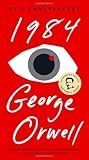
#4 — 1984 by George Orwell
Where Kafka’s bureaucracy is inexplicable because it does not explain itself, Orwell’s is terrifying because it does. The Party has a reason for everything — for the rewriting of history, for the doublethink, for the torture in Room 101 — and Winston Smith’s horror in the final section of the novel is that the reasons are consistent and coherent and leave no gap for appeal. O’Brien’s explanation of the Party’s purpose is the moment when Kafka’s silence is replaced by something worse: an articulate ideology that has thought through every objection. 1984 and The Trial are the two poles of the political nightmare: the system that will not speak and the system that speaks too clearly.
#5 — The Stranger by Albert Camus
Camus’s Meursault is put on trial not primarily for the crime he committed — shooting an Arab on a beach — but for the way he behaved at his mother’s funeral: his failure to cry, his apparent indifference, his inability to perform the emotional responses the court expects. The prosecution constructs a moral character from his emotional non-compliance and argues that his crime is continuous with his inhumanity. It is Kafka’s logic in realist mode: the charge that matters is not the stated charge but the uncharged, unarticulated failure to be the kind of person the system can process. Camus and Kafka are in direct conversation, and The Stranger reads differently after The Trial.
#6 — Catch-22 by Joseph Heller
Joseph Heller’s military bureaucracy is Kafka’s system in comic mode, and the novel’s central device — the rule that says any airman who requests a psychiatric evaluation to avoid flying is sane by definition, so the request is self-defeating — is a perfect formal parallel to the logic that traps Josef K. Yossarian cannot get out of flying missions because every attempt to escape invokes a rule that returns him to the same position. The system is not malevolent in the way that Orwell’s is or even Kafka’s is; it is simply self-sealing, designed to perpetuate itself by incorporating every challenge as further evidence of its necessity. Heller’s comedy does not soften the horror — it sharpens it.
#7 — The Tin Drum by Günter Grass
Grass’s Oskar Matzerath — who decides at age three to stop growing, armed with a tin drum and a voice that can shatter glass — witnesses the rise of National Socialism, the Second World War, and the reconstruction of West Germany from the position of a permanent outsider who has, in a sense, opted out of the system by refusing to become an adult. The Nazi bureaucracy is one of the institutional systems Oskar moves through, and what Grass gives you is the perspective from below: the view of a man who has been classified as incompetent and therefore invisible, watching the machinery of history from inside an institution that processes everyone around him. It is Kafka’s nightmare seen from three feet off the ground.
Guilt, Innocence, and the Impossibility of Defense
#8 — Crime and Punishment by Fyodor Dostoevsky
Raskolnikov knows he is guilty. He committed the murder; he planned it; he has the knowledge that the legal system is trying to extract. What he cannot do is escape the interior system — the one inside his own mind — that processes him more thoroughly and mercilessly than any court could. Dostoevsky’s novel is Kafka’s nightmare inverted: where Josef K. is innocent (or at least never told his guilt) and cannot escape the external apparatus, Raskolnikov is guilty and cannot escape himself. The two novels together map the full territory of the modern legal nightmare: the innocent man destroyed by a system he cannot understand, and the guilty man destroyed by understanding too much.
#9 — Slaughterhouse-Five by Kurt Vonnegut
Billy Pilgrim is unstuck in time — he moves without control between his life as a prisoner of war in Dresden, his suburban optometrist existence in postwar America, and his captivity on the planet Tralfamadore, where time is experienced all at once. Vonnegut’s novel processes Billy through the same logic as Kafka processes Josef K.: a man moved through systems — military, domestic, cosmic — that he did not choose and cannot influence, and whose logic he gradually accepts not because it makes sense but because resistance is not available. “So it goes,” Billy’s refrain, is the Tralfamadorian answer to Kafka’s silence: the acknowledgment that the system is not going to explain itself, and that equanimity is the only available response.
#10 — The Man Who Was Thursday by G.K. Chesterton
Gabriel Syme, a police detective, infiltrates what appears to be a dangerous anarchist cell whose members are identified only by days of the week. He becomes Thursday. As he moves deeper into the conspiracy, he discovers that almost everything is not what it seemed, and the paranoid logic of the infiltration begins to turn inside out. Chesterton’s 1908 novel is the Kafka nightmare played as metaphysical comedy: the system of surveillance and counter-surveillance, the identity that is never stable, the authority that reveals itself to be something other than what it claimed. It is the lightest book on this list and the most philosophically explicit — Chesterton was never subtle about his intentions — but it maps the same territory.
How to Choose Your Next Read
If you want more Kafka: The Castle — the companion piece, the bureaucracy of access instead of accusation.
If you want the political expansion: 1984 — what Kafka’s system looks like when it decides to explain itself.
If you want the comic version: Catch-22 — the self-sealing rule as the organizing principle of an entire war.
If you want guilt from the inside: Crime and Punishment — the man who knows he is guilty and cannot escape that knowledge.
If you want the absurdist cousin: The Stranger — prosecuted for emotional non-compliance, the trial as moral judgment.
For the Best Fiction Books
For the definitive guide to fiction — the greatest novels across literary fiction, classics, and contemporary writing — see our Best Fiction Books of All Time list.
More Modernist and Classic Literature Guides
- Books Like The Tin Drum: Dark Modernism and WWII
- Books Like The Brothers Karamazov: God and Free Will
More Existentialist Fiction Guides
Affiliate disclosure: Links to Amazon on this page are affiliate links. We earn a small commission at no extra cost to you. This does not influence our editorial recommendations.
Frequently Asked Questions
What is The Trial actually about?
On the surface, The Trial follows Josef K., a bank employee who is arrested one morning without explanation, subjected to an incomprehensible legal process, and eventually executed — still without learning the charge against him. But the novel operates as an allegory for the experience of modernity itself: the feeling of being subject to systems — legal, bureaucratic, social — that claim authority without offering justification, that demand compliance without providing understanding. Kafka wrote it in 1914 and 1915 and never finished it; his friend Max Brod assembled and published it after Kafka's death. The unfinished state is part of its meaning.
Is The Trial related to Kafka's own life?
Kafka worked as a legal official for an insurance company for most of his adult life, processing workers' compensation claims and navigating the Austro-Hungarian bureaucracy. He knew institutional systems from the inside and found them genuinely nightmarish — not because of any single villain but because of their impersonal operation, their self-referential logic, and their capacity to exhaust any individual who tried to understand or challenge them. Josef K. is not a self-portrait, but the anxiety is Kafka's own, and readers who know his biography will find it illuminating.
What are the best books like The Trial for readers who want more Kafka?
The Castle is the most direct companion piece: K. tries to reach the authorities in the Castle and cannot, the bureaucracy of access being as impenetrable as the bureaucracy of accusation in The Trial. The Metamorphosis is shorter and more domestic — the bureaucratic system here is the family — but the logic is identical: a man becomes incomprehensible to the people around him and the system (in this case, his household) processes him accordingly. In the Penal Colony is the most extreme and explicit: a machine inscribes the law directly onto the body of the condemned, who does not know the law he has broken.