Books Like The Tin Drum: Dark Modernist WWII Novels
Grass's Oskar Matzerath — who stops growing at three and watches the twentieth century from below adult eye level — is one of fiction's great unreliable witnesses. These books share its dark humor, its European modernist ambition, and its determination to make historical atrocity visible through strange and distorted forms.
By Oliver Kane

Günter Grass published The Tin Drum in 1959, fourteen years after the end of the Second World War, and the Germany it described was a country that had not yet found a way to look honestly at what it had done. Grass found one: Oskar Matzerath, a boy who on his third birthday decides to stop growing, who drums his tin drum to recover and protect the past, and who watches the rise of Nazism, the fall of Danzig, and the catastrophe of the war from a height of approximately three feet. By being permanently childlike in body while terrifyingly adult in comprehension, Oskar can see everything and be held responsible for nothing — which is itself a form of complicity the novel does not let him escape.
The formal strategy Grass invented — the grotesque witness, the magical or distorted body that allows historical atrocity to be rendered in registers that documentary realism cannot reach — became one of the defining modes of postwar literature. García Márquez read The Tin Drum before writing One Hundred Years of Solitude and acknowledged the debt. Salman Rushdie’s Saleem Sinai in Midnight’s Children is Oskar’s direct descendant. The novel won Grass the Nobel Prize in 1999, and the Nobel committee described it as one of the great literary events of the twentieth century.
The books below were chosen for readers who responded to what The Tin Drum does: the dark humor that refuses to be merely comic, the European modernist ambition to make form carry historical weight, and the use of strange or distorted perspective to make visible what the official version would prefer to leave unseen. They are grouped first by the Grass trilogy that extends the project, then by European novels that confront WWII and its aftermath, and finally by novels that share the grotesque witness strategy across different histories.
More Günter Grass: The Danzig Trilogy
#1 — Cat and Mouse by Günter Grass
Grass’s most concentrated Danzig novel — Mahlke’s enormous Adam’s apple, the boys who swim out to a half-sunken Polish minesweeper in the Baltic, and the war that gradually engulfs the adolescent world they have constructed around that wreck. A novella of extraordinary compression, Cat and Mouse does what the longer Tin Drum spreads across hundreds of pages in under 150: it locates the whole horror of Germany’s war in a single physical detail of a single boy’s body, and then watches that detail become first obsession, then symbol, then ruin. The most formally perfect of the three Danzig books.
#2 — Dog Years by Günter Grass
The most ambitious Danzig novel — a German shepherd passes from a Danzig family to Hitler’s command post, and three narrators triangulate the same decades of German guilt from different angles, different languages, and different degrees of complicity. Dense, digressive, and dark in ways that The Tin Drum’s exuberance sometimes conceals, Dog Years is the novel in which Grass most directly implicates the German language itself in what happened: the narrators argue about who gets to tell the story, and the argument is not resolved. Essential reading for anyone who wants to understand what Grass was building across the trilogy.
European Novels About WWII and Its Aftermath
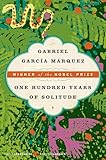
#3 — One Hundred Years of Solitude by Gabriel García Márquez
García Márquez acknowledged Grass as a direct model: the magical realism that allows historical violence to be rendered in a register that documentary prose cannot reach. Where The Tin Drum uses Oskar’s impossible body to make Nazi Germany visible, One Hundred Years of Solitude uses the Buendía family’s impossible history — plagues of insomnia, levitating priests, a civil war fought seventeen times — to make visible the violence and futility of Colombian political history. The two novels are the founding texts of the grotesque-witness mode, and reading them together reveals how the same formal strategy works across radically different cultures and histories.
#4 — Beloved by Toni Morrison
Morrison uses the ghost story as Grass uses Oskar’s magic drum and glass-shattering voice — to render a history too devastating for realism to approach directly. Sethe’s murdered daughter returns as a physical presence, and the novel’s formal strategies (the non-linear chronology, the sentences that break apart under the weight of what they’re carrying) are all designed to force a confrontation with slavery’s trauma that the conventional historical novel would allow the reader to observe from a safe distance. Different countries, different traumas, the same formal conviction: that history at this scale requires a literature that distorts in order to tell the truth.
#5 — The Lost Honor of Katharina Blum by Heinrich Böll
A young woman spends one night with a man who turns out to be a wanted criminal; the tabloid press destroys her reputation and her life. Böll’s most politically direct novella — published in 1974 as a response to West Germany’s Bild-Zeitung — is the realist complement to Grass’s grotesque. Where Grass uses magic and distortion to expose the German past, Böll uses flat, precise, documentary prose to expose the German present: the mechanisms by which a society that has not reckoned with its history produces new persecutions in new forms. The two writers are the essential twin voices of postwar German literature.
#6 — One Day in the Life of Ivan Denisovich by Alexander Solzhenitsyn
Solzhenitsyn’s account of a single ordinary day in a Soviet labor camp — the strategies for staying warm, the politics of a work brigade, the minor victories and defeats of survival — makes the Gulag visible through accumulation of detail rather than through outrage. The formal strategy is the same as Oskar’s drum: the minor detail that contains the major horror. Published in the Soviet Union in 1962 during Khrushchev’s brief thaw, it was the first official acknowledgment that the camps existed, and it destroyed the pretense that Soviet society had nothing to reckon with. Short, precise, and devastating.
Dark Witnesses and Grotesque Forms
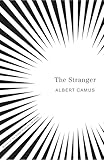
#7 — The Stranger by Albert Camus
Meursault kills a man on an Algerian beach and is tried less for the murder than for his failure to cry at his mother’s funeral. Camus’s Meursault is another witness who refuses to perform the appropriate emotions — another figure who observes the world’s violence and the social scripts it demands from a position of absolute detachment. Where Oskar’s difference is physical (he stopped growing), Meursault’s is philosophical (he cannot feel what he is supposed to feel), and in both cases the character’s incapacity functions as a mirror held up to the society that finds him monstrous.
#8 — The Trial by Franz Kafka
Josef K. is arrested one morning for unnamed crimes and processed by an invisible bureaucratic court that he can never fully see or address. Kafka’s nightmare, written in Prague before either world war, is the modernist predecessor of The Tin Drum’s bureaucratic grotesque — the anonymous machinery that processes human beings without explanation or appeal. Grass translated Kafka’s abstract horror into the specific historical horror of Germany: the court in The Trial becomes the actual courts of the Third Reich, and the charges that cannot be answered become the racial laws that do not require answering. Reading Kafka after Grass clarifies what Grass built on.
#9 — Catch-22 by Joseph Heller
Yossarian is an American bombardier stationed off Italy in World War II who is trying to get grounded on grounds of insanity — but the catch is that anyone who wants to be grounded must be crazy, and anyone who applies to be grounded proves by the application that they are sane. Heller’s World War II as absurdist farce is the American cousin of The Tin Drum’s dark humor: the same conviction that the horror of war can only be rendered truthfully by abandoning the conventions of seriousness, the same use of grotesque comedy to make visible what the heroic narrative conceals. Published in 1961, two years after The Tin Drum, it confirms that the grotesque witness was a transatlantic postwar project.
#10 — Lord of the Flies by William Golding
British schoolboys stranded on an island without adults construct a civilization and then destroy it. Golding’s novel is the political parallel to Oskar’s childhood observation of adult society: children are not innocent, and what they reveal about the society they were raised in is what that society would prefer to believe belongs only to savagery or pathology. Published in 1954, five years before The Tin Drum, Lord of the Flies is one of the foundational texts of the postwar European project of using extreme or distorted situations to ask what the war revealed about civilization itself — and to refuse the comfortable answer that what happened in Germany was an aberration rather than a possibility.
How to Choose Your Next Read
If you want more Günter Grass: Cat and Mouse — shorter, more concentrated, and the most formally perfect of the trilogy.
If you want the novel that most directly inherits Grass’s mode: One Hundred Years of Solitude — García Márquez acknowledged the debt.
If you want the philosophical parallel: The Stranger — Meursault is Oskar’s French counterpart, a witness who refuses the expected performance.
If you want the darkest historical reckoning: Beloved — the same formal strategy applied to slavery’s trauma.
If you want the most concentrated single-day horror: One Day in the Life of Ivan Denisovich — Solzhenitsyn’s answer to what ordinary days inside atrocity actually look like.
For the Best Fiction Books
For the definitive guide to fiction — the greatest novels across literary fiction, classics, and contemporary writing — see our Best Fiction Books of All Time list.
More Modernist Literature Reading Guides
- Books Like The Trial: Kafka’s Nightmare of Authority
- Books Like The Sound and the Fury: Modernist Masterpieces
Affiliate disclosure: Links to Amazon on this page are affiliate links. We earn a small commission at no extra cost to you. This does not influence our editorial recommendations.
Frequently Asked Questions
Is The Tin Drum autobiographical?
Partly. Grass grew up in Danzig (now Gdańsk) as the son of a German father and Kashubian mother, and the novel's Danzig setting is drawn from his childhood. Like Oskar, Grass was a witness to the German crimes of the Nazi period — he was later revealed to have served in the Waffen-SS as a teenager, a disclosure that damaged his reputation in Germany. But Oskar is not Grass: the device of the character who refuses to grow is a literary invention, not autobiography, and the novel's narrative is full of events that are surreal rather than documentary. The autobiographical and the invented are inseparable, which is part of the novel's point about how memory works.
Why does Oskar stop growing?
Oskar decides at age three, on his birthday, that he doesn't want to grow up — and falls down a cellar stairs as an excuse. Grass gives this decision as much symbolic as literal weight: Oskar's refusal to grow is a refusal to participate in the world of adults (a world that, in 1920s and 1930s Danzig, is sliding toward fascism and war). From his three-year-old height, Oskar can observe what adults are doing without being accountable for it. The tin drum is his instrument of both protest and complicity — he can shatter glass with his voice, summon crowds, disrupt Nazi rallies, but he cannot stop what is happening.
What should I read after The Tin Drum?
Grass's two other Danzig novels complete the trilogy — Cat and Mouse (a novella, the most concentrated of the three) and Dog Years (the most ambitious). Beyond Grass, the European novels most directly in conversation with The Tin Drum are Böll's novels about postwar Germany, Camus's The Stranger (the philosophical parallel: the witness who refuses the moral script), and García Márquez's One Hundred Years of Solitude (the magical realism that Grass helped establish as a mode for addressing history that documentary realism cannot reach).