Books Like The Sound and the Fury: Modernist Classics
Faulkner's fracturing of the Compson family across four radically different narrative voices is the peak of American modernism. These books share its formal ambition, its psychological depth, and its willingness to make narrative difficulty the price of genuine intimacy.

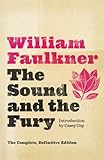
William Faulkner’s The Sound and the Fury is one of the most demanding novels in the American canon — and one of the most rewarding. Told in four sections across four different narrators and three different days, it maps the disintegration of the Compson family, once aristocrats of Jefferson, Mississippi, now in various stages of ruin. The first section belongs to Benjy, a 33-year-old man with severe intellectual disabilities whose consciousness cannot distinguish past from present; the second to his brother Quentin on the last day of his life; the third to Jason, the family’s bitter, mercenary survivor; and the fourth to a third-person narrator who centers finally on Dilsey, the Black cook who has held the household together across decades of Compson self-destruction.
What Faulkner was attempting — and achieved — was a novel that conveys grief and loss not by explaining them but by recreating the experience of consciousness in which they live. Benjy does not understand what he has lost; he only feels its absence, ceaselessly. That formal choice — to render feeling before comprehension, to trust that readers can absorb what they cannot yet interpret — is the most influential technical decision in American fiction. It made the novel nearly unpublishable in 1929, and it made it permanent.
The books below were chosen for readers who responded to what The Sound and the Fury does: the radical formal ambition, the depth of psychological immersion, and the willingness to use the past not as backstory but as a living presence that the present cannot escape. They are grouped first by the closest Faulkner, then by the modernist tradition his work belongs to and helped define, and finally by the theme that organizes the Compson story — family decline and the weight of what cannot be undone.
More William Faulkner
#1 — As I Lay Dying by William Faulkner
Fifteen narrators share the task of carrying Addie Bundren’s coffin across Mississippi to fulfill her wish to be buried in Jefferson. Faulkner’s most formally varied novel — each narrator has a distinct voice, a distinct angle of vision, and a distinct claim on the reader’s sympathy, including Addie herself in one chapter that speaks from inside the coffin. More propulsive than The Sound and the Fury, driven by the absurdist momentum of the journey itself, it is the best place to go immediately after finishing the Compsons: shorter, funnier in a bleak way, and with a structural ingenuity that is, if anything, even more dazzling once you see the whole.
#2 — Absalom, Absalom! by William Faulkner
Thomas Sutpen arrives in Jefferson, Mississippi with a design: to build a dynasty, a plantation, an embodiment of Southern grandeur — and to do it from origins he will not disclose. The novel that many Faulkner readers eventually decide is his greatest work, denser and more historically ambitious than The Sound and the Fury, tells Sutpen’s story through four narrators across several decades, each adding layers of speculation and unreliable memory to a core event that is not revealed until the end. It is the fullest expression of Faulkner’s central theme: that the American South cannot escape its founding crimes because it has never honestly faced them.
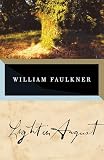
#3 — Light in August by William Faulkner
Joe Christmas — a man who may or may not be partly Black, who does not know and is destroyed by the uncertainty — moves through Yoknapatawpha County toward his violent end, while Lena Grove, heavily pregnant, travels calmly in search of the man who fathered her child. The most humanly accessible of Faulkner’s great novels and the one that most directly and unflinchingly confronts race, Light in August is also the best place to begin if The Sound and the Fury is your first Faulkner: the stream-of-consciousness technique is present but more controlled, and the novel’s moral stakes are clear.
Modernist Stream of Consciousness
#4 — Beloved by Toni Morrison
Sethe, a formerly enslaved woman living outside Cincinnati, is haunted by the ghost of the daughter she killed to prevent her from being taken back into slavery. Morrison’s Sethe is Faulkner’s direct descendant — the non-linear memory, the past that bleeds physically into the present, the grief too large to be processed in a single consciousness. Morrison has acknowledged Faulkner as a primary influence, and Beloved can be read as what happens when his formal innovations are applied to the history his white characters could not see, or would not. It won the Pulitzer Prize in 1988 and is, by any measure, one of the greatest American novels of the twentieth century.
#5 — Ulysses by James Joyce
Leopold Bloom moves through Dublin on a single day in June 1904, and James Joyce follows his consciousness — and those of Stephen Dedalus and Molly Bloom — with a completeness and formal restlessness that changed what novels were understood to be capable of. Ulysses is the primary model for Faulkner’s stream-of-consciousness technique and for the twentieth century’s project of radical interiority; Molly Bloom’s closing unpunctuated monologue is the direct ancestor of Benjy’s section in The Sound and the Fury. Longer, more allusive, and more encyclopedically demanding than Faulkner, it is also, once entered, inexhaustible.
#6 — Mrs Dalloway by Virginia Woolf
Clarissa Dalloway prepares for a party she is giving that evening; across London, Septimus Warren Smith, a shell-shocked war veteran, moves toward his own crisis. Woolf’s novel covers a single day in two consciousnesses, and the formal technique — the way time dilates and contracts within perception, the way a single sensory detail can release the whole of a past life — is the female modernist equivalent of Faulkner’s ambition. Shorter and more formally elegant than Ulysses, Mrs Dalloway is the best introduction to the European strand of stream-of-consciousness fiction that Faulkner was reading and transforming as he wrote.
#7 — The Unnamable by Samuel Beckett
A disembodied voice that cannot stop speaking, cannot locate itself in space, cannot be sure whether it exists or only narrates — Beckett’s late novel is the logical end point of stream-of-consciousness fiction, the Faulkner technique extended until character, plot, and setting have been dissolved entirely. What remains is language itself, compulsive and without exit. It is not easy reading, but readers who finished The Sound and the Fury and felt that the modernist project had further to go — further than Faulkner was willing to go — will find in The Unnamable the far shore of the tradition.
Family Decline and the Weight of the Past
#8 — One Hundred Years of Solitude by Gabriel García Márquez
The Buendía family founds the town of Macondo and repeats, across six generations, the same obsessions, the same names, the same magnificent and self-defeating patterns — until the final Buendía reads a prophecy that has always already described them. García Márquez has said he wanted to write the Latin American Sound and the Fury; what he wrote instead is the novel’s equal from the opposite direction, substituting magical realism for stream of consciousness, warmth for cold grief, and a whole civilization’s fate for a single family’s ruin. The family saga as cosmic repetition.
#9 — Song of Solomon by Toni Morrison
Milkman Dead grows up in a prosperous Michigan Black family and spends the novel’s second half traveling south to find his family’s origins — the names that were taken during slavery and the names that survived. Morrison’s most mythologically rich novel works in the tradition that Faulkner opened: the American family history as a buried treasure that the present generation must excavate. The flight south is both literal and metaphysical, and what Milkman recovers there is both a fact about his ancestors and a freedom he did not know he was looking for.
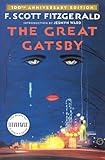
#10 — The Great Gatsby by F. Scott Fitzgerald
Jay Gatsby has constructed himself — his name, his mansion, his parties, his reinvented past — around the single fact of Daisy Buchanan, whom he lost five years ago and believes he can recover. Fitzgerald’s novel is the other pole of American modernism in the 1920s: where Faulkner’s prose is dense and involuted, Fitzgerald’s is clear and luminous, but they are both writing about the same thing — the American belief that the past can be undone, the refusal to accept that the green light is always already receding. Nick Carraway’s closing lines are Faulkner’s subject stated plainly.
#11 — The Road by Cormac McCarthy
A father and son move through a post-apocalyptic America carrying the fire — whatever remains of human decency — across a landscape of ash and collapsed civilization. McCarthy is from Tennessee and Faulkner’s most direct literary heir; the Southern Gothic sensibility, the prose that accumulates weight through rhythm rather than punctuation, the sense that history is something that has already destroyed everything worth saving — these are Faulkner’s coordinates translated into apocalypse. The Road is the most stripped-down version of the same vision, and its father-son love story is the more devastating for being the last thing left.
How to Choose Your Next Read
If you want more Faulkner immediately: As I Lay Dying — shorter, propulsive, formally brilliant.
If you want Faulkner’s maximum ambition: Absalom, Absalom! — longer, denser, and many readers’ eventual favorite.
If you want the modernist tradition Faulkner belongs to: Ulysses or Mrs Dalloway.
If you want a direct descendant that surpasses the debt: Beloved — Morrison applies Faulkner’s technique to the history he couldn’t fully see.
If you want the most accessible entry point: Light in August — the best Faulkner to read first.
For the Best Fiction Books
For the definitive guide to fiction — the greatest novels across literary fiction, classics, and contemporary writing — see our Best Fiction Books of All Time list.
More Classic Literature Reading Guides
- Books Like Catch-22: Dark Comedy and Hard Truths
- Books Like The Grapes of Wrath: Social Fiction and Survival
Affiliate disclosure: Links to Amazon on this page are affiliate links. We earn a small commission at no extra cost to you. This does not influence our editorial recommendations.
Frequently Asked Questions
How do you read The Sound and the Fury without getting lost?
Most readers find the novel most accessible if they know, before starting, that the first section belongs to Benjy — a severely intellectually disabled man of 33 whose perception of time is non-linear. Benjy doesn't know that past and present are different; they bleed into each other, separated only by typeface changes (italic indicates a memory). The best approach is to read Benjy's section for feeling rather than plot — let the grief accumulate without fully understanding its source. The second section (Quentin) is more legible but more disturbing; the third (Jason) is the most conventionally readable. Many readers benefit from a family genealogy chart. The novel becomes clearer on second reading, when the architecture is visible.
What does the title The Sound and the Fury mean?
The title comes from Macbeth's soliloquy: 'Life's but a walking shadow... a tale / Told by an idiot, full of sound and fury, / Signifying nothing.' Benjy — the idiot narrator of the first section — is the novel's most literal embodiment of the title: his account is full of sound (his constant bellowing) and fury (his incomprehending grief) and, from the outside, signifies nothing. But Faulkner is also applying the Macbeth line to the Compson family as a whole: their anguish, their honor codes, their ruin — all the sound and fury — signify, in the end, nothing. It is a deeply pessimistic novel, and the title names its conclusion before the first word.
Should I read As I Lay Dying or Absalom, Absalom! next?
As I Lay Dying is the more immediately approachable: shorter, faster, and with a narrative drive (the journey to bury Addie Bundren) that keeps it moving despite its fifteen different narrators. Absalom, Absalom! is considered by many readers and critics to be Faulkner's greatest achievement — denser, more historically ambitious, and more formally radical even than The Sound and the Fury. If you want more Faulkner, start with As I Lay Dying; if you want the peak, go straight to Absalom. Light in August is the most humanly accessible of his major novels and the best place to start if you haven't read Faulkner before.