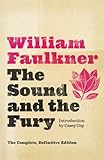
Editors Reads Verdict
A formally daring and emotionally devastating masterpiece of American modernism that rewards every difficult page.
What We Loved
- Structurally unprecedented — four distinct narrative voices each illuminate the same tragedy differently
- Benjy's section is one of the most immersive stream-of-consciousness passages in the English language
- The emotional accumulation across all four sections is genuinely devastating
Minor Drawbacks
- Benjy's opening section requires patience and often re-reading before the story coheres
- Dense allusive prose demands active engagement rather than passive reading
Key Takeaways
- → Memory and time are not linear — Faulkner's fractured chronology enacts the novel's themes structurally
- → Grief unacknowledged poisons a family across generations
- → The American South's mythology of honor and gentility is revealed as a death cult
- → Form and content are inseparable: how the story is told is what the story means
| Author | William Faulkner |
|---|---|
| Publisher | Vintage |
| Pages | 336 |
| Published | October 7, 1929 |
| Language | English |
| Genre | Classic Fiction, American Literature, Modernist Fiction |
How The Sound and the Fury Compares
The Sound and the Fury at a glance against 3 similar books readers weigh alongside it.
| Book | Author | Rating | Best for |
|---|---|---|---|
| The Sound and the Fury (this book) | William Faulkner | ★ 4.5 | Classic Fiction |
| A Farewell to Arms | Ernest Hemingway | ★ 4.5 | Readers who want to understand the World War I generation's literary response |
| Crime and Punishment | Fyodor Dostoevsky | ★ 4.8 | Classic Fiction |
| The Great Gatsby | F. Scott Fitzgerald | ★ 4.7 | Classic Fiction |
The Sound and the Fury Review
Few novels demand as much from a reader — or return as much — as William Faulkner’s 1929 masterpiece. The collapse of the Compson family, once Mississippi aristocracy, is told four times over, each retelling stripping away another layer of coherence until the final third-person section arrives with something that feels, devastatingly, like clarity.
The first section belongs to Benjy, a severely disabled man of thirty-three whose perception of time is non-linear: past and present bleed together without warning, separated only by Faulkner’s shifts in typeface. It is bewildering at first and heartbreaking once you understand what you are reading — the undiscriminating love of a mind that registers loss without being able to process it. The second section, Quentin’s, is the novel’s most lyrical: a Harvard student obsessed with his sister Caddy’s lost honor, unable to disentangle Southern mythology from his own suicidal ideation. Jason’s section is the novel’s most legible and its cruelest — a furiously comic portrait of pettiness and spite. The final section, narrated in third person, centers on Dilsey, the family’s Black cook, whose patient endurance provides the only counterweight to everything that has collapsed.
Faulkner himself said he never quite achieved what he wanted with this book. What he achieved instead is one of the most formally ambitious and emotionally raw novels in American literature — a book that insists on the reader’s patience and repays it with an intimacy no conventional narrative can reach.
The novel entered the public domain on January 1, 2025. For those who have been waiting for a free text to discover it: this is the one to start with. Come prepared to be lost, then found, then genuinely shaken.
Reading Guides
- Books Like The Sound and the Fury: Modernist Masterpieces and Stream of Consciousness
- Books Like Lincoln in the Bardo: Grief, the Afterlife, and Experimental Form
- Books Like Moby Dick: Epic Obsession, the Sea, and America
- Books Like The Brothers Karamazov: God, Free Will, and the Limits of Reason
- Books Like The Great Gatsby: The American Dream, Class, and Longing
- Books Like The Remains of the Day: Repression, Regret, and the Life Unlived
- Oprah
The Four Sections
The novel’s structure — four sections narrated by four different voices, each approaching the same family tragedy from a different angle — is Faulkner’s most radical formal decision, and it is a decision with specific emotional logic rather than mere experiment. Benjy’s section is first because Benjy’s perception is the least mediated: he has no narrative, no causal logic, no ability to distinguish past from present, and so the reader experiences the Compson family’s tragedy as pure sensation — loss registered without the protective distance of understanding. Caddy is gone; Benjy cannot explain why; he only knows she is gone and that her absence is everything.
Quentin’s section, which follows, is the most linguistically complex: a Harvard student in 1910 on the day of his suicide, unable to stop thinking about his sister Caddy’s sexual history, unable to separate his personal obsession from the larger mythology of Southern honor that has given the obsession its power. Quentin’s consciousness is an instrument tuned to Southern Gothic frequencies — honor, loss, time, the impossibility of the past ever being genuinely past — and his section is simultaneously the most beautiful and the most claustrophobic in the novel. He is drowning before he reaches the river.
Jason’s section arrives with the shock of legibility: straightforward, furiously comic, narrated by a man of total pettiness and total clarity, whose spite is so comprehensive and so systematic that it achieves a kind of dark grandeur. Where Benjy cannot reason and Quentin cannot stop reasoning, Jason reasons without mercy and without illusion. He is the Compson who has survived by knowing exactly what he is and maximizing it.
Dilsey and the Final Section
The fourth section, in the third person, centers on Dilsey Gibson, the Compson family’s Black cook — a woman who has given her life to a family that is disintegrating around her, who attends Easter services at her church while the Compsons sleep off their latest catastrophes, and who sees, as the pastor preaches, “the beginning and the ending” in a vision of something beyond the decay she has served. Faulkner wrote Dilsey with enormous respect and considerable sensitivity to the risk of sentimentalizing her, and the Dilsey sections have been debated by critics ever since: she is idealized, some argue; she is the novel’s moral compass, others reply. What is not arguable is that she is the only character in the novel who functions, who works, who attends to the living and the dying with something that the Compsons themselves cannot muster.
Yoknapatawpha and the American South
Faulkner was born in New Albany, Mississippi in 1897 and spent most of his adult life in Oxford, Mississippi, the model for Jefferson, Yoknapatawpha County. The Sound and the Fury was the first novel in which Yoknapatawpha County — based on Lafayette County, Mississippi — became the clearly defined fictional space it would remain throughout his major work. The Compson family’s decline is also the South’s decline, or more precisely the decline of a particular Southern mythology of honor, lineage, and racial hierarchy that was already collapsing in the early twentieth century under the weight of its own contradictions.
Faulkner received the Nobel Prize for Literature in 1949. His acceptance speech — one of the great short pieces of American prose — spoke of the writer’s duty to affirm the belief in the endurance and survival of humanity. The Sound and the Fury, which seems at first reading like an extended demonstration of human failure, is, on re-reading, exactly that affirmation: Dilsey endures, Benjy’s love persists, and the novel’s formal achievement is itself an act of faith in the possibility of order.
Frequently Asked Questions
What is "The Sound and the Fury" about?
The decline of the Compson family in Mississippi is told four times — by Benjy, Quentin, Jason, and a third-person narrator — each section dissolving further the coherent narrative that preceded it. Faulkner's most formally radical novel is also his most emotionally devastating: a meditation on loss, time, and the American South's refusal to grieve honestly.
What are the key takeaways from "The Sound and the Fury"?
Memory and time are not linear — Faulkner's fractured chronology enacts the novel's themes structurally Grief unacknowledged poisons a family across generations The American South's mythology of honor and gentility is revealed as a death cult Form and content are inseparable: how the story is told is what the story means
Is "The Sound and the Fury" worth reading?
A formally daring and emotionally devastating masterpiece of American modernism that rewards every difficult page.
Ready to Read The Sound and the Fury?
Check the current price on Amazon.
Check Price on Amazon (paid link)Prices and availability are subject to change. See Amazon for current price.
Review last updated: