Books Like The Great Gatsby: 11 Tales of the Dream
Fitzgerald's portrait of Jay Gatsby reaching for the green light is the defining American novel of illusion and disillusion. These books share its obsession with reinvention, its gorgeous prose, and its brutal honesty about who America lets succeed.
By Aisha Patel
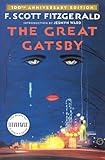
F. Scott Fitzgerald published The Great Gatsby in 1925 to respectable but not spectacular reviews, and he died in 1940 believing it a failure. What happened after his death is one of literary history’s stranger reversals: the novel was distributed to American soldiers during World War II, read by hundreds of thousands of people who had never encountered it, and returned from the war transformed into a classic. By the 1950s it was canonical. By now it is something closer to mythological — the green light, the parties, Daisy’s voice full of money, the eyes of Doctor T.J. Eckleburg watching from their billboard over the Valley of Ashes.
What makes The Great Gatsby endure is not its plot — the story of a self-invented millionaire throwing parties to impress a married woman he loved five years ago is not obviously the stuff of eternal literature. It is Fitzgerald’s prose, which is among the most precisely beautiful in American fiction, and the way that prose makes a specific historical moment feel like a universal condition. Gatsby reaching for the green light is an image for everything anyone has ever wanted and almost had. The Buchanans’ carelessness is a diagnosis that has not expired. Nick Carraway’s ambivalent witness — drawn to the spectacle, horrified by it, complicit in it — remains the honest position of the American reader.
The books below were chosen for readers who want to stay in the world The Great Gatsby opens: the Lost Generation and the Jazz Age; the American Dream examined from every angle; and the broader literary territory of obsession with the past, the irrecoverability of what is gone, and the brutal mechanics of class. They range from Fitzgerald’s own contemporaries to novels written a century later that still argue with him.
The Lost Generation and Jazz Age
#1 — The Sun Also Rises by Ernest Hemingway
Published the same year as The Great Gatsby, Hemingway’s first novel is the other great document of the Lost Generation — the Americans and British expatriates drinking and traveling through Paris and Pamplona in the 1920s, damaged by the war in ways they cannot quite articulate. Jake Barnes, wounded and in love with Brett Ashley, is Gatsby’s shadow self: a man who also wants something he cannot have, but who has stripped away every illusion about getting it. Where Fitzgerald’s prose is lyrical and ornate, Hemingway’s is compressed and declarative, and the contrast is instructive — two writers looking at the same generation and finding different languages for the same emptiness.
#2 — A Farewell to Arms by Ernest Hemingway
If The Sun Also Rises shows the aftermath of the war, A Farewell to Arms is set inside it — an American ambulance officer in Italy, a love affair with a British nurse, the retreat from Caporetto. Hemingway’s prose here achieves something close to perfection: the war rendered in flat, precise sentences that carry enormous emotional weight under the surface. The novel belongs alongside Gatsby because it gives you the experience — the actual years of the war — that Fitzgerald’s characters are defined by but never shown. Gatsby was an officer; this is what officers saw. The ending is among the most devastating in American literature.
#3 — Tender Is the Night by F. Scott Fitzgerald
Fitzgerald’s third novel, published in 1934, is the one he worked hardest on and the one that most directly extends Gatsby’s concerns into new territory. Dick Diver is a brilliant American psychiatrist living with his wealthy wife Nicole on the French Riviera, surrounded by glamour and slowly, almost imperceptibly, falling apart. Where Gatsby’s fall is sudden and external, Dick’s is gradual and interior — the dissolution of a man by the very wealth and charm he has cultivated. It is a longer, more complicated novel, and some readers find it bloated where Gatsby is perfect. But for readers who want to see what Fitzgerald could do at full stretch, it is essential.
The American Dream Examined
#4 — East of Eden by John Steinbeck
Steinbeck’s great novel is the American myth written at epic scale: two families in the Salinas Valley over three generations, the Cain and Abel story retold in California soil, the question of whether the desire to be good is enough to make us so. Where Gatsby compresses the American Dream into one man and one summer, East of Eden expands it across a century. The character of Adam Trask is Gatsby without the parties and without the money — a man who invests everything in a dream that turns against him. But it is the word timshel — thou mayest — that this novel offers as its answer to the green light: not fate, but choice.
#5 — The House of Mirth by Edith Wharton
Published in 1905, twenty years before Gatsby, Wharton’s novel about Lily Bart — a beautiful, intelligent woman navigating New York’s Gilded Age society without enough money to belong to it — is the great predecessor to Fitzgerald’s diagnosis. Lily is Gatsby seen from the other side: not someone climbing into wealth, but someone desperately trying not to fall out of it. Wharton’s prose is cooler than Fitzgerald’s, her irony more cutting, and her understanding of the mechanisms of class more clinical. The novel is a masterpiece of sociological precision dressed as tragedy, and it asks the same question Gatsby asks: who does America actually let succeed?
#6 — American Pastoral by Philip Roth
Philip Roth’s 1997 Pulitzer winner follows the Swede — Seymour Levov, a golden boy of 1950s Newark, all-American athlete, successful businessman — as his perfect life is destroyed by the 1960s. His daughter plants a bomb, and the American Dream that had seemed his by right collapses around him. Roth’s novel is Gatsby at a longer distance: the dream fully achieved and then unwound from inside, the horror of discovering that building the life you were supposed to want was never the point. Where Fitzgerald kills Gatsby before he can fully understand his failure, Roth makes the Swede live to comprehend everything.
#7 — Invisible Man by Ralph Ellison
Ellison’s 1952 novel follows an unnamed Black narrator from the South through Harlem, watching him pursue the versions of the American Dream available to him — education, organizational loyalty, community leadership — and discover that each one is a different form of invisibility. Where Gatsby shows the Dream from the perspective of someone just outside it, Invisible Man shows it from the perspective of someone it was specifically designed to exclude. Ellison’s prose is among the richest in American fiction, capable of both savage comedy and genuine tragedy. Reading it alongside Gatsby is to see the green light from the other side of the bay, and to understand why it was never meant for everyone.
Obsession, Nostalgia, and the Irrecoverable Past
#8 — Beloved by Toni Morrison
Morrison’s 1987 novel is set in post-Civil War Ohio, where Sethe, a formerly enslaved woman, is haunted — literally — by the daughter she killed to prevent her from being taken back into slavery. Beloved is the deepest investigation in American fiction of what Gatsby grasps at: the past that will not stay past, the thing done or lost or suffered that shapes every subsequent moment. Morrison’s prose operates at a different register from Fitzgerald’s — denser, more incantatory, built on repetition — but both novels are fundamentally about the impossibility of moving forward when you are not finished with what is behind you.
#9 — Rebecca by Daphne du Maurier
The unnamed narrator of du Maurier’s 1938 gothic novel marries a wealthy widower, Maxim de Winter, and moves into Manderley — his magnificent estate — only to find it haunted by the memory of his first wife, Rebecca. The housekeeper Mrs. Danvers keeps Rebecca’s room as a shrine; every room holds her presence; the narrator is perpetually measured against a dead woman she can never equal. Rebecca takes the Gatsby structure — an obsession with someone gone, an identity shaped entirely by absence — and intensifies it into psychological thriller. It is the most compulsively readable book on this list, and one of the most precise accounts of how the past can colonize the present.
#10 — Never Let Me Go by Kazuo Ishiguro
Ishiguro’s 2005 novel follows Kathy, Tommy, and Ruth from childhood at the mysterious Hailsham boarding school into an adulthood that has been determined for them before they were born. The novel’s great subject is the green light that cannot be reached — the lives these characters can see and almost imagine but are not permitted to have. Ishiguro withholds information the way Fitzgerald does: the reader pieces together what is actually happening at Hailsham slowly, and the full picture, when it arrives, makes everything that came before more devastating. For readers who want Gatsby’s central note — the yearning for something just out of reach — sustained across a full novel, this is the place to go.
How to Choose Your Next Read
If you want the closest companion in time and spirit: The Sun Also Rises — same generation, same disillusion, different prose style.
If you want Fitzgerald himself at greater length: Tender Is the Night — more ambitious, more uneven, more complete.
If you want the American Dream examined from outside: Invisible Man — the essential counterpoint.
If you want the most emotionally devastating: Beloved — the past as ghost, the wound that will not close.
If you want the most compulsively readable: Rebecca — obsession and the haunted past as gothic thriller.
If you want the longest view: East of Eden — the American myth at full epic scale.
The Great Gatsby vs The Catcher in the Rye
For a direct comparison of Fitzgerald and Salinger’s two most studied American novels — what each does, which is better, and which to read first — see our The Great Gatsby vs The Catcher in the Rye guide.
For the Best Fiction Books
For the definitive guide to fiction — the greatest novels across literary fiction, classics, and contemporary writing — see our Best Fiction Books of All Time list.
Affiliate disclosure: Links to Amazon on this page are affiliate links. We earn a small commission at no extra cost to you. This does not influence our editorial recommendations.
Frequently Asked Questions
What is The Great Gatsby actually about?
The Great Gatsby is about Jay Gatsby, a self-made millionaire in 1920s Long Island who has reinvented himself entirely in order to win back a woman — Daisy Buchanan — he loved before the war. Narrated by her cousin Nick Carraway, the novel watches Gatsby's obsessive plan fail against the reality that old money and new money are not the same thing, and that the past cannot be recovered. Fitzgerald uses the green light at the end of Daisy's dock as the novel's central image: the thing you reach for that is always just out of reach. It is a book about longing more than it is about love, and about America's promise more than any individual character's fate.
Why does The Great Gatsby still matter?
The Great Gatsby has never gone out of print since 1925, and it has only grown more central to American culture over time. Its staying power comes from the precision of Fitzgerald's diagnosis: the idea that America offers reinvention but not forgiveness, that class is real even when it is denied, and that the people who benefit most from the system are least likely to acknowledge it. Tom and Daisy Buchanan's carelessness — 'they smashed up things and creatures and then retreated back into their money' — reads as freshly as ever. The novel is short enough to teach, dense enough to reward rereading, and its central metaphor has become part of the American language.
What books are most similar to The Great Gatsby in style and theme?
Readers looking for the closest stylistic match should try Fitzgerald's own Tender Is the Night, which covers similar territory — Americans abroad, the corruption of wealth, a beautiful surface concealing damage — with more ambition and more length. For the American Dream examined from different angles, The House of Mirth by Edith Wharton is the great predecessor, and American Pastoral by Philip Roth is the great successor. Readers drawn to Fitzgerald's prose style specifically — the poetic compression, the sentences that land like punches — will find kindred work in The Sun Also Rises by Hemingway, which was published the same year as Gatsby and is in many ways its companion novel.