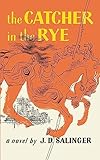
The Great Gatsby vs The Catcher in the Rye: Which First?
Two books on every high school syllabus, two very different Americas. The green light versus the red hunting hat — which should you read first, and why both still matter.
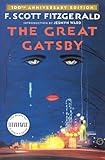
They appear on nearly every high school reading list in America, they have sold tens of millions of copies between them, and they sit on opposite ends of almost every literary spectrum you can name. The Great Gatsby by F. Scott Fitzgerald and The Catcher in the Rye by J.D. Salinger are both canonical, both taught, both argued over — and they represent two very different visions of what American literature can do and what America itself means.
Gatsby’s symbol is the green light: something small and luminous across the water, always just out of reach, the embodiment of aspiration forever deferred. Holden’s symbol is the red hunting hat: a private, slightly absurd marker of identity, worn as armour against a world of phonies. One novel looks outward at the spectacle of wealth and desire; the other looks inward at the tangle of alienation and longing. One is about the dream of becoming someone else. The other is about the terror of becoming anyone at all.
Both deserve to be read. The question is which to read first — and why.
Quick Comparison
| The Great Gatsby | The Catcher in the Rye | |
|---|---|---|
| Author | F. Scott Fitzgerald | J.D. Salinger |
| Year | 1925 | 1951 |
| Narrator | Nick Carraway (third-person adjacent) | Holden Caulfield (first-person) |
| Central theme | The American Dream and its corruption | Alienation, authenticity, and the fear of adulthood |
| Length | ~180 pages | ~277 pages |
| School assignment frequency | Almost universal (grades 10–12) | Very common (grades 9–11) |
The Great Gatsby: What Makes It Work
The Great Gatsby is a novel about a liar — a man who has invented himself so completely that the invention has swallowed whatever was underneath. James Gatz of North Dakota has become Jay Gatsby of West Egg, master of a mansion, thrower of parties no one is quite invited to, possessor of a fortune whose origins he cannot discuss. And all of it — every shirt, every car, every yellow-light party — exists for a single purpose: to recreate the moment five years ago when Daisy Buchanan loved him.
What makes the novel work, first and most importantly, is Nick Carraway as narrator. Nick is not a neutral observer. He is seduced by Gatsby, complicit in Gatsby’s pursuit of Daisy, and finally devastated by what the Buchanans represent — their careless wealth, their capacity to smash things and retreat back into money. Nick’s narration is retrospective and consciously literary, which means Fitzgerald can shape every sentence with full control of irony and implication. The reader watches Gatsby through Nick, but also watches Nick watching himself watching Gatsby, and this layering is where the novel’s moral intelligence lives.
The green light is Fitzgerald’s central symbol, and it earns its fame. Gatsby reaches toward it across the water — it is visible, specific, measurable — and yet the distance it represents is not geographical. What separates Gatsby from Daisy is not Long Island Sound but everything money cannot buy: the ease of old money, the confidence of belonging. He can acquire the parties and the shirts. He cannot acquire the assumption that the world was made for him.
Fitzgerald’s prose style is the other reason this novel survives. Every sentence is doing work. The Valley of Ashes, presided over by the eyes of Doctor T.J. Eckleburg on a faded billboard, is both a literal place and the novel’s moral landscape — the human cost of the green light’s pursuit rendered in ash and industrial waste. The parties at Gatsby’s mansion are described with a breathless social energy that makes their emptiness all the more precise. The writing is never decorative; it is structural.
The Jazz Age backdrop is not merely atmosphere. The novel’s argument is inseparable from its historical moment — the 1920s boom, the new money pouring into America, the sense that the old limits of class and origin might finally be dissolved by sufficient ambition and sufficient cash. Fitzgerald understood, writing in 1925, that this was an illusion. The novel’s events move toward a collision that the prose has been quietly predicting from the first page.
The Catcher in the Rye: What Makes It Work
The Catcher in the Rye opens with one of the most deliberately provocative sentences in American fiction: “If you really want to hear about it, the first thing you’ll probably want to know is where I was born, and what my lousy childhood was like, and how my parents were occupied and all before they had me, and all that David Copperfield kind of crap, but I don’t feel like going into it, if you want to know the truth.”
In one sentence, Salinger’s narrator dismisses the entire tradition of the novel of development, addresses the reader directly, and signals that what follows will be told on his terms, not the genre’s. This is Holden Caulfield at sixteen, narrating from some unspecified therapeutic facility the events of three days in New York City after his expulsion from Pencey Prep — his fourth school in three years.
The voice is everything. Holden’s narration is colloquial, digressive, funny, and suffused with a grief he cannot name. His central accusation — that almost everyone is a “phony” — has been read as adolescent narcissism and as genuine social critique, and the novel’s productive ambiguity is that both readings are correct simultaneously. Holden is an unreliable narrator whose unreliability does not disqualify his observations. The phoniness he sees is real; the way he sees it is distorted by his own terror.
What Holden fears in adulthood is the requirement to perform emotions you do not have — to exchange genuine feeling for the smooth functionality of social life. The catcher fantasy that gives the novel its title is the clearest expression of his actual self: he imagines himself standing at the edge of a cliff in a field of rye, catching children before they fall over. He wants to preserve innocence from the fall into corruption. He cannot. He is himself already falling.
The novel became a generational touchstone because it offered teenage readers, for the first time in the American literary mainstream, a narrator who spoke their language and took their alienation seriously. Every generation since 1951 has found Holden — or found him intolerable, which is also a form of recognition. The novel’s staying power is partly Salinger’s technical achievement and partly the apparently inexhaustible supply of adolescents who feel exactly as Holden does and need to know someone put it into words.
Key Differences
The most fundamental difference is structural: Gatsby is a tightly controlled third-person-adjacent narrative, shaped retrospectively by a narrator who is managing the reader’s understanding with craft and intention. Catcher is a first-person torrent, apparently unmanaged, where the formal control is hidden inside the apparent artlessness. Reading Gatsby, you are always aware of the author shaping the experience. Reading Catcher, you forget.
Thematically, the novels are almost mirror images. Gatsby is about aspiration toward something external — wealth, status, a woman who represents what money is supposed to buy. Its tragedy is the gap between desire and the world’s structure, between the man Gatsby wants to be and the world that will not let him become it. Catcher is about resistance to something external — adulthood, conformity, the pressure to perform. Its tragedy is the gap between Holden’s authentic self and the world’s demand for social performance.
The prose styles enact this difference. Fitzgerald writes with a heightened, poetic compression — images that function as arguments, sentences that carry their ironies inside their rhythms. Salinger writes with a vernacular immediacy that conceals its craft: the syntax is natural speech, but the repetitions and returns are as deliberately patterned as anything in Fitzgerald. One is prose poetry; the other is overheard thought.
Finally, the novels represent different Americas. Gatsby’s America is about what you can acquire, and about the class system that acquisition cannot dissolve. Catcher’s America is about what you are required to become, and the cost of refusing. Together, they map the poles of American anxiety: not enough, and too much.
Which Should You Read First?
Read The Catcher in the Rye first.
The case for this order: Catcher is the more immediately accessible novel, and it works well as a first encounter with serious American literary fiction precisely because Holden’s voice creates the illusion of no effort at all. The novel reads quickly, the voice grips from the first paragraph, and the questions it raises — about authenticity, about what adulthood demands, about who gets to decide what counts as real — are questions that stay with you.
The Great Gatsby works better as a second book in this pair because its formal qualities — the controlled narration, the dense symbolism, the retrospective irony — are easier to appreciate if you have already had the experience of a very different kind of American literary ambition. Coming to Gatsby after Catcher, the compression feels like a deliberate artistic choice rather than a limitation. The green light lands harder when you have already spent time with Holden’s red hunting hat.
There is also an argument for reading Gatsby first if you are primarily interested in prose style or American cultural history — in which case Fitzgerald’s Jazz Age portrait is the more instructive text. But for most readers approaching these novels for the first time, the order that creates the more complete experience is Holden first, Gatsby second.
Either way: read both.
What to Read After Both
Having read both novels, you have two clear directions.
The Sun Also Rises by Ernest Hemingway (1926) is the obvious companion to Gatsby — the other defining novel of the 1920s, equally spare, equally about the disillusionment of a generation that has seen too much. Where Gatsby is about aspiration, Hemingway’s novel is about the wreckage left when aspiration has been burned away. The Lost Generation abroad, trying to live with what the war took.
East of Eden by John Steinbeck (1952) takes the American Dream to California and expands it to biblical scale — the full generational sweep of what the promise of the West costs its believers. If Gatsby is the American Dream in 180 pages, East of Eden is the American Dream in 600, with everything Fitzgerald had to leave out for compression.
On the Road by Jack Kerouac (1957) is the most direct successor to Holden’s restlessness — the same pursuit of authenticity and the same flight from conformity, taken cross-country by characters who have become adults but not settled. Reading it after Catcher shows how much Kerouac inherited from Salinger and how differently that inheritance plays out.
Of Mice and Men by John Steinbeck (1937) is short, devastating, and asks what happens to those whose dreams have no purchase in the world — a question both Fitzgerald and Salinger circle from different directions. At 112 pages, it is the most concentrated companion on this list.
Frequently Asked Questions
Is The Great Gatsby or The Catcher in the Rye better?
Neither is objectively better — they are doing different things. The Great Gatsby is a formally perfect novel, a tightly constructed fable about aspiration and illusion with prose of extraordinary beauty. The Catcher in the Rye is a voice novel, a sustained interior monologue that lives or dies on whether Holden’s consciousness grips you. Readers who prize structure and style tend to prefer Gatsby. Readers who prize voice and psychological immediacy tend to prefer Catcher. Most serious readers eventually love both, for opposite reasons.
Which is harder to read?
The Catcher in the Rye is easier to read page by page — the vernacular voice moves quickly and Holden’s narration is immediately accessible. The Great Gatsby requires more active reading: Fitzgerald’s prose is dense with implication, his symbols do significant structural work, and the novel rewards close attention in a way that a fast read will miss. That said, Gatsby is only 180 pages, so the difficulty is concentrated rather than prolonged. Most readers find Catcher easier to finish and Gatsby more rewarding to reread.
Why are both books assigned in school?
Both novels are assigned because they offer durable literary and cultural education in a compact form. The Great Gatsby crystallises the American Dream — its power, its seductiveness, and its fundamental dishonesty — in under 200 pages of extraordinary prose, making it ideal for teaching both literary technique and cultural history. The Catcher in the Rye models close first-person narration, unreliable perspective, and the psychology of adolescent alienation in ways that resonate directly with teenage readers. Together, they represent two poles of American literary ambition: the formal and the vernacular.
What should I read after The Great Gatsby and The Catcher in the Rye?
After Gatsby, the most natural next steps are The Sun Also Rises by Ernest Hemingway, which is equally spare and equally about disillusionment but rooted in the expatriate Lost Generation rather than Long Island, and East of Eden by John Steinbeck, which takes the American Dream to California and expands it to biblical scale. After Catcher, the most direct successors are On the Road by Jack Kerouac, which inherits Holden’s restlessness and pursuit of authenticity and takes it cross-country, and Of Mice and Men by Steinbeck, which is short, devastating, and asks what happens to dreams in a world that has no place for them.
Books Like The Great Gatsby
For novels with The Great Gatsby’s Jazz Age setting, social critique, and lyrical prose, see our Books Like The Great Gatsby guide.
Books Like The Catcher in the Rye
For coming-of-age novels with The Catcher in the Rye’s alienation, sardonic voice, and adolescent intensity, see our Books Like The Catcher in the Rye guide.
For the Best Fiction Books
For the definitive guide to fiction — the greatest novels across literary fiction, classics, and contemporary writing — see our Best Fiction Books of All Time list.
Affiliate disclosure: Links on this site are affiliate links. We earn a small commission at no extra cost to you. This does not influence our editorial recommendations.
Frequently Asked Questions
Is The Great Gatsby or The Catcher in the Rye better?
Neither is objectively better — they are doing different things. The Great Gatsby is a formally perfect novel, a tightly constructed fable about aspiration and illusion with prose of extraordinary beauty. The Catcher in the Rye is a voice novel, a sustained interior monologue that lives or dies on whether Holden's consciousness grips you. Readers who prize structure and style tend to prefer Gatsby. Readers who prize voice and psychological immediacy tend to prefer Catcher. Most serious readers eventually love both, for opposite reasons.
Which is harder to read?
The Catcher in the Rye is easier to read page by page — the vernacular voice moves quickly and Holden's narration is immediately accessible. The Great Gatsby requires more active reading: Fitzgerald's prose is dense with implication, his symbols do significant structural work, and the novel rewards close attention in a way that a fast read will miss. That said, Gatsby is only 180 pages, so the difficulty is concentrated rather than prolonged. Most readers find Catcher easier to finish and Gatsby more rewarding to reread.
Why are both books assigned in school?
Both novels are assigned because they offer durable literary and cultural education in a compact form. The Great Gatsby crystallises the American Dream — its power, its seductiveness, and its fundamental dishonesty — in under 200 pages of extraordinary prose, making it ideal for teaching both literary technique and cultural history. The Catcher in the Rye models close first-person narration, unreliable perspective, and the psychology of adolescent alienation in ways that resonate directly with teenage readers. Together, they represent two poles of American literary ambition: the formal and the vernacular.
What should I read after The Great Gatsby and The Catcher in the Rye?
After Gatsby, the most natural next steps are The Sun Also Rises by Ernest Hemingway, which is equally spare and equally about disillusionment but rooted in the expatriate Lost Generation rather than Long Island, and East of Eden by John Steinbeck, which takes the American Dream to California and expands it to biblical scale. After Catcher, the most direct successors are On the Road by Jack Kerouac, which inherits Holden's restlessness and pursuit of authenticity and takes it cross-country, and Of Mice and Men by Steinbeck, which is short, devastating, and asks what happens to dreams in a world that has no place for them.