Books Like Moby Dick: Epic Obsession & the Sea
Melville's white whale — and Ahab's catastrophic pursuit of it — is the American epic: a novel about obsession, metaphysics, and the human need to impose meaning on an indifferent universe. These books share its scope, its ambition, and its dark prophetic energy.

Herman Melville published Moby-Dick in 1851 to mixed reviews and dwindling sales, and it was essentially out of print by the time he died in 1891. The rediscovery came in the 1920s, when the modernists recognized in Melville’s great novel the kind of formal ambition and metaphysical seriousness they were pursuing in their own work. By mid-century it had become the American epic — the novel that took the full measure of what America was and what it contained, from the democracy of the Pequod’s crew to the madness of its captain, from the beauty of the sea to the violence of the industry that exploited it.
What makes Moby-Dick extraordinary is not the plot — a whaling captain pursues a white sperm whale that took his leg, and is destroyed — but the way Melville uses that plot to contain everything. The novel is encyclopedic in the literal sense: it contains everything known about whales and whaling in 1851, framed as chapters delivered by Ishmael, the novel’s narrator and only survivor. But the encyclopedic form is also the novel’s argument: the white whale can only be understood in the context of everything, and even then it cannot be understood. The novel is a sustained meditation on the human need to find meaning in an indifferent universe, and Ahab is its exemplary figure — the man whose need for meaning becomes the madness that kills him.
The books below were chosen for readers who want to stay in the world Moby-Dick opens: the great American epics of obsession and doom; the tradition of man against the indifferent universe; and the Transcendentalist and literary tradition that Melville both belongs to and argues against. They range from his immediate contemporaries to novels written a century later that are still in conversation with him.
Great American Epics of Obsession
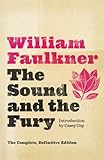
#1 — The Sound and the Fury by William Faulkner
Faulkner’s 1929 novel tells the story of the Compson family’s disintegration through four different narrators — the cognitively disabled Benjy, the suicidal Quentin, the bitter Jason, and finally a third-person section centered on Dilsey, the Black housekeeper — each offering a different angle on the same catastrophe. Where Moby-Dick is about a man who destroys himself and everyone around him in pursuit of meaning, The Sound and the Fury is about a family that collapses under the weight of what it cannot let go: the Southern past, the lost gentility, the sister Caddy who escaped. Faulkner shares with Melville the conviction that doom is structural, not accidental, and that the most interesting question is how consciousness experiences its own destruction.
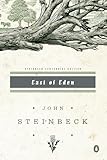
#2 — East of Eden by John Steinbeck
Steinbeck spent years preparing to write the novel he considered his masterpiece — a multigenerational saga set in the Salinas Valley of California, tracing two families across the story of Cain and Abel retold in American soil. East of Eden is Moby-Dick’s land-based equivalent: the attempt to write the American epic at full scale, to contain the continent and its mythology in a single novel. Where Melville’s obsession is Ahab’s, Steinbeck’s is more diffuse — it belongs to the land itself, to the question of whether good and evil are in us by nature or by choice. The word timshel — thou mayest — is his answer to Ahab’s white whale: not fate but the possibility of choosing otherwise.
#3 — Blood Meridian by Cormac McCarthy
McCarthy’s 1985 novel follows the Kid — a nameless teenage runaway from Tennessee — through the American Southwest in the 1840s with a scalp-hunting gang led by the Judge, one of the most terrifying figures in American fiction. Blood Meridian is Moby-Dick in the desert: the same prophetic register, the same encyclopedic accumulation of detail (here violence rather than cetology), the same sense of a metaphysical darkness at the heart of American expansion. The Judge, like Ahab, is a figure of absolute will pursuing an absolute end. Unlike Ahab, he succeeds. It is the most disturbing book on this list and the most directly Melvillean in its ambition.
Man Against the Indifferent Universe
#4 — The Old Man and the Sea by Ernest Hemingway
Hemingway’s 1952 novella is the compressed response to Moby-Dick: an old Cuban fisherman goes out alone into the Gulf Stream, hooks a great marlin after two days, and fights it until he can fight no longer. Where Melville writes with maximum abundance — chapters on chapters of context, meditation, digression — Hemingway writes with maximum economy. The struggle is the same: one man against a creature that represents everything larger and older and more indifferent than himself. Santiago does not rage against the fish the way Ahab rages against the whale; he respects it, even loves it. The different emotional register produces a different kind of tragedy, and the two novels together map the range of how a person can meet an overwhelming force.
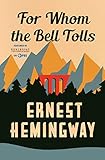
#5 — For Whom the Bell Tolls by Ernest Hemingway
Robert Jordan, an American demolitions expert fighting with Republican guerrillas in the Spanish Civil War, is given a mission he knows is probably fatal: blow up a bridge at a specific time to cover a larger offensive. He commits to it completely, and the novel is the three days before the bridge. For Whom the Bell Tolls belongs on this list because it shares with Moby-Dick the structure of a man who commits fully to an impossible task and pursues it through to the end, knowing it will destroy him. Hemingway’s novel is more intimate than Melville’s — the love story is central in a way that Moby-Dick does not permit — but the existential posture is the same: doing the thing completely because it is the thing.
#6 — Lord Jim by Joseph Conrad
Jim, a young British merchant officer, abandons his ship during a crisis — leaving hundreds of passengers to what he believes is certain death — and spends the rest of his life trying to redeem that moment of cowardice, eventually dying for the attempt. Conrad’s 1900 novel is a sea story that shares Moby-Dick’s concern with obsession and the cost of not being able to leave something behind. The structure, narrated through Marlow (the same narrator as Heart of Darkness), is deliberately fragmented — the full picture assembled from partial accounts — in a way that recalls Ishmael’s meditative, circling approach. Jim’s obsession is not with a whale but with himself, which Conrad suggests may be the same thing.
#7 — Heart of Darkness by Joseph Conrad
Marlow travels up the Congo River into the interior of Africa to find Kurtz — an ivory trader who has become something like a god to the people around him, and who is dying. Conrad’s 1899 novella is the voyage upstream as a journey into the human interior: the white whale at the end of the journey is Kurtz himself, a man who has pursued his own will past the point where civilized restraint applies. The parallels with Moby-Dick are structural: the narrator who survives and tells the story, the charismatic figure who leads others into catastrophe, the sense of an encounter with something that reveals the darkness at the center of everything. It is shorter and more concentrated than Melville, and its politics — about imperialism and race — are more explicit and more debated.
The Transcendentalist Tradition
#8 — Walden by Henry David Thoreau
Thoreau spent two years living in a cabin at Walden Pond in Massachusetts, and the 1854 account of that experiment is the great document of American Transcendentalism — the conviction that meaning is available in nature and solitude, if the person is willing to be still enough to receive it. Melville knew Thoreau’s work and was in explicit conversation with it: where Thoreau finds the universe legible and benign, Melville finds it legible only in its refusal to mean what we want it to mean. Reading Walden alongside Moby-Dick is to understand the argument Melville is having: with Thoreau, with Emerson, with the optimistic American conviction that the self and the universe are in harmony. Ahab is what happens when that faith breaks.
#9 — Song of Myself by Walt Whitman
Whitman published the first version of Leaves of Grass in 1855, four years after Moby-Dick, and Melville is the writer he most directly speaks against. Where Ahab imposes his will on the universe and is destroyed, Whitman’s speaker absorbs the universe — every contradiction, every opposite, every other self — and is enlarged by it. Song of Myself is not a novel, but it is essential context for understanding Moby-Dick: the Transcendentalist tradition that Melville was working inside and pushing against, the vision of America as expansive and self-containing that his novel’s catastrophe refuses. The two texts are the poles of nineteenth-century American ambition.
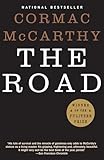
#10 — The Road by Cormac McCarthy
McCarthy’s 2006 novel follows a father and son through a post-apocalyptic America — ash, cold, the remnants of civilization — carrying the fire of their love for each other through a world that has gone out. The Road is Moby-Dick stripped to its most essential: the father’s obsession is not a whale but his son’s survival, and the universe’s indifference is made literal by the extinction of everything around them. McCarthy returns to the Melvillean register — the prophetic, biblical sentences; the refusal of consolation — but focuses it on the smallest possible scale. Where Moby-Dick ends in catastrophic destruction, The Road ends with something that might be hope, which in McCarthy’s world is a more terrifying proposition.
How to Choose Your Next Read
If you want the compressed version of the same confrontation: The Old Man and the Sea — minimum words, maximum weight.
If you want Melville’s darkness in the American West: Blood Meridian — the most demanding and the most Melvillean.
If you want the American epic on land: East of Eden — continent-scale, multigenerational, the myth retold in California.
If you want the philosophical counterpoint: Walden — the optimism that Moby-Dick argues against.
If you want the most emotionally direct: The Road — the same dark register, the father and son, the fire carried through the end of the world.
For the Best Fiction Books
For the definitive guide to fiction — the greatest novels across literary fiction, classics, and contemporary writing — see our Best Fiction Books of All Time list.
More Classic Literature Reading Guides
- Books Like The Old Man and the Sea: Man Against Nature
- Books Like Don Quixote: Idealism and the Madness of Literature
- Best Public Domain Books You Can Download Free
Affiliate disclosure: Links to Amazon on this page are affiliate links. We earn a small commission at no extra cost to you. This does not influence our editorial recommendations.
Frequently Asked Questions
Is Moby Dick worth reading in full?
Moby Dick is worth reading in full, but it rewards readers who go in knowing what they are entering. The novel is not primarily a narrative — it is an encyclopedic meditation on whaling, obsession, metaphysics, and the American character that uses a narrative as its spine. The cetology chapters, the taxonomy of whales, the detailed descriptions of the try-works and the rigging — these are not digressions. They are Melville's method for building the world of the Pequod until it feels more real than the world outside the book. Readers who try to race to the plot will find it tedious. Readers who surrender to Melville's pace and let the whale accumulate meaning through accumulation of detail will find it one of the most extraordinary reading experiences in American literature.
What does the white whale symbolize?
Melville built the white whale to resist single interpretation, and the novel's richness comes from that resistance. For Ahab, Moby Dick is the embodiment of malicious intelligence — the universe's indifference given form and made personal. For Ishmael, the whale is more ambiguous: terrifying and beautiful, a creature whose whiteness he meditates on at length as the absence of meaning that the human mind cannot tolerate and therefore fills with whatever it most fears. For readers, the whale has accumulated the meanings of a century and a half of interpretation: nature, America, God, the unconscious, fate, capitalism, the thing that will destroy you if you pursue it past reason. The novel survives all of these readings because Melville was interested in the question, not the answer.
What are the best books to read alongside Moby Dick?
The essential companion for scope and American mythology is East of Eden by John Steinbeck — the other great attempt to write the American epic, set on land rather than sea but with the same ambition to contain multitudes. For the sea specifically, The Old Man and the Sea by Hemingway is the compressed response: one man, one fish, the same confrontation between human will and natural indifference, written with maximum economy where Melville writes with maximum abundance. For the Melvillean combination of violence, metaphysics, and American darkness, Blood Meridian by Cormac McCarthy is the twentieth-century descendant — the same prophetic register, the same refusal of consolation, the same sense that history is a slaughterhouse and meaning must be found anyway.