Books Like Don Quixote: Idealism & Illusion Classics
Cervantes's knight errant who mistakes windmills for giants is the founding novel of Western literature — the first book about a man destroyed by too much reading, the first comic novel, and the most generous portrait of idealism ever written. These books share its playfulness, its depth, and its love.
Miguel de Cervantes published the first part of Don Quixote in 1605 and the second in 1615, and in those two volumes he invented the Western novel — or rather, he invented the novel that knows it is a novel, which is the only kind that matters. Alonso Quijano, a middle-aged minor nobleman from La Mancha, reads so many chivalric romances that he loses his mind and becomes Don Quixote de la Mancha, a knight errant who sallies forth to right wrongs, rescue maidens, and challenge giants. The windmills are famous. Less discussed is what Cervantes does with the character’s madness: he treats it simultaneously as delusion and as the most coherent possible response to a world that has stopped believing in heroism.
Sancho Panza, the squire Don Quixote recruits — a practical, skeptical farmer offered governorship of an island he will never see — is the novel’s other great invention: the realist consciousness watching the idealist consciousness from close range, unable to fully believe and unable to fully stop believing. The relationship between them generates the novel’s emotional center. Don Quixote is comic and melancholy in equal measure, and its depth comes from Cervantes’s refusal to choose between those modes: the knight is ridiculous, and the knight is right, and these are not contradictions.
The books below were chosen for readers who responded to one or more dimensions of Don Quixote: the novel that turns on its own fictional machinery, the idealist who cannot survive contact with a disenchanted world, or the comic mode that conceals a serious argument. They are grouped by what they share most closely.
The Novel Thinking About Itself
#1 — Tristram Shandy by Laurence Sterne
Laurence Sterne published The Life and Opinions of Tristram Shandy, Gentleman in nine volumes between 1759 and 1767, and it remains the most formally radical novel in English: a narrator who cannot begin his own life story because every beginning requires the context of a prior event, a text that includes a completely black page (for the death of Parson Yorick), a marbled page (because marbling is inexplicable), and several blank pages (for the reader to draw the Widow Wadman). Sterne read Cervantes carefully and took the self-awareness as far as it could go while remaining attached to any narrative at all. For readers who found Don Quixote’s metafictional dimension the most interesting thing about it, Tristram Shandy is the destination.
#2 — If on a winter’s night a traveler by Italo Calvino
Calvino’s 1979 novel opens: “You are about to begin reading Italo Calvino’s new novel, If on a winter’s night a traveler.” The reader — addressed as “you” throughout — is the protagonist, purchasing a new Calvino novel, beginning to read it, and discovering that the copy is defective. The replacement is a different book. The structure multiplies: ten beginnings of ten novels, none of which can be completed, and a reader who moves through them trying to find the continuation of a story that keeps transforming. It is Don Quixote’s question — what does fiction do to the people who consume it — answered at the level of form, with Calvino’s characteristic lightness and his genuine warmth toward the act of reading.
#3 — The Name of the Rose by Umberto Eco
Eco’s 1980 debut is a medieval murder mystery set in a Benedictine monastery, narrated by a monk who was present at the events and is now reconstructing them from memory and documents. But it is also a novel about interpretation: William of Baskerville, the detective-monk who investigates the deaths, reads the world as a system of signs, and the question the novel poses is whether a sign-reading mind can ever reach the truth or whether it only produces more elaborate interpretations. The library at the center of the abbey — a labyrinth that conceals the book whose existence is at the heart of the crime — is the novel’s Don Quixote: the book that drives men mad, whose power comes from what it promises and what it withholds.
The Noble Fool and the Pure Heart
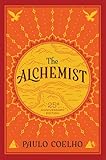
#4 — The Alchemist by Paulo Coelho
Santiago, the Andalusian shepherd of Coelho’s 1988 fable, is Don Quixote simplified and sweetened: a young man who abandons the ordinary life to follow a dream about treasure, encountering wisdom in the form of teachers and omens along the way. Where Don Quixote’s idealism is comic and self-destructive, Santiago’s is rewarded, and the universe of Coelho’s novel is one that actively cooperates with the pure of heart. It is the optimistic version of Cervantes’s question — what happens to the person who takes their inner vision more seriously than the world’s skepticism — and its enormous global success suggests that Coelho’s answer is one people need to hear.
#5 — The Idiot by Fyodor Dostoevsky
Prince Myshkin returns to Russia after years in a Swiss sanatorium where he was treated for epilepsy, and he moves through St. Petersburg society like a Christ figure: genuinely good, incapable of calculation, unable to protect himself or anyone else. Dostoevsky intended Myshkin as a portrait of “a perfectly beautiful man,” and the question the novel poses is what a perfectly beautiful man does in a world that is not. The answer is: he is destroyed, and in being destroyed he destroys others. It is Don Quixote’s argument made tragic rather than comic: the pure-hearted idealist is not ridiculous but lethal, and the world’s corruption is more powerful than any individual goodness brought against it.
#6 — Candide by Voltaire
Voltaire’s 1759 satirical novella sends its young protagonist — Candide, the student of the philosopher Pangloss, who teaches that this is the best of all possible worlds — through a series of disasters designed to test his teacher’s thesis. Wars, shipwrecks, earthquakes, the Inquisition, slavery, murder: each catastrophe is survived and followed immediately by the next. Pangloss maintains his optimism through everything. The novel is Don Quixote at its most compressed and most savage: the idealist without the self-awareness, the collision between inner conviction and outer reality played as pure comedy, the joke only funny because the alternative is despair.
#7 — A Confederacy of Dunces by John Kennedy Toole
Ignatius J. Reilly, the enormous, flatulent, philosophically self-certain protagonist of Toole’s posthumously published 1980 novel, moves through New Orleans convinced that modernity has been a catastrophic mistake and that the medieval worldview — specifically his interpretation of it, derived from his reading of Boethius — is the only sane response to the contemporary world. He is, in every practical sense, unemployable and delusional. He is also, intermittently and despite himself, right. Toole gives Ignatius Don Quixote’s basic situation — the man whose reading has made him impossible — and sets him loose in mid-century America, where the comedy is even more merciless.
Comic Mastery and the Serious Clown
#8 — The Adventures of Huckleberry Finn by Mark Twain
Huck Finn is the American Don Quixote — an innocent moving through a morally corrupt society, encountering its violence and hypocrisy and remaining, through some combination of naivety and instinctive decency, uncorrupted by it. The Mississippi River is Huck’s road, Jim is his Sancho Panza, and the society they move through is La Mancha reconstituted as antebellum America: a world of self-deception and cruelty that Huck is too young and too clear-eyed to rationalize away. Twain’s novel is the book Hemingway said all American literature derives from, and it earns that claim by doing what Don Quixote does: taking the comic adventure form and loading it with a moral argument it can barely carry.
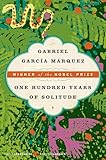
#9 — One Hundred Years of Solitude by Gabriel García Márquez
García Márquez built Macondo from Cervantes as much as from the Colombian coast where he grew up, and One Hundred Years of Solitude shares Don Quixote’s genre-inventing ambition: the novel that is also a history, also a myth, also a meditation on time and memory and the stories a culture tells about itself. The Buendía family’s hundred years are as much about reading and misreading — the parchment manuscripts that José Arcadio Buendía cannot decipher for generations — as they are about love and war. García Márquez said that after reading the opening of Don Quixote, he realized he could write the way he wanted to write. The debt is structural and it runs deep.
#10 — The Good Soldier Švejk by Jaroslav Hašek
Hašek’s Czech everyman Švejk — a bumbling, enthusiastically compliant soldier in the Austro-Hungarian army during the First World War — defeats every institutional authority he encounters not by opposing them but by agreeing with them so enthusiastically that the system cannot process him. He is, he insists, a certified idiot. He may be the only sane man in the novel. Hašek’s unfinished comic masterpiece is the anti-Don Quixote: where Cervantes’s knight tilts at windmills with the full force of his conviction, Švejk moves through a system that grinds up everyone around him by being too agreeable to grind. The comedy is the same; the strategy is reversed.
How to Choose Your Next Read
If you want the metafictional heir: If on a winter’s night a traveler — the reader as protagonist, fiction as subject.
If you want the formal extremist: Tristram Shandy — the novel that cannot begin, the digression as method.
If you want the tragic version: The Idiot — the pure heart that destroys everything it touches.
If you want the savage comedy: Candide — the optimist in a world designed to refute him.
If you want the American equivalent: Huckleberry Finn — the innocent navigating a morally bankrupt society.
For the Best Fiction Books
For the definitive guide to fiction — the greatest novels across literary fiction, classics, and contemporary writing — see our Best Fiction Books of All Time list.
More Classic Literature Reading Guides
- Books Like Les Misérables: Justice, Redemption, and Epic Scale
- Books Like The Count of Monte Cristo: Epic Adventure
- Best Public Domain Books You Can Download Free
Affiliate disclosure: Links to Amazon on this page are affiliate links. We earn a small commission at no extra cost to you. This does not influence our editorial recommendations.
Frequently Asked Questions
Is Don Quixote really the first novel?
It is the most common answer to that question, and it is defensible in a specific sense: Don Quixote, published in two parts in 1605 and 1615, is the first extended prose narrative in the Western tradition that is self-consciously aware of being a novel. It contains characters who have read Part One of the book and have opinions about it. The narrator questions his own sources. Characters argue about whether the story they are living in is accurately rendered by the author. No earlier prose fiction does this. Whether you call it the first novel depends on how you define the word, but it is unquestionably the first novel that knows it is a novel.
How long is Don Quixote and is it actually readable?
The complete Don Quixote is roughly 900 to 1,000 pages in most modern translations, making it one of the longest novels in the Western canon. Whether it is readable depends on which translation you use — the Edith Grossman translation is the most frequently recommended for modern readers, praised for preserving Cervantes's humor without archaism. The novel is genuinely funny, particularly in Part One, and readers who approach it expecting difficulty often find themselves enjoying it more than they anticipated. Part Two is more melancholy and complex, and many readers find it the greater achievement.
What are the best books like Don Quixote for readers who want the metafictional quality specifically?
Italo Calvino's If on a winter's night a traveler is the purest modern heir to Don Quixote's self-awareness: the reader is a character in the novel, and the novel's subject is the act of reading itself. Tristram Shandy by Laurence Sterne predates Calvino by two centuries and is equally radical — a narrator who cannot begin his story because every beginning requires another beginning, a novel that is entirely digression. Both share Don Quixote's willingness to treat the fiction as a subject rather than a transparent window.