Books Like Les Misérables: Epic Justice & Redemption
Victor Hugo's vast novel of Jean Valjean's flight from Inspector Javert — and the society that made both men what they are — is social fiction on the grandest scale. These books share its moral urgency and its belief that the world could be otherwise.
By Aisha Patel

Victor Hugo published Les Misérables in 1862, and even by the standards of the nineteenth-century novel — a form that favored length and ambition — it was extraordinary. Jean Valjean, released after nineteen years in prison for stealing a loaf of bread, is given new life by a bishop’s act of grace and spends the rest of the novel trying to become the man that grace implied he could be: a factory owner, a mayor, a father figure to the orphan Cosette, a fugitive always one step ahead of Inspector Javert’s implacable pursuit. The novel is enormous not only in length but in moral ambition: Hugo wanted to write the definitive indictment of a society that produces misery and then punishes the miserable.
What makes Les Misérables survive as a novel rather than a pamphlet is the complexity of its characters. Javert is not simply a villain: he is a man who believes in law as the only barrier against chaos, whose entire identity is invested in the idea that the world divides cleanly into criminals and honest people. When Valjean saves his life, Javert cannot process what has happened — his categories have no room for a convict who acts with more honor than a policeman — and the result is one of the novel’s most quietly devastating scenes. Similarly, Valjean’s goodness is not natural or automatic; it is a daily choice made against the grain of everything society has done to him.
The books below were chosen for readers who responded to that scale and that moral urgency — the sense that fiction can carry an argument about how the world is organized and how it might be otherwise, without ceasing to be a story about human beings whose fates matter. They range from Hugo’s contemporary Dumas to twentieth-century novels that carry the same conviction that the dispossessed deserve to be seen.
Epic Social Justice and Redemption
#1 — The Count of Monte Cristo by Alexandre Dumas
Dumas and Hugo were contemporaries, rivals, and friends, and The Count of Monte Cristo — published in serial form between 1844 and 1846, nearly two decades before Les Misérables — is the other great nineteenth-century French novel of injustice and its aftermath. Edmond Dantès is wrongly imprisoned through the malice of three men, escapes after fourteen years, discovers a vast treasure on the island of Monte Cristo, and returns to Paris as the mysterious, inexhaustible Count, intent on destroying those who destroyed him. Where Hugo’s Valjean chooses mercy, Dumas’s Dantès chooses revenge, and the novel’s slow, elaborate, theatrically satisfying machinery of retribution is one of the great pleasures in all of literature. The two novels are natural companions: they ask the same question about what injustice does to a man, and they give opposite answers.
#2 — A Tale of Two Cities by Charles Dickens
Dickens’s 1859 novel is set against the French Revolution — the historical event that haunts Les Misérables from the background — and shares Hugo’s conviction that social injustice produces the violence that then sweeps away the innocent along with the guilty. Sydney Carton’s final act of self-sacrifice carries the same structure as Valjean’s self-revelation to save an innocent man: a broken person choosing, at the last moment, to become something better than what he has been. Dickens’s Paris is melodramatic in ways that Hugo’s is not, and his characters are somewhat less psychologically dense, but the moral engine is identical — the belief that individual acts of grace can redeem what social structures have made monstrous. “It is a far, far better thing that I do” is the closest Dickens ever came to Hugo’s register.
#3 — Crime and Punishment
Dostoevsky’s novel covers similar moral territory — crime, punishment, the possibility of redemption through suffering — in a completely different mode. Where Hugo is panoramic and declamatory, Dostoevsky is claustrophobic and psychological. Where Valjean’s goodness is partly imposed from outside by the bishop’s grace, Raskolnikov’s redemption, if it comes, must come entirely from within. The two novels together constitute the nineteenth century’s fullest examination of what it means to commit a crime against society and then live with it. Crime and Punishment is also the more uncomfortable book: Dostoevsky refuses Hugo’s confidence that grace, once received, becomes a reliable foundation for a new self.
The Dispossessed and the Institutions That Crush Them
#4 — The Grapes of Wrath by John Steinbeck
The Joad family is driven from their Oklahoma farm by the Dust Bowl and the economic forces of the Depression, loads everything onto a truck, and heads west on Route 66 toward California, which promises work and does not deliver it. Steinbeck’s 1939 novel is the American equivalent of Hugo’s indictment: a society that produces poverty and then punishes the poor for being poor, a legal and economic apparatus designed to serve property over persons, and at the center of it a family whose dignity survives — barely — everything the world throws at it. Tom Joad’s final speech (“Wherever there’s a fight so hungry people can eat, I’ll be there”) is the American equivalent of Hugo’s direct address to the reader: the novel refusing to pretend that these are merely fictional people with fictional problems.
#5 — Beloved
Toni Morrison’s 1987 novel is set in the aftermath of the American Civil War: Sethe, a formerly enslaved woman living in Cincinnati, is haunted by the ghost of the infant daughter she killed rather than allow to be returned to slavery. Beloved is the most demanding book on this list — formally experimental, emotionally overwhelming, structured around trauma rather than narrative resolution — but it belongs here because it shares with Les Misérables the insistence that the crimes of institutions against individuals have consequences that last lifetimes, and that survival in the aftermath of those crimes is itself a form of heroism. Sethe’s act is Hugo’s social argument made unbearable: the world had made slavery worse than death for her child.
#6 — A Thousand Splendid Suns
Khaled Hosseini’s second novel follows two Afghan women across thirty years of war, Soviet occupation, civil conflict, and Taliban rule. Mariam and Laila are brought together by circumstances neither chose, in a marriage that imprisons them both, and the bond they develop under those conditions becomes the novel’s moral center. Like Les Misérables, A Thousand Splendid Suns is interested in what it means to maintain humanity — to keep loving, to protect another person — inside a social and political structure designed to deny it. The ending is earned in the way Hugo’s endings are earned: not cheaply optimistic but genuinely hopeful, because the hope has been paid for at full price.
Redemption Across Time and History
#7 — Middlemarch by George Eliot
Eliot’s 1871 masterpiece does not share Hugo’s political urgency — it is set in a provincial English town, not the Paris barricades — but it is the greatest Victorian novel of social conscience, and its central argument is one Hugo would have recognized: that the world is made better or worse by the accumulated weight of ordinary people’s ordinary choices, and that the unheroic heroism of a life lived with integrity is the most important kind. Dorothea Brooke’s story is a tragedy of circumstance and social limitation, but the novel’s famous final paragraph — about the growing good of the world depending on unhistoric acts — is Hugo’s social vision expressed in quieter, more personal terms. Middlemarch is what Les Misérables looks like when the ambition is novelistic rather than polemical.
#8 — The Kite Runner
Amir’s betrayal of Hassan — his silence in a Kabul alley — is a smaller crime than anything in Hugo, but Hosseini uses it to the same structural purpose: a single act, and then a lifetime shaped by the attempt to live with it. The return to Taliban Afghanistan in the novel’s second half gives The Kite Runner its Hugo-esque historical sweep, and the possibility of redemption that it offers — costly, imperfect, earned at real price — belongs to the same moral tradition as Valjean’s transformation. Hosseini is also, like Hugo, unashamed of emotional directness: both writers trust their readers to be moved, and both are right.
#9 — North and South by Elizabeth Gaskell
Margaret Hale moves from the rural south of England to the industrial north and encounters, for the first time, the social reality of factory labor — the working conditions, the poverty, the dignity of the workers, and the indifference of the mill owners. Gaskell’s 1855 novel is quieter than Hugo but shares his belief that the industrial economy is producing a kind of misery that requires a moral response, and that novels are an appropriate vehicle for that response. The romance plot — Margaret’s antagonism and eventual love for the mill owner Thornton — is used to dramatize the question of whether social conscience and economic interest can be reconciled. More hopeful than Hugo, and a useful corrective to his occasional grandiosity.
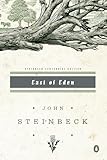
#10 — East of Eden
Steinbeck’s most ambitious novel follows two families in the Salinas Valley across generations, organized explicitly around the Cain and Abel story. Like Les Misérables, it is a novel about whether a man can escape the judgment history has already pronounced on him — whether the inheritance of sin can be overcome by an act of will. The Chinese servant Lee’s analysis of the word timshel — “thou mayest,” the possibility of choice — is Steinbeck’s answer to Hugo’s question about grace: not that goodness is bestowed from outside, as it is for Valjean by the bishop’s mercy, but that it is always available as a choice. Long, generous, occasionally flawed, and one of the few American novels that earns comparison with Hugo in scope and moral seriousness.
How to Choose Your Next Read
If you want the most direct nineteenth-century companion: The Count of Monte Cristo — Dumas’s answer to Hugo’s question, via revenge rather than mercy.
If you want the American equivalent: The Grapes of Wrath — Steinbeck’s Joads as the Valjean of the Depression.
If you want the most emotionally intense: Beloved — Morrison’s indictment of institutional cruelty, taken to its furthest extreme.
If you want the most psychologically compressed: Crime and Punishment — Hugo’s redemption arc in Dostoevsky’s underground register.
If you want the most elegant social novel: Middlemarch — unheroic heroism, the accumulated weight of ordinary goodness.
For the Best Fiction Books
For the definitive guide to fiction — the greatest novels across literary fiction, classics, and contemporary writing — see our Best Fiction Books of All Time list.
More Classic Literature Reading Guides
- Books Like Don Quixote: Idealism and the Madness of Literature
- Books Like The Count of Monte Cristo: Epic Revenge Classics
Affiliate disclosure: Links to Amazon on this page are affiliate links. We earn a small commission at no extra cost to you. This does not influence our editorial recommendations.
Frequently Asked Questions
How long is Les Misérables and is the unabridged version worth reading?
The unabridged Les Misérables runs to approximately 1,500 pages in most translations, including Hugo's famous digressions on the Battle of Waterloo, the Paris sewer system, and the history of French convent life. Whether those digressions are worth reading depends on the reader. They can be skipped without losing the narrative thread, but they are not merely padding: Hugo's argument about society and justice is carried partly through the digressions, which establish the institutional and historical context that produces both Valjean and Javert. Many readers start with an abridged version and return to the full text; others find the complete novel essential from the first page. The Norman Denny translation and the Julie Rose translation are both highly regarded.
What is Les Misérables actually arguing about justice?
Hugo's central argument is that a society which criminalizes poverty and then uses the law to enforce its own cruelties is not a just society, and that the law — represented by Javert — can be an instrument of oppression as readily as an instrument of justice. Valjean was imprisoned for nineteen years for stealing bread to feed a starving child and for subsequent escape attempts. The punishment was legal; Hugo argues it was monstrous. Javert, who pursues Valjean with total conviction, is not a villain in any simple sense — he believes in the law as the only alternative to chaos — which is what makes his eventual collapse so devastating. The novel is an argument that mercy and justice are not opposites but that mercy is the completion of justice.
Are there books like Les Misérables with similarly epic redemption arcs?
The Count of Monte Cristo by Alexandre Dumas is the direct contemporary comparison: equally epic, equally preoccupied with justice, though Dumas pursues revenge where Hugo pursues mercy. Crime and Punishment by Dostoevsky covers the same territory of guilt, punishment, and redemption in a more psychologically compressed form. East of Eden by Steinbeck traces redemption across generations with a biblical explicitness that echoes Hugo's own fondness for Old Testament parallels. For something more recent, The Kite Runner by Hosseini structures itself around the question of whether a single act of cowardice can be redeemed — which is, in different clothes, Valjean's question across all fifteen hundred pages.