Books Like The Count of Monte Cristo: 11 Adventures
If Edmond Dantès's patient, elaborate revenge gripped you, these epic adventures and revenge tales deliver the same sweep and satisfaction.

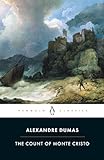
Alexandre Dumas published The Count of Monte Cristo in serial installments between 1844 and 1846, and it has never been out of print since. The premise is elemental: Edmond Dantès, a young sailor on the verge of the best moment of his life, is betrayed by men who envy and fear him and thrown into the island prison of Château d’If. He spends years learning why and who, escapes with a fortune in hidden treasure, and reinvents himself as the impossibly wealthy, cosmopolitan Count of Monte Cristo. What follows is one of the most meticulously plotted revenge narratives in all of literature — each of the men who destroyed his life will be undone, and the reader watches it happen with a satisfaction that is difficult to feel entirely comfortable about.
That discomfort is part of what elevates the novel above pure wish fulfillment. Dumas keeps asking, through the reactions of the people Dantès loves and the collateral damage his revenge creates, whether the man he has become is worth becoming. The books below share something of that same scale and moral complexity: epic adventures with genuinely long shadows, revenge stories that question the cost of vengeance, and swashbuckling historical fiction that earns its length.
A note on the length question: The Count of Monte Cristo runs to over 1,200 pages in most unabridged editions, and readers who have not encountered it often assume that means a slow, demanding read. It does not. The serial origins mean Dumas wrote every chapter to make you need the next one. The pacing is much closer to a modern thriller than to most novels of its era. The investment is real, but so is the reward.
Other Dumas and the 19th-Century Adventure Tradition
#1 — The Three Musketeers by Alexandre Dumas
The obvious starting point for any reader who loved Monte Cristo and has not yet read Dumas’s other great novel. Young d’Artagnan arrives in Paris and falls in with Athos, Porthos, and Aramis — three musketeers whose loyalty to each other and to the king is tested by the scheming Cardinal Richelieu and the terrifying Milady de Winter. The Three Musketeers is lighter in moral weight than Monte Cristo but shares its author’s absolute command of pace, his gallery of vivid characters, and his pleasure in the mechanics of plot. Dumas writes action the way no one else does. The sequels Twenty Years After and The Vicomte de Bragelonne extend the story into genuine tragedy.
#2 — The Scarlet Pimpernel by Baroness Orczy
Published in 1905, Baroness Orczy’s novel invented the secret-identity hero. Sir Percy Blakeney appears to all of Paris and London as a vain, witless aristocrat — an elaborate performance that conceals the Scarlet Pimpernel, who slips into Revolutionary France to rescue condemned nobles from the guillotine. The double-identity pleasure here is very close to Monte Cristo’s: watching a character perform a false self in plain sight of people who want to destroy him, while the reader is in on the secret. The romance between Percy and his wife Marguerite, who does not initially know the truth, gives the adventure an emotional anchor that the disguise plot alone could not provide.
#3 — Ivanhoe by Walter Scott
Walter Scott’s 1819 novel set the template for the historical romance that Dumas would later master, and it holds up better than most of its contemporaries. Wilfred of Ivanhoe returns from the Crusades to a Norman-occupied England where his father has disinherited him, his king is captive, and the woman he loves is promised to another. Scott mixes jousting tournaments, outlaws in Sherwood Forest, a siege, and a trial by combat with the same confident handling of scale that characterizes Monte Cristo. The moral geography — who is loyal, who has betrayed, who can be redeemed — is more complex than the adventure surface suggests.
Epic Historical Fiction on a Grand Scale
#4 — Shōgun by James Clavell
In 1600, English navigator John Blackthorne is shipwrecked in Japan and becomes entangled in the politics of a country on the verge of civil war. Clavell’s novel runs to over 1,100 pages and earns every one of them. Like Monte Cristo, it follows an outsider who must reinvent himself completely — learning a language, a culture, a set of loyalties — in order to survive and eventually matter. The revenge and power politics operating among the Japanese lords provide the same structural satisfaction as Dantès’s long game, and Blackthorne’s transformation from terrified prisoner to trusted advisor has a similar arc of earned mastery over an initially overwhelming world.
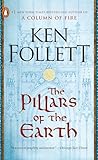
#5 — The Pillars of the Earth by Ken Follett
The building of a cathedral in 12th-century England is the ostensible subject; the real subject is the decades-long collision between ambition, faith, love, and the exercise of power by those who have it against those who do not. Follett’s novel reads faster than most 300-page thrillers — the serial structure is consciously Dickensian, with cliffhangers and reversals keeping the pages turning. The revenge threads running through the story, particularly the fates of those who destroyed Tom Builder’s family, provide exactly the long-deferred satisfaction that Monte Cristo readers are looking for. It is a novel in which patience is eventually rewarded.
#6 — Fall of Giants by Ken Follett
The first volume of Follett’s Century Trilogy follows five families across World War One: British, German, Russian, American, and Welsh. It is a novel of the same ambition as Monte Cristo — not a revenge plot, but a story in which the decisions made by the powerful fall catastrophically on the lives of ordinary people, and where the outcomes of history hinge on individual choices made under impossible pressure. Readers who love the sweep and social breadth of Monte Cristo — the way Dumas moves from Marseille to Rome to Paris, from sailors to princes — will find Follett covering similar ground with modern novelistic technique and a cast large enough to populate a small city.
#7 — A Gentleman in Moscow by Amor Towles
In 1922, Count Alexander Rostov is sentenced by a Bolshevik tribunal to house arrest in the Metropol Hotel in Moscow for the remainder of his life. He will never leave. What he does instead — learning the hotel’s geography with the precision of a prisoner who has decided to master his world rather than be defeated by it — is Towles’s subject. The parallels to Dantès’s imprisonment in Château d’If are not coincidental. Both novels are about what a person of exceptional intelligence and cultivation can do with confinement, and both trace the slow accumulation of purpose and connection that makes the eventual reckoning possible. A Gentleman in Moscow is quieter than Monte Cristo but operates in the same emotional register of patient, principled endurance.
Revenge, Identity, and the Price of Both
#8 — Les Misérables by Victor Hugo
Hugo’s 1862 novel is the other great French epic of the 19th century and the natural companion to Monte Cristo. Jean Valjean, imprisoned for stealing bread and hardened by years of brutal treatment, escapes and reinvents himself entirely — a new name, a new life, a new moral identity forged in opposition to what the system tried to make him. Where Dumas’s novel is a revenge fantasy with moral complications, Hugo’s is a moral argument with a revenge structure: the decades-long pursuit of Valjean by Inspector Javert asks what justice actually requires. At around 1,500 pages in the unabridged edition, it is longer than Monte Cristo and equally worth the time. The two novels together constitute the fullest account of 19th-century France that fiction has produced.
#9 — The Name of the Rose by Umberto Eco
Set in a 14th-century Italian monastery where monks are dying under mysterious circumstances, Eco’s novel is superficially a detective story — William of Baskerville investigates the deaths with his young novice Adso. But the real subject is the nature of knowledge, the corruption of institutions, and the question of whether the pursuit of truth justifies any means necessary. The moral framework that Monte Cristo raises — whether the avenger is corrupted by his own methods — is examined here in a theological register, with a resolution that is as unsettling as any in either book. Dense, erudite, and immensely rewarding for readers who want an epic that works their minds as hard as it works their nerves.
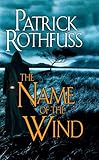
#10 — The Name of the Wind by Patrick Rothfuss
Kvothe is the most legendary figure of his age — a wizard, a warrior, a musician who called down lightning — and he is now hiding under a false name in an obscure village inn, telling his life story to a chronicler before his enemies find him. Rothfuss’s novel shares Monte Cristo’s fascination with a protagonist who constructs and inhabits multiple identities, and whose gifts and ambitions are matched only by the forces that want to destroy him. The frame narrative — Kvothe in hiding, master of a persona no one suspects — is the Dantès dynamic transposed into epic fantasy. The sense of a vast, patient intelligence working toward a reckoning that has not yet arrived carries through every page.
#11 — Captain Blood by Rafael Sabatini
Peter Blood is an Irish physician who tends a wounded rebel after the Battle of Sedgemoor in 1685 and is transported to Barbados as a slave for his trouble. He escapes, seizes a Spanish ship, and becomes the most feared pirate captain in the Caribbean — using his new identity to pursue both freedom and a reckoning with the men who condemned him. Sabatini published Captain Blood in 1922, and the debt to Monte Cristo is overt: the wrongful imprisonment, the dramatic escape, the reinvention as a figure of power, the enemies who do not initially recognize the man they destroyed. It is faster and less morally complex than Dumas, but it delivers the same basic pleasure with tremendous efficiency.
How to Choose Your Next Read
If you want more Dumas, immediately: The Three Musketeers — same author, same pleasure in plot and pace, lighter moral weight.
If you want the double-identity pleasure most directly: The Scarlet Pimpernel by Baroness Orczy.
If you want another 1,000-page epic that earns its length: Shōgun or The Pillars of the Earth.
If you want the moral argument that Monte Cristo raises, taken to its fullest extent: Les Misérables.
If you want confinement and patient transformation, but quieter: A Gentleman in Moscow.
If you want the revenge-and-identity structure in epic fantasy: The Name of the Wind.
If you want medieval atmosphere and a deeply unsettling moral conclusion: The Name of the Rose.
For the Best Fiction Books
For the definitive guide to fiction — the greatest novels across literary fiction, classics, and contemporary writing — see our Best Fiction Books of All Time list.
More Classic Literature Reading Guides
- Books Like Les Misérables: Justice, Redemption, and Epic Scale
- Books Like Don Quixote: Idealism and the Madness of Literature
Also Recommended
Affiliate disclosure: Links to Amazon on this page are affiliate links. We earn a small commission at no extra cost to you. This does not influence our editorial recommendations.
Frequently Asked Questions
Is The Count of Monte Cristo worth reading at over 1,200 pages?
Yes, and it is one of the few books of that length where the size rarely feels like an obstacle. Dumas was originally writing for serial publication, which means each section is engineered to propel you into the next. The pacing is closer to a modern thriller than to most 19th-century novels. Readers who approach it expecting a slow literary slog are consistently surprised by how quickly 1,200 pages can pass.
Should I read the abridged or unabridged version of The Count of Monte Cristo?
The unabridged version is strongly preferable. The abridged editions — some cut to fewer than 500 pages — remove entire subplots and secondary characters that are essential to the moral architecture of the revenge. The abbreviated version can feel thin and mechanical; the full text earns its ending. The most widely recommended unabridged English translation is Robin Buss's Penguin Classics edition, which reads naturally without feeling archaic.
What other adventure classics are on the same scale as The Count of Monte Cristo?
For sheer scope and commitment to a sprawling cast across years of story, the closest comparisons are Les Misérables by Victor Hugo, Shogun by James Clavell, and The Pillars of the Earth by Ken Follett. All three exceed 900 pages, all three reward the investment, and all three share Monte Cristo's quality of making a very long book feel like an immersive world rather than a chore.
What should I read if I loved the revenge plot specifically?
If the revenge architecture — the patience, the disguises, the slow unraveling of each betrayer — is what gripped you, the most direct comparisons are The Scarlet Pimpernel by Baroness Orczy for the double-identity element, and A Gentleman in Moscow by Amor Towles for a protagonist who transforms confinement into a form of mastery. For a more literary treatment of whether revenge corrupts the avenger, The Name of the Rose by Umberto Eco raises similar moral questions in a medieval setting.