Books Like The Shadow of the Wind: Bookish Mysteries
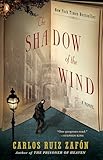
Carlos Ruiz Zafón's novel of a boy who finds a forgotten book and uncovers its author's tragic story is the most atmospheric novel about books ever written. These books share its labyrinthine mystery, its love of literature, and its sense of a city as a living, secret-laden place.

Carlos Ruiz Zafón’s The Shadow of the Wind was published in Spain in 2001 and became one of the most successful Spanish-language novels of the century — eventually selling fifteen million copies worldwide. It opens in post-Civil War Barcelona, in 1945, when a bookseller takes his ten-year-old son Daniel to a secret place called the Cemetery of Forgotten Books and invites him to choose one book to adopt and protect. Daniel chooses a novel called The Shadow of the Wind by an author named Julián Carax. He reads it overnight and is possessed by it. When he tries to find more of Carax’s work, he discovers that someone has been systematically hunting down and destroying every copy of every book Carax ever wrote.
What follows is both a mystery and a meditation on what books do to people — why some novels feel like they were written specifically for the person reading them, and what it means to pursue a literary obsession across years and across a city’s hidden layers. Zafón uses Barcelona the way Dickens used London: as a moral landscape, a place where every alley and building carries the weight of the history that happened inside it. The Franco-era Barcelona of the novel is not just a setting but a character, and the story of Julián Carax mirrors and illuminates Daniel’s story in ways that only become fully visible near the end.
The books below were chosen for readers who responded to the labyrinthine mystery, the love of literature as a subject in itself, the atmosphere of a city as a place of secrets and memory, or the Gothic romance of a past that refuses to stay buried.
Great Mysteries About Books and Secrets
#1 — The Name of the Rose by Umberto Eco
A Franciscan monk named William of Baskerville and his young novice Adso arrive at a medieval Italian monastery to investigate a series of deaths that seem connected to the library — a vast, labyrinthine archive that the abbot controls with obsessive secrecy. Eco’s novel is simultaneously a medieval murder mystery, a treatise on semiotics and interpretation, and a meditation on the relationship between knowledge and power. Like The Shadow of the Wind, it places books at the center of the mystery — the forbidden book that someone is willing to kill to protect. The library-as-labyrinth that Daniel navigates in Zafón’s Cemetery of Forgotten Books is directly descended from Eco’s maze.
#2 — The Club Dumas by Arturo Pérez-Reverte
Lucas Corso, a cynical book dealer, is hired to authenticate a chapter of the original manuscript of The Three Musketeers and simultaneously to investigate a rare manual on summoning the Devil, of which only three copies exist. The two investigations turn out to be connected. Pérez-Reverte’s novel is the most direct equivalent to The Shadow of the Wind in the bibliophile mystery genre: a protagonist who loves books professionally and obsessively, a mystery that requires literary knowledge to solve, and a plot that rewards readers who know the novels being referenced. Roman Polanski adapted it as The Ninth Gate — but the novel is considerably richer than the film.
#3 — Possession by A.S. Byatt
Two contemporary academics — Roland Michell and Maud Bailey — discover a cache of secret letters between two Victorian poets and spend the novel pursuing their lost love affair across archives and country houses. Byatt’s novel is the most intellectually demanding book on this list and the one that takes the book-as-archive most seriously: she writes the Victorian poets’ letters and poems herself, and they are good enough to be real. The mystery is not a thriller but an academic detection — what did these two people mean to each other, and what did it cost them? The parallel love story between the contemporary academics is the novel’s romantic engine. For readers who love The Shadow of the Wind’s sense that the past is always pressing through the archive, this is the literary equivalent.
Cities as Characters
#4 — The Hunchback of Notre-Dame by Victor Hugo
Hugo’s 1831 novel is less about Quasimodo than about Paris itself — specifically about the Cathedral of Notre-Dame as the body of the medieval city, its architecture expressing a civilization’s entire spiritual and artistic life. Hugo uses the novel as a vehicle for his theory of the relationship between architecture and literature, and the result is a book in which the city is not a backdrop but a protagonist. Zafón learned from Hugo: Barcelona in The Shadow of the Wind is as much a character as Daniel or Julián, and the Gothic Quarter’s architecture carries the same moral weight that Hugo’s cathedral carries. For readers who want to trace the genealogy of the city-as-character in the novel, The Hunchback is the source.
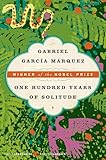
#5 — One Hundred Years of Solitude by Gabriel García Márquez
Macondo, the fictional Colombian town founded by José Arcadio Buendía, has a memory. It was founded on a secret, and the founding secret determines everything that happens in it for a hundred years. García Márquez’s novel is the most complete realization of the idea that a place can accumulate meaning across time — that the weight of what happened in a city is present in its streets whether or not the current inhabitants know the history. Daniel Sempere feels this in every corner of Barcelona; the Buendías feel it in Macondo without understanding why. Both novels are about what places remember when people forget.
#6 — The Secret History by Donna Tartt
A scholarship student at a small Vermont college is drawn into an elite classics study group that has committed — and covered up — a terrible act before his arrival. Tartt’s novel takes the Gothic atmosphere of The Shadow of the Wind and applies it to an American campus: the closed community with its own rules, the charismatic older figure who controls access to knowledge, the secret that organizes every subsequent event. Where Zafón’s mystery moves forward in time as Daniel uncovers the past, Tartt’s moves backward — the novel opens with the murder and spends the rest explaining how it happened. The city is a campus; the labyrinth is a social world; the haunting is collective guilt.
#7 — A Gentleman in Moscow by Amor Towles
The Metropol Hotel, in Towles’s novel, is a city within a city — a complete world of corridors and rooms and remembered conversations, with its own social hierarchies and customs and hidden passages. Count Rostov, confined to its walls for life, navigates it with the same obsessive topographical knowledge that Daniel Sempere navigates Barcelona, and with the same sense that every corner holds a history. Both novels are about the relationship between a person and a place that has become, through long intimacy, an extension of the self. Towles’s prose has the same formal elegance as Zafón’s, and the Metropol the same capacity to feel simultaneously real and mythic.
Gothic Romance and Family Secrets
#8 — Rebecca by Daphne du Maurier
A nameless young woman marries a wealthy widower and goes to live at his estate, Manderley, where the presence of his dead first wife — Rebecca, the title character — saturates every room. The housekeeper Mrs Danvers, loyal to Rebecca’s memory with an intensity that borders on pathological, makes the new wife feel constantly inadequate and watched. Du Maurier’s novel is the purest Gothic source for the atmosphere Zafón creates: the house that embodies the past, the secret that cannot be spoken, the woman whose absence controls the present more than the living characters do. Julián Carax’s shadow over Daniel’s investigation is Rebecca’s shadow over Manderley — the dead who refuse to release the living.
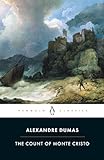
#9 — The Count of Monte Cristo by Alexandre Dumas
Edmond Dantès, unjustly imprisoned for thirteen years, escapes, finds a buried treasure, reinvents himself as the Count of Monte Cristo, and returns to Paris to exact precise, methodical revenge on the men who destroyed his life. Dumas’s novel shares with The Shadow of the Wind both the buried-past structure — a terrible injustice that took place years before the novel opens, whose perpetrators have since built respectable lives — and the sense that the truth is always available to someone willing to look for it. The Count’s investigation of his own history is what Daniel does in pursuing Carax’s; both novels treat the past as a mystery that demands solution.
#10 — The Pillars of the Earth by Ken Follett
In twelfth-century England, a master builder and a monk dedicate their lives to constructing a cathedral in the fictional town of Kingsbridge, their stories entwined with a prior and a noblewoman across decades of war, church politics, and personal treachery. Follett’s novel is the longest book on this list and the most plot-driven, but it shares with The Shadow of the Wind the Gothic setting, the multi-decade span, the sense of lives shaped by events that took place before the characters were born, and the cathedral-building as an act of faith in human creativity. For readers who love Zafón’s atmosphere and want it sustained across eight hundred pages of medieval intrigue, this is the destination.
How to Choose Your Next Read
If you want the essential literary mystery about books: The Name of the Rose — medieval library, forbidden knowledge, Eco’s erudition.
If you want the most direct bibliophile mystery equivalent: The Club Dumas — rare manuscripts, literary detection, the same pleasure.
If you want the Gothic atmosphere in its purest form: Rebecca — the dead woman who controls the living, the house that remembers.
If you want the most intellectually demanding parallel: Possession — Victorian letters, academic detection, Byatt’s invented poets.
If you want the city-as-character taken to its extreme: One Hundred Years of Solitude — Macondo’s memory, the city that knows its own history.
For the Best Fiction Books
For the definitive guide to fiction — the greatest novels across literary fiction, classics, and contemporary writing — see our Best Fiction Books of All Time list.
More Latin American and World Fiction Guides
Affiliate disclosure: Links to Amazon on this page are affiliate links. We earn a small commission at no extra cost to you. This does not influence our editorial recommendations.
Frequently Asked Questions
Is The Shadow of the Wind part of a series?
Yes. The Shadow of the Wind is the first novel in Zafón's Cemetery of Forgotten Books series, which consists of four interconnected novels set in Barcelona across much of the twentieth century. The other novels are The Angel's Game, The Prisoner of Heaven, and The Labyrinth of Spirits. Each can be read independently — they are connected by setting, recurring characters, and the mythic Cemetery of Forgotten Books itself rather than by a sequential plot — but readers who are drawn in by the first novel will find four books' worth of the same atmospheric Barcelona. Zafón died in 2020, and the quartet stands as his complete achievement.
What is the Cemetery of Forgotten Books in The Shadow of the Wind?
The Cemetery of Forgotten Books is a vast, labyrinthine secret library hidden in the old city of Barcelona, maintained by a small community of booksellers and bibliophiles. The tradition it embodies is that each visitor chooses one book to adopt and protect — to ensure that the book survives as long as its guardian does. Ten-year-old Daniel Sempere is taken there by his father at the opening of the novel and chooses a novel called The Shadow of the Wind by Julián Carax. The Cemetery is not a real place, but Zafón based it on his deep knowledge of Barcelona's Gothic Quarter, and its mythology — the idea that books have a spirit that requires protection — is the animating belief behind the entire series.
What are the best books like The Shadow of the Wind for readers who love books about books?
The Name of the Rose by Umberto Eco is the essential parallel — a medieval monastery, a library with forbidden books, murder, and a narrator who loves learning as much as Daniel Sempere loves stories. The Club Dumas by Arturo Pérez-Reverte is the most direct equivalent: a bibliophile protagonist, a mystery centered on a rare manuscript, and a literary detective plot that rewards readers who know the novels being referenced. Possession by A.S. Byatt is the most literary: two academics discover a secret Victorian love affair in a poet's letters, and the book-as-archive becomes the book's whole subject. For readers who want the Gothic atmosphere without the bibliophile element, Rebecca by Daphne du Maurier is the purest source.