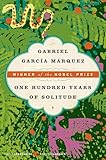
Books Like One Hundred Years of Solitude: Saga Reads
If García Márquez's Macondo swept you away, these novels share its magical worlds, multigenerational scope, and the sense of history as a living, breathing force.

Gabriel García Márquez’s One Hundred Years of Solitude begins with a man facing a firing squad remembering the afternoon his father took him to see ice, and from that opening sentence it is already clear that ordinary chronology will not apply here. The novel follows seven generations of the Buendía family in the fictional town of Macondo, from its founding in a Colombian jungle to its annihilation in a wind that erases all trace of it from the earth. Along the way, a woman ascends to heaven while hanging laundry, a plague of insomnia causes the entire town to forget the names of things, and the patriarch José Arcadio Buendía spends his final years tied to a chestnut tree, talking to the ghost of his dead friend Prudencio Aguilar. None of this is treated as remarkable.
Published in 1967, the novel won García Márquez the Nobel Prize in Literature in 1982 and is widely considered the most important Spanish-language novel of the twentieth century. Its influence has been so pervasive that the term “magical realism” — which García Márquez did not invent but which his novel defined for most readers — now carries both its weight and, occasionally, the burden of imitation. Dozens of novels in dozens of languages have attempted the combination of family saga, mythological scope, and matter-of-fact impossible events that García Márquez made look effortless. Very few have achieved it.
The books below were chosen for readers who were moved by something specific about One Hundred Years of Solitude — either the magical realist mode itself, the multigenerational sweep, or the sense of history as a force that shapes and eventually overwhelms individual lives. They are grouped by what they share most closely with the novel, and they range from García Márquez’s own shorter work to the Latin American tradition he emerged from to family epics from other literary cultures altogether.
More García Márquez: The Macondo World
#1 — Love in the Time of Cholera by Gabriel García Márquez
The most romantic of García Márquez’s novels follows Florentino Ariza, who falls in love with Fermina Daza as a teenager and waits fifty-three years — through her marriage to another man, her widowhood, and his own long string of consoling affairs — for the chance to tell her again. Where One Hundred Years of Solitude asks what history does to families across generations, Love in the Time of Cholera asks what love is when stripped of youth, beauty, and novelty, when only its obstinate core remains. It is warmer and more conventionally romantic than Macondo, and considerably easier to follow, but the same magical quality of attention — the sense that the narrator regards time itself with gentle irony — runs through every page.
#2 — Chronicle of a Death Foretold by Gabriel García Márquez
The shortest and most perfectly constructed of García Márquez’s novels opens with the information that Santiago Nasar is going to be murdered today, then spends its entire length asking why no one stopped it. Everyone in the unnamed town — including the two brothers who have announced their intention publicly — expects someone else to intervene. No one does. The result is a meditation on fate, honor, collective guilt, and the way communities conspire through inaction. At roughly a hundred pages it can be read in a single sitting, and most readers find themselves reading it twice: once to follow the story, once to understand the architecture that makes it feel both inevitable and unbearable.
#3 — No One Writes to the Colonel by Gabriel García Márquez
A retired colonel in an unnamed Colombian town waits fifteen years for a military pension that the government has promised and never delivered, in the meantime feeding a fighting cock on borrowed money he does not have. Written before One Hundred Years of Solitude and in some ways its emotional template, the novella strips away the magic and the generational sweep to leave only dignity and futility facing each other across a kitchen table. The colonel’s refusal to surrender his self-respect — and his cock — in the face of complete material defeat is among the most quietly heroic things in all of García Márquez. Readers who want to understand where Macondo came from will find essential ground here.
Magical Realism from Around the World
#4 — The Tin Drum by Günter Grass
Günter Grass’s 1959 novel follows Oskar Matzerath, a boy in Danzig who on his third birthday decides to stop growing, preserving himself at child height while the Second World War unfolds around him at adult eye level. He carries a tin drum and can shatter glass with his voice; he watches the rise of Nazism, the war, the postwar rubble, all from below the notice of those who shape events. The Tin Drum is Germany’s magical realism — as formally inventive as García Márquez, as concerned with what history does to the people who live through it, but colder, more grotesque, and considerably darker in its conclusions about human nature. The Nobel Committee described Grass as having “portrayed the forgotten face of history” — exactly the project of Macondo.
#5 — Beloved by Toni Morrison
Toni Morrison’s ghost story is also magical realism, American in its roots and devastating in its application. The murdered baby’s ghost — who eventually returns in physical form — is treated as real, not as hallucination or metaphor. The former slave Sethe’s haunted house on Bluestone Road carries the same matter-of-fact atmosphere of supernatural presence that García Márquez brings to Macondo’s yellow butterflies and ascending women. Beloved uses the modes of magical realism to do what García Márquez used them for: to write about historical violence and collective trauma in a way that journalism and realist fiction cannot fully reach. The Nobel committee cited Morrison’s ability to “give life to an essential aspect of American reality” — exactly the formula.
#6 — Flights by Olga Tokarczuk
Olga Tokarczuk’s 2007 novel — which won her the Nobel Prize in Literature — weaves together dozens of fragments: travel narratives, anatomical histories, a seventeenth-century story of a woman following her husband to war, a contemporary account of a child who vanishes in an airport. It resists summary because it resists the genre conventions that make summary possible. Flights is the European equivalent of One Hundred Years of Solitude in its ambition — the attempt to hold a whole civilization’s relationship to movement, the body, and mortality inside a single work of fiction — and in its strangeness. Readers who loved Macondo’s density and were willing to be lost in it will find a different but comparable experience here.
#7 — Doctor Zhivago by Boris Pasternak
Pasternak’s epic is not magical realism — the snow falls realistically, the violence is historical and documented — but it shares with One Hundred Years of Solitude the quality of mythological sweep and the sense that individual lives are carried by forces far larger than themselves. The doctor-poet Yuri Zhivago moves through the Russian Revolution, the civil war, and the Stalinist terror like a man swept in a current, his private love for Lara existing in a separate dimension from the history that eventually destroys him. The novel was banned in the Soviet Union, smuggled to Italy, published there in 1957, and won Pasternak the Nobel Prize he was forced to refuse. The poetry at its end is among the most beautiful in Russian literature.
Epic Family Sagas
#8 — East of Eden by John Steinbeck
Steinbeck’s most ambitious novel follows two families — the Trasks and the Hamiltons — across three generations in California’s Salinas Valley, from the Civil War to the First World War, consciously retelling the story of Cain and Abel in American terms. It is the closest American equivalent to García Márquez’s multigenerational ambition: the same interest in how families repeat their patterns across generations, the same sense of landscape as both physical fact and mythological force, the same conviction that the stories we inherit shape us more powerfully than we understand. Steinbeck called it his greatest work, the book he had been preparing to write his entire life. Most of his readers agree with him.
#9 — The Family Moskat by Isaac Bashevis Singer
Singer’s 1950 novel follows the Warsaw Moskat family from the late nineteenth century to the eve of the Holocaust, tracing the dissolution of the traditional Jewish world under the pressures of modernization, secular idealism, and eventually catastrophe. It is, in effect, a Jewish One Hundred Years of Solitude — the same multigenerational structure, the same accumulation of names and relationships across decades, the same sense of a world moving toward an ending that those inside it cannot prevent. Singer won the Nobel Prize in 1978 and described himself as writing for “the ten million Yiddish-speaking Jews” who had been murdered; the ending of The Family Moskat retroactively transforms everything that preceded it in the same way the last page of Macondo does.
#10 — Independent People by Halldór Laxness
Halldór Laxness won the Nobel Prize in 1955 largely on the basis of this 1934 Icelandic novel, which follows a stubborn crofter named Bjartur of Summerhouses across decades of poverty, pride, and destruction as he fights to remain independent — of his landlord, of his family, of history itself. It is a different kind of family epic than Macondo: smaller, bleaker, anchored in the specific material conditions of early twentieth-century Iceland rather than in the dreamlike. But its mythological ambitions are equivalent — Laxness weaves Icelandic saga, ancient verse, and folk belief through a relentlessly realistic social narrative in a way that produces something as irreducible and strange as García Márquez’s Colombia. Bjartur is among the great stubborn characters of world literature.
How to Choose Your Next Read
If you want the most direct continuation of García Márquez’s voice: Love in the Time of Cholera — the warmest and most romantic of his novels.
If you want García Márquez at his most condensed: Chronicle of a Death Foretold — perfect structure, devastating effect, readable in an afternoon.
If you want magical realism applied to American history: Beloved — the same mode, entirely different emotional territory.
If you want the darkest use of magical realism: The Tin Drum — Germany instead of Colombia, grotesque rather than lyrical.
If you want a multigenerational saga in the American tradition: East of Eden — Steinbeck at his most ambitious.
If you want the most formally experimental option: Flights — demanding, original, and unlike anything else.
For the Best Fiction Books
For the definitive guide to fiction — the greatest novels across literary fiction, classics, and contemporary writing — see our Best Fiction Books of All Time list.
Affiliate disclosure: Links to Amazon on this page are affiliate links. We earn a small commission at no extra cost to you. This does not influence our editorial recommendations.
Frequently Asked Questions
Is One Hundred Years of Solitude magical realism or fantasy?
The distinction matters. In magical realism, the impossible is treated as ordinary — not as wonder, not as violation of natural law, simply as fact. When a cloud of yellow butterflies follows Mauricio Babilonia, no character pauses to remark on it. García Márquez inherited the mode from William Faulkner, Alejo Carpentier, and the oral storytelling tradition of the Colombian Caribbean coast, where his grandmother narrated supernatural events with the same flat certainty she brought to everything else. Fantasy, by contrast, builds an alternative world with its own internal rules and asks the reader to accept those rules. Magical realism does no such thing — it simply includes the magical in the ordinary world without commentary or explanation. That is why *One Hundred Years of Solitude* feels simultaneously like history and dream.
Why is One Hundred Years of Solitude so hard to follow?
The six generations of Buendías share names — there are seventeen Aurelianos and multiple José Arcadios — the timeline loops back on itself repeatedly, and the narrator treats memory, prophecy, and present experience as equally real and equally unreliable. The effect is deliberate: García Márquez wanted the reader to feel what the characters feel, which is that history repeats itself so completely that individual lives blur into a pattern. The genealogical chart at the back of most editions is useful; most readers recommend consulting it freely. Almost everyone finds the novel considerably easier on a second reading, when the architecture becomes clear and what felt like confusion reveals itself as structure.
What should I read after One Hundred Years of Solitude?
Readers who loved the novel most often go to García Márquez's shorter work next — *Chronicle of a Death Foretold* is elegantly structured and can be read in an afternoon, while *Love in the Time of Cholera* is his most romantic novel and the most accessible of his longer books. Beyond García Márquez, the most direct path is to other Latin American magical realists: Isabel Allende's *The House of the Spirits* is the most direct heir, Juan Rulfo's *Pedro Páramo* is short and essential and probably the closest model for Macondo itself, and Laura Esquivel's *Like Water for Chocolate* brings the magical realist mode to a smaller domestic canvas. Readers ready to range further should consider Günter Grass's *The Tin Drum*, which applies similar techniques to German history with considerably darker results.