Japan's most internationally celebrated novelist, whose work blends everyday realism with surrealism, jazz, and solitude.
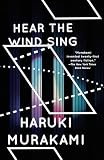
Haruki Murakami was born in Kyoto in 1949 and grew up in Ashiya, near Kobe. He studied drama at Waseda University, where he met his wife. In 1974 they opened a jazz bar in Tokyo — Peter Cat — which he ran for seven years while writing his first two novels. Hear the Wind Sing and Pinball, 1973 established him in Japan; A Wild Sheep Chase (1982) brought him international attention.
His breakthrough in the English-speaking world came with Norwegian Wood (1987), a melancholy coming-of-age novel that sold millions of copies in Japan and was eventually translated into more than fifty languages. The Wind-Up Bird Chronicle (1994) and Kafka on the Shore (2002) confirmed his reputation as one of the most distinctive voices in world literature — a writer able to blend the mundane and the surreal with musical precision.
Murakami’s fiction is characterised by jazz and classical music references, solitary protagonists, lonely urban settings, and dreamlike narrative logic. He is a dedicated long-distance runner — his memoir What I Talk About When I Talk About Running is rightly counted among the most honest accounts of the creative process available.
A Singular Literary Voice
Haruki Murakami is among the most widely read and translated novelists in the world, a Japanese writer whose dreamlike, melancholy fiction has found a vast international audience. His novels occupy a distinctive territory between realism and the surreal, where ordinary, often passive protagonists slip into strange parallel worlds, encounter talking cats and disappearing people, and pursue lost loves through landscapes that obey the logic of dreams. This blend of the mundane and the uncanny is so recognisable that his name has become shorthand for a particular mood — quiet, lonely, and quietly magical.
Recurring Worlds and Obsessions
Across his body of work, Murakami returns to a consistent set of motifs that his readers come to know intimately: jazz and classical music, cooking and cats, wells and parallel dimensions, vanished women and the men who search for them, and a pervasive sense of alienation in contemporary urban life. Novels such as Norwegian Wood, The Wind-Up Bird Chronicle, Kafka on the Shore, and 1Q84 explore loneliness, memory, and the porous boundary between the real and the imagined. His protagonists are typically detached, drifting figures whose passivity becomes a lens for examining longing, loss, and the search for meaning.
Style and Influences
Murakami’s prose, even in translation, is famously clear, conversational, and hypnotic, drawing the reader smoothly into its strangeness. He has been candid about his debt to Western culture — American jazz, Raymond Chandler, Kurt Vonnegut, Western pop and classical music — and his fiction feels deliberately untethered from traditional Japanese literary convention, which initially drew criticism at home even as it fueled his global appeal. A dedicated long-distance runner, he has also written memorably about the discipline of writing and the rhythms of the creative life.
Where to Start and Why He Matters
Newcomers often begin with Norwegian Wood, his most straightforwardly realistic and emotionally direct novel, or with Kafka on the Shore for a fuller taste of his surreal mode; the short stories offer another accessible entry. Readers should know that his endings frequently leave mysteries unresolved, a quality that frustrates some and enchants others, since his concern is mood and resonance more than tidy explanation. Perennially mentioned as a Nobel contender, Murakami has shaped global literary taste and introduced millions of readers to a uniquely atmospheric kind of storytelling that lingers long after the plot details fade.
Between Two Cultures
Part of what makes Murakami so distinctive is his position between cultures. Deeply shaped by Western music, literature, and film, he writes a Japanese fiction that feels cosmopolitan and global, and this very quality, which once drew suspicion from Japan’s literary establishment, has been central to his international success. His characters move through a recognisably modern, urban, globalised world of bars and kitchens and record collections, yet they are forever brushing against something older, stranger, and unknowable. This tension between the contemporary surface and the mysterious depths beneath gives his fiction its peculiar resonance and its broad cross-cultural appeal.
A Writer of Mood and Memory
Above all, Murakami is a writer of mood. His novels are less about plot than about atmosphere — the ache of loneliness, the weight of memory, the strange beauty of ordinary moments, the sense that reality is thinner and more permeable than we assume. Readers return to him not for resolution but for the experience of inhabiting his world, with its melancholy tenderness and its quiet magic. He has also written acclaimed nonfiction, including a meditation on running and writing and a study of the 1995 Tokyo subway gas attack, showing a range beyond his signature surrealism.
Why He Matters
Murakami’s achievement has been to create a body of work so distinctive that it constitutes a genre of its own, instantly recognisable and endlessly imitated. He has expanded the global audience for literary fiction, proven that a contemporary novelist can be both experimental and immensely popular, and given millions of readers around the world a shared vocabulary of cats, wells, jazz, and longing. Whether or not the Nobel ever comes, his place as one of the defining novelists of his era is secure, and his strange, beautiful, melancholy worlds continue to draw new readers into their spell. His novels and stories continue to be eagerly awaited and widely translated, and each new release becomes a global literary event, confirming his rare status as a serious novelist with a genuinely popular following.
Reading Guides